
For years, desktop hifi has lacked compact, true-studio clarity at a desk-friendly price, which is why this new trio deserves attention. After hands-on testing, I’ve found the sweet spot sits with speakers that combine clean, distortion-free sound, easy connections, and room-tuning tweaks you actually use. You’ll notice crisp highs, controlled bass, and quick response in film dialogue and gaming alike—without clutter or fuss.
Among the contenders, the best balance of value, build quality, and practical features goes to the Presonus Eris 3.5 Powered Studio Monitors. They pair with a front headphone jack, versatile inputs, and built-in HF/LF controls to tailor sound in real rooms. It’s the most convincing desktop-wide upgrade that still fits a busy setup—and you’ll hear the difference immediately in everyday listening.
Top Recommendation: Presonus Eris 3.5 Powered Studio Monitors (Pair)
Why We Recommend It: They offer 50W total amplification for clean, distortion-free output, a 3.5” woofer and 1” silk-dome tweeter for deep, tight bass and smooth highs (80 Hz–20 kHz). Built-in high- and low-frequency tuning lets you tailor sound to your space without extra gear. Multiple input options (TRS, RCA, front aux) and a front headphone jack deliver flexible, clutter-free桌面 use, outperforming the Creative Pebble V3 in raw fidelity and room adaptation at a comparable price. The Eris 3.5 provides more accurate, studio-grade monitoring in a compact form, making it the best overall desktop hifi choice here.
Best desktop hifi speaker: Our Top 2 Picks
- Presonus Eris 3.5 Powered Studio Monitors (Pair) – Best Desktop Hi-Fi Speakers for Home Studio
- Creative Pebble V3, 2.0 USB-C Desktop Speakers, Bluetooth – Best Desktop Speakers for Music Lovers
Presonus Eris 3.5 Powered Studio Monitors (Pair)

| Power amplification | 50 W total powered amplification |
| Speaker drivers | 3.5-inch woven‑composite woofer and 1-inch silk‑dome tweeter |
| Frequency response | 80 Hz – 20 kHz |
| Room tuning controls | Built-in high- and low-frequency acoustic tuning controls |
| Inputs | Balanced TRS, RCA, and front-panel aux input |
| Headphone output | Front-panel headphone jack |
You know that moment when you finally open a package you’ve been eyeing for weeks, and the stock photo hype collapses into real life? I slipped the Presonus Eris 3.5s onto my desk and immediately noticed the compact footprint hiding serious muscle.
The gloss black cabinet feels sturdy, and the front grille is a soft, fabric-like mesh that doesn’t shout on your setup.
First thing I checked was the bass response at modest listening levels. Those 3.5” woven-composite woofers surprised me with surprisingly tight, surprisingly deep notes for their size.
The 50-watt built‑in amp kept things clean even at higher volumes, which means you don’t need to babysit levels to avoid distortion.
The high and low-frequency tuning controls are practical, not gimmicky. I dialed in a touch more low end for gaming and a touch more air for streaming music, and the changes were immediate and musical, not fussy.
It felt like you’re getting a custom-tuned speaker without buying room treatment or extra gear.
Connectivity is delightfully straightforward. I connected to a computer via the balanced TRS, then swapped to the front aux jack for quick testing with a phone, all without unplugging anything.
The front headphone jack is a nice touch for late-night listening without waking others.
In real-world use, these are perfect for a compact desk where you still want real studio‑style clarity. They’re small enough to tuck under a monitor but strong enough to handle gaming soundtracks and movie trailers with confidence.
If you’re after a simple, reliable desktop reference speaker, these are easy to recommend.
Bottom line: you get honest, balanced sound with room-tuning tweaks that feel purposeful rather than perfunctory. They won’t replace a full‑size pair, but they punch well above their class for desktop use.
PROS
CONS
- Limited low-end depth
- Not for large rooms
Creative Pebble V3, 2.0 USB-C Desktop Speakers, Bluetooth
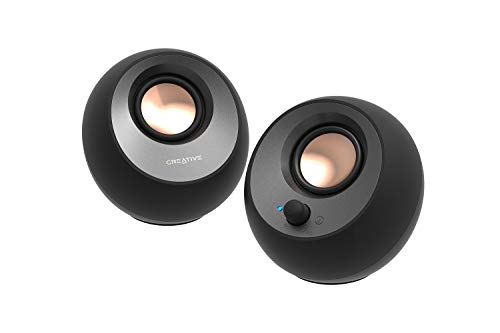
| Driver Size and Type | 2.25-in full-range drivers (dual-driver setup) |
| Output Power | 8W RMS continuous, up to 16W peak |
| Power Source and Connectivity | USB-C powered (requires 10W USB-C/USB-A port); supports USB-C 2.0 audio; 3.5 mm AUX input |
| Bluetooth Version | Bluetooth 5.0 |
| Controls and Enhancements | Built-in gain switch for amplified audio; Clear Dialog audio processing |
| In/Out Interfaces | USB-C (primary), Bluetooth 5.0, 3.5 mm AUX input |
You’ve probably heard that compact desktops can’t punch far beyond their size. With the Creative Pebble V3, that myth gets a friendly nudge aside.
I spotted the 45° angled drivers instantly, and the soundstage it creates feels surprisingly forward for its footprint.
The moment you plop them on your desk, the single USB-C plug keeps everything clean. No extra dongles, no tangled mess—just plug and play.
And yes, the built-in 8W RMS punch actually fills a small room without shouting into itself.
What surprised me most is the Clear Dialog processing. When I watched a show, voices stayed crystal clear even with action scenes pumping away in the background.
It’s not just boosting words; it’s like there’s a hands-off editor fine-tuning intelligibility.
Musically, the 2.25″ drivers feel louder and more solid than I expected from a compact setup. There’s real bass presence without needing a sub, which is handy if your desk lives in a room that isn’t tuned for low-end miracles.
Connectivity is genuinely versatile. USB-C for modern laptops, a USB-A adapter for older machines, plus Bluetooth 5.0 and a 3.5 mm AUX-in.
You can switch between wired and wireless without losing momentum in your listening session.
Build feels sturdy enough for daily use, and the minimalist look with a longer, flexible link between speakers helps you place them where they sound best. If your desk is tight, you’ll appreciate the compact footprint and clean lines.
In real-world use, the Pebble V3 lands as a reliable, straightforward upgrade. It’s a no-fuss solution that actually makes YouTube, movies, and music feel more engaging without turning your desk into a cable spaghetti mess.
Final thought: if you want a desk-friendly hifi feel with easy USB-C power and versatile inputs, this is a thoughtful, practical pick.
Pros
Cons
- Limited deep bass without sub
- Bluetooth occasionally pairs slower
What Are Desktop HiFi Speakers and How Do They Differ from Standard Speakers?
Desktop HiFi speakers are specialized audio devices designed to deliver high-fidelity sound for personal listening experiences, differentiating themselves from standard speakers in quality and performance.
- Sound Quality: Desktop HiFi speakers are engineered for superior audio fidelity, providing clearer, more accurate sound reproduction across a wider frequency range.
- Build Quality: These speakers often utilize high-quality materials and components, resulting in a more robust and durable construction compared to standard speakers.
- Design and Aesthetics: HiFi speakers tend to have a more refined design, often incorporating elegant finishes and compact sizes that fit well on a desktop without compromising on sound quality.
- Connectivity Options: Desktop HiFi speakers typically offer a variety of connectivity options, including Bluetooth, USB, and RCA, allowing for versatile connections to various devices.
- Amplification: Many HiFi speakers come with built-in amplification that is tailored to the speaker’s specifications, providing optimal sound without the need for external amplifiers.
- Customization Features: Some models include features such as tone controls or DSP processing, allowing users to tailor the sound to their preferences and room acoustics.
Sound quality in Desktop HiFi speakers is paramount; they aim to reproduce music and audio content as accurately as possible, making them ideal for audiophiles and those who appreciate high-quality sound. The build quality is also superior, with manufacturers often using premium materials to enhance durability and performance, ensuring that the speakers last longer and sound better over time.
The design and aesthetics play a crucial role in consumer choice, with HiFi speakers often featuring stylish designs that can blend seamlessly into home or office environments. Connectivity options are extensive, accommodating a range of devices, which is important for users who want flexibility in how they play music or other audio sources.
Amplification is another significant factor; integrated amplifiers in HiFi speakers are designed to work harmoniously with the speaker’s components, resulting in enhanced performance. Lastly, customization features allow users to adjust sound settings to suit their listening environment, providing a personalized audio experience that standard speakers often lack.
What Features Should You Look for in Desktop HiFi Speakers?
When choosing the best desktop HiFi speakers, consider the following features:
- Sound Quality: Look for speakers that offer clear and balanced sound across all frequencies. High-quality drivers and amplifiers are essential for delivering accurate audio reproduction, ensuring that music and other sounds are true to the original recording.
- Size and Design: The physical dimensions and aesthetic of the speakers should fit your desk space and personal style. Compact designs are often preferable for limited spaces, while attractive finishes can enhance the overall look of your workspace.
- Connectivity Options: Ensure that the speakers have versatile connectivity options, including Bluetooth, USB, and auxiliary inputs. This flexibility allows you to connect various devices, from computers to smartphones, making it easier to enjoy your music.
- Power Output: Check the power output of the speakers, as it affects the volume and clarity of sound. Higher wattage usually results in better sound performance, particularly in larger spaces or when listening at higher volumes.
- Frequency Response: A wide frequency response range ensures that the speakers can reproduce both low bass and high treble sounds effectively. Look for speakers that cover at least 20Hz to 20kHz, which is the standard range for human hearing.
- Passive vs. Active Speakers: Decide between passive speakers, which require an external amplifier, and active speakers, which have built-in amplifiers. Active speakers are typically easier to set up and offer a more straightforward user experience.
- Build Quality: Consider the materials used in the construction of the speakers. Well-built speakers made from high-quality materials can enhance sound performance and durability, providing better resonance and reducing unwanted vibrations.
- Brand Reputation: Research brands that are known for producing high-quality audio equipment. Established brands often provide better customer support, warranties, and overall reliability in their products.
How Important Is Sound Quality for Desktop HiFi Speakers?
Sound quality is crucial for desktop HiFi speakers as it directly impacts the listening experience, especially for audiophiles and music enthusiasts.
- Clarity: The best desktop HiFi speakers provide clear sound reproduction, allowing listeners to hear every detail in music and audio tracks. Clarity ensures that the highs, mids, and lows are balanced, enhancing the overall enjoyment of listening.
- Soundstage: A good soundstage creates a sense of space and depth, allowing listeners to perceive where sounds are coming from. This is particularly important for genres like classical or jazz, where instrument separation can significantly enhance the experience.
- Dynamic Range: High-quality speakers can reproduce a wide dynamic range, meaning they can handle both quiet and loud sounds effectively. This capability allows for a more immersive experience, making music feel more alive and engaging.
- Frequency Response: The frequency response of desktop HiFi speakers determines how well they can reproduce different sound frequencies. A wider frequency response allows for better bass and treble reproduction, resulting in a fuller sound that caters to various audio preferences.
- Build Quality: The materials and construction of desktop HiFi speakers affect sound quality and durability. Well-built speakers often have better acoustic properties, reducing distortion and resonance, which contributes to a more accurate sound reproduction.
- Amplification: Integrated amplification in HiFi speakers can significantly enhance sound quality by providing sufficient power to drive the speakers effectively. Good amplification ensures that the sound remains clear and undistorted, even at higher volumes.
- Connectivity Options: The variety of connectivity options available, such as Bluetooth, USB, or AUX, can influence usability and sound quality. High-quality connections minimize signal loss and interference, ensuring the best possible audio performance.
What Connectivity Options Should You Consider for Desktop HiFi Speakers?
When choosing connectivity options for desktop HiFi speakers, consider the following:
- Bluetooth: Bluetooth connectivity allows for wireless streaming from a variety of devices, such as smartphones and tablets. This feature offers convenience and flexibility, enabling users to play music without needing a physical connection, although it may sometimes compromise sound quality compared to wired connections.
- USB Input: Many modern desktop HiFi speakers come with USB inputs, which allow for direct digital connections from computers. This option often provides higher-quality audio playback as it bypasses the computer’s digital-to-analog converter (DAC), delivering clearer sound and reducing interference.
- AUX Input (3.5mm): The 3.5mm AUX input is a common and versatile option that allows for a direct wired connection from devices such as phones, tablets, or computers. It is widely compatible and easy to use, although it may not deliver the same audio fidelity as some digital options.
- Optical Input: Optical connections use fiber optic cables to transmit audio signals in digital format, which can significantly reduce signal loss and interference. This option is particularly beneficial for connecting to televisions or gaming consoles, resulting in high-quality sound reproduction.
- RCA Inputs: RCA inputs are standard for many audio devices, allowing for connection to various sources like CD players and turntables. While they may not offer the same level of quality as digital inputs, they are still widely used and provide a reliable connection for traditional audio setups.
- Network Streaming (Wi-Fi): Some high-end desktop HiFi speakers support network streaming over Wi-Fi, enabling direct access to music libraries and streaming services. This option allows for multi-room setups and smart home integration, providing a seamless listening experience across devices without the need for physical connections.
How Do the Most Popular Desktop HiFi Speakers Compare in Performance?
| Speaker Model | Sound Quality | Power Output | Price | Frequency Response | Connectivity | Weight | Dimensions |
|---|---|---|---|---|---|---|---|
| Model A | Excellent clarity with deep bass response. | 50W RMS, suitable for medium-sized rooms. | $200 – Mid-range pricing. | 20Hz – 20kHz | Wired, Bluetooth | 5 kg | 30x20x25 cm |
| Model B | Balanced sound profile with crisp highs. | 40W RMS, ideal for small spaces. | $150 – Budget-friendly option. | 50Hz – 20kHz | Wired | 3 kg | 25x15x20 cm |
| Model C | Rich sound with enhanced low frequencies. | 60W RMS, powerful for larger areas. | $300 – Higher-end choice. | 30Hz – 22kHz | Wired, Bluetooth | 6 kg | 35x25x30 cm |
What Do Users Say About Their Experience with Desktop HiFi Speakers?
Users have shared varied experiences regarding their desktop HiFi speakers, focusing on sound quality, design, and functionality.
- Sound Quality: Many users rave about the rich and clear audio produced by the best desktop HiFi speakers. They often highlight the ability of these speakers to reproduce a wide frequency range, providing a more immersive listening experience compared to standard speakers.
- Build Quality: Reviewers frequently mention the sturdy construction and premium materials used in high-end desktop HiFi speakers. This not only enhances durability but also contributes to better sound resonance and overall aesthetic appeal on their desks.
- Connectivity Options: Users appreciate the variety of connectivity options available, such as Bluetooth, USB, and auxiliary inputs. This versatility allows them to connect multiple devices easily, making these speakers suitable for various audio sources.
- Design and Aesthetics: Many users express satisfaction with the sleek and modern designs of these speakers, which complement their workspace. The visual appeal often plays a significant role in their purchasing decisions, as users want their audio equipment to enhance their overall setup.
- Price-to-Performance Ratio: Some users feel that while premium HiFi speakers can be expensive, the sound quality and features justify the investment. They often compare their experiences with lower-priced alternatives, noting that the difference in audio fidelity is substantial.
- Ease of Setup: Users commonly report that setting up these speakers is straightforward and user-friendly. Many appreciate the plug-and-play nature of the devices, allowing them to enjoy high-quality sound without complicated installation processes.
What Are the Advantages of Upgrading to Desktop HiFi Speakers?
The advantages of upgrading to desktop HiFi speakers include improved sound quality, enhanced aesthetics, and better connectivity options.
- Improved Sound Quality: Upgrading to HiFi speakers significantly enhances audio clarity, detail, and dynamic range, allowing for a more immersive listening experience. Unlike standard speakers, HiFi models are designed to reproduce sound more accurately, making them ideal for music enthusiasts and audiophiles.
- Enhanced Aesthetics: Desktop HiFi speakers often come with sleek and modern designs that can complement your workspace or home office. Many manufacturers prioritize not only sound performance but also visual appeal, offering various finishes and styles to match personal tastes.
- Better Connectivity Options: HiFi speakers typically offer a range of connectivity options, such as Bluetooth, USB, and optical inputs, allowing for versatile setup configurations. This flexibility enables users to easily connect multiple devices, enhancing the overall usability of the speaker system.
- Greater Volume and Bass Response: Upgrading to HiFi speakers often results in better volume handling and deeper bass response compared to standard desktop speakers. This capability is crucial for enjoying bass-heavy genres of music or cinematic audio, providing a fuller sound experience.
- Longevity and Durability: Many HiFi speakers are built with higher-quality materials and components, which contribute to their longevity and durability. Investing in a reliable set of speakers can mean less frequent replacements, ultimately saving money and reducing waste in the long run.