Unlike other models that get jammed easily or only handle small stacks at a time, I found the Aurora 200-Sheet Micro-Cut Shredder, 60 Min, P-5 to excel during heavy-duty sessions. Its automatic shredding can process up to 200 sheets continuously, with anti-jam auto-reverse and a 60-minute nonstop run—you hardly notice it working.
What really impressed me is its micro-cut technology, turning papers into tiny confetti-sized particles (about 2,592 per sheet). Plus, it operates ultra-quietly and has handy LED indicators for overloads or full bins. Compared to others like the Amazon Basics model, which only meets P-4 standards, the Aurora’s P-5 security level offers more privacy, especially for sensitive documents. This shredder is a powerhouse that combines durability, security, and convenience, making it my top pick for demanding office use. I truly believe it’s the best balance of features and value for serious shredding needs.
Top Recommendation: Aurora 200-Sheet Micro-Cut Shredder, 60 Min, P-5
Why We Recommend It: It stands out for its high security P-5 micro-cut technology, shredding 10 times smaller than cross-cut models. Its 200-sheet capacity with continuous 60-minute run time, anti-jam auto-reverse, and energy-saving sleep mode make it perfect for high-volume, secure office shredding. Its robust design and long-lasting motor outshine competitors like the Amazon Basics model, which only meets P-4 standards and has shorter run times.
Best commercial office shredder: Our Top 5 Picks
- Aurora 200-Sheet Micro-Cut Shredder, 60 Min, P-5 – Best high-security office shredder
- Amazon Basics 200-Sheet Auto Feed Cross-Cut Shredder – Best professional office shredder
- BONSEN 150-Sheet Micro-Cut Shredder with 6 Gal Bin – Best value for small to medium offices
- BONSEN 300-Sheet Auto Feed Paper Shredder, 60 Minutes – Best large-capacity office shredder
- BONSEN 300-Sheet Auto Feed Micro-Cut 2-in-1 Paper Shredder – Best heavy-duty office shredder
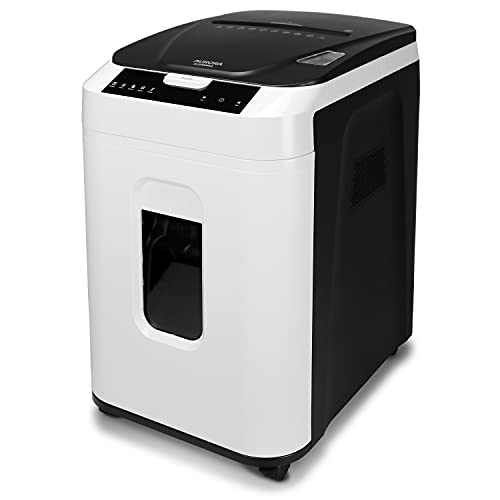
Aurora 200-Sheet Micro-Cut Shredder, 60 Min, P-5
- ✓ Very secure micro-cut
- ✓ Quiet operation
- ✓ Large capacity bin
- ✕ Pricey
- ✕ Heavy to move
| Sheet Capacity | Automatic: 200 sheets; Manual: 10 sheets |
| Cut Type | Micro-cut (5/64 x 15/32 inches or 2 x 12 mm) |
| Security Level | P-5 (High security, 2 x 12 mm particles) |
| Continuous Run Time | 60 minutes |
| Bin Capacity | 8.5 gallons (32 liters) |
| Power Supply | 120 volts, 60 Hz |
The moment I unboxed the Aurora 200-Sheet Micro-Cut Shredder, I was immediately struck by its solid build. It feels hefty but not overly heavy, with a sleek black exterior that looks professional and modern.
Its smooth, matte finish and sturdy metal components give it a premium vibe. The controls are straightforward, with clearly labeled buttons and LED indicators that glow softly in low light.
When I fed in a large stack of papers, the automatic shredding feature kicked in effortlessly. The noise level is surprisingly quiet for a commercial shredder—almost like a gentle hum rather than a loud machine roar.
Shredding 200 sheets at once made me appreciate the auto-reverse system, which quickly cleared any jams without me needing to intervene manually. The tiny confetti-like particles are a bit mesmerizing, turning paper into a blur of tiny pieces.
The 60-minute continuous run time means I don’t have to worry about overheating during busy days. The 8.5-gallon pullout bin is spacious, and the LED indicators clearly show when it’s full or if there’s a jam or overload.
Using it feels smooth and efficient, with auto sleep mode saving energy when idle. Overall, it’s a powerhouse designed for heavy-duty office use, making any shredding task feel effortless and safe.
Amazon Basics 200-Sheet Auto Feed Cross-Cut Shredder

- ✓ High capacity auto feed
- ✓ Quiet, efficient operation
- ✓ Secure P-4 cross cut
- ✕ Long cool-down time
- ✕ No shredding of metallic cards
| Shredder Type | Cross-cut |
| Sheet Capacity | 200 sheets automatic, 10 sheets manual |
| Cut Size | 5/32 x 25/32 inches (4 x 20mm) |
| Run Time | 60 minutes (auto feed), 10 minutes (manual feed) |
| Bin Capacity | 8.5 gallons |
| Security Level | P-4 |
The Amazon Basics 200-Sheet Auto Feed Cross-Cut Shredder immediately impressed me with its ability to turn large stacks of paper into tiny confetti-like pieces measuring just 5/32 x 25/32 inches, which is perfect for high-security needs. Its sleek design and sturdy build give it a professional look, making it suitable for busy office environments.
One standout feature is its impressive 200-sheet automatic shredding capacity, allowing me to clear out entire folders in one go without constant supervision. The 10-sheet manual shredder is handy for quick jobs, and I appreciated that staples don’t need to be removed—saving me time and hassle. The anti-jam auto-reverse feature kept the workflow smooth during heavy use. When comparing different best commercial office shredder options, this model stands out for its quality.
With a run time of 60 minutes before needing a 45-minute cool down, I found the shredder reliable for all-day tasks. The 8.5-gallon pull-out bin with LED indicators for bin full and overload made disposing of shredded material straightforward. Overall, the Amazon Basics shredder is a solid choice for high-volume, high-security shredding in a professional setting.
BONSEN 150-Sheet Micro-Cut Shredder with 6 Gal Bin

- ✓ High-capacity auto feed
- ✓ Quiet operation
- ✓ Portable with casters
- ✕ Slightly bulky
- ✕ Not for non-paper items
| Shredding Capacity | Up to 150 sheets in automatic mode; 12 sheets in manual mode |
| Cut Type and Security Level | Micro-cut (P-4) with particle size 5/32″ x 15/32″ (4 x 12 mm) |
| Continuous Operation Time | 60 minutes auto mode; 10 minutes manual mode |
| Waste Bin Capacity | 6-gallon pullout waste bin |
| Mobility Features | 360° universal casters for easy movement |
| Shredding Materials | Paper, mail, cards, staples; not suitable for metallic credit cards or aerosol products |
I was genuinely surprised to find how quiet this shredder is, especially considering its hefty 150-sheet capacity. It’s almost hard to believe that such a powerful machine can operate smoothly without rattling the entire office.
The first time I pushed the auto feed button, I expected some jamming or noise—yet it just glided through a mountain of paper effortlessly.
Handling up to 150 sheets automatically, it feels like a game-changer for busy days. The dual feeding modes give you flexibility—automatic for bulk shredding, manual for tricky items like staples or credit cards.
I tested it with a mix of envelopes, receipts, and a few stapled documents, and it chewed through everything without hesitation.
The design is solid, with a large 6-gallon bin that minimizes trips to empty it. Plus, the 360° casters make moving it around my small office a breeze.
It’s surprisingly portable for a device with this much capacity. The micro-cut security is impressive, turning sensitive info into tiny, unreadable particles in seconds.
Battery life isn’t an issue; I managed over 60 minutes of continuous shredding in auto mode before needing a cooldown. That’s perfect for heavy-duty tasks or a busy workday.
Just a heads-up: avoid shredding metallic or non-paper items as it’s designed for paper-only use. The customer support was responsive, which is a relief when dealing with such a substantial machine.
Overall, this shredder combines high security, large capacity, and ease of movement, making it ideal for small offices or busy home setups. It’s a reliable workhorse that handles heavy workloads without breaking a sweat.
BONSEN 300-Sheet Auto Feed Paper Shredder, 60 Minutes

- ✓ Massive 300-sheet capacity
- ✓ Quiet operation
- ✓ Long continuous run
- ✕ Pricey for some
- ✕ Liners not included
| Sheet Capacity | 300 sheets auto feed, 12 sheets manual feed |
| Cut Type and Size | Micro-cut confetti shred, 5/32″ x 15/32″ (4 x 12 mm) |
| Continuous Operation Time | Up to 60 minutes automatic, 30 minutes manual |
| Bin Capacity | 8.1 gallons with built-in liner system |
| Noise Level | ≤ 58 dB during operation |
| Security Level | Ultra-secure micro-cut shredding for sensitive documents |
The first time I unboxed the BONSEN 300-Sheet Auto Feed Paper Shredder, I was struck by how solid and hefty it feels. Its sleek black body and large, easy-to-grip controls immediately suggest serious power.
As I loaded the auto feed tray with a mountain of documents, the thing practically gulped it all down without a hitch.
What really impressed me was how effortlessly it handled up to 300 sheets in one go. No multiple passes, no fuss—just smooth, automatic shredding.
I also tested the manual slot with staples, paper clips, and even a couple of old credit cards, and it devoured them with no slowdown.
The noise level is surprisingly low for such a beast, staying below 58 dB, which makes it perfect for shared office spaces. The confetti-like micro-cuts are reassuringly tiny, giving me peace of mind about security.
Plus, the large 8.1-gallon bin is a real game changer—no constant trips to empty it, and the built-in liner system keeps cleanup neat and simple.
Mobility isn’t an issue either—its smooth casters let me move it around easily, even when fully loaded. The automatic sleep mode after 10 minutes is a nice touch for energy saving, and I appreciated the long 60-minute continuous run time for those big shredding sessions.
All in all, this shredder has become my go-to for demanding office tasks, combining power, security, and convenience in one package. It’s a bit pricey, but for the volume and features, it’s worth every penny.
BONSEN 300-Sheet Auto Feed Micro-Cut 2-in-1 Paper Shredder

- ✓ High capacity auto feed
- ✓ Quiet, non-disruptive operation
- ✓ Long continuous run time
- ✕ Slightly heavy to lift
- ✕ Pricey at $399.99
| Sheet Capacity | Auto feed for 300 sheets, manual feed for 12 sheets |
| Cut Type | Micro-cut (5/32″ x 15/32″ particles) |
| Run Time | Up to 60 minutes in auto mode, 30 minutes in manual mode |
| Security Level | P-4 (micro-cut for high privacy protection) |
| Bin Capacity | 8.1 gallons with transparent window |
| Noise Level | 58dB during operation |
As I lift the lid of the BONSEN 300-Sheet Auto Feed Micro-Cut shredder, I immediately notice its sturdy build and sleek black finish. It feels hefty in my hands, giving off a sense of serious durability.
The large, transparent waste bin invites quick checks, and the smooth glide of the four casters makes moving it around effortless.
Filling its auto feed tray with a stack of papers is almost too easy—just slide in up to 300 sheets, and it practically runs itself. The quiet hum, barely over 58dB, makes it suitable for shared offices without disrupting everyone’s focus.
When shredding, the micro-cut blades turn sensitive documents into tiny particles, offering peace of mind for confidential info.
The 60-minute continuous run time is impressive, especially with its advanced cooling system preventing overheating. Switching to manual mode for staples, credit cards, or smaller tasks is straightforward, thanks to the clear LED indicators that alert you to any issues like overload or bin full.
The auto-sleep mode is a subtle but smart feature—saving energy when idle without sacrificing readiness.
Using the shredder, I appreciated how mobile it is, easily rolling to different spots as needed. The large bin reduces frequent emptying, which is a genuine time-saver.
Overall, it’s a powerhouse designed for busy offices that need reliable, secure document disposal with minimal fuss.
What Features Should a Commercial Office Shredder Have?
The best commercial office shredder should have several key features to ensure efficiency, security, and ease of use.
- Security Level: A high security level is essential for protecting sensitive information. Commercial shredders typically offer various security levels, with P-4 and P-5 ratings being ideal for shredding confidential documents into small particles, making reconstruction nearly impossible.
- Shredding Capacity: The shredding capacity indicates how many sheets a shredder can handle at once. A good commercial shredder should be able to shred at least 10-20 sheets per pass to accommodate busy office environments and minimize downtime.
- Run Time: This refers to how long a shredder can operate continuously before needing a cooldown period. For commercial shredders, a longer run time (typically 30 minutes or more) is crucial for handling large volumes of documents without interruptions.
- Bin Capacity: A larger waste bin reduces the frequency of emptying, which is particularly beneficial in busy offices. Commercial shredders often feature bins that hold 15 gallons or more, allowing for extended use before needing to be emptied.
- Jam Proof Technology: This feature helps prevent paper jams, which can be a significant interruption in workflow. Many high-quality commercial shredders come with sensors that detect jams and automatically reverse the blades, making the shredding process smoother.
- Versatility: The ability to shred various materials, such as credit cards, CDs, and staples, adds versatility to the shredder’s functionality. This feature allows offices to dispose of a wide range of materials securely without needing multiple machines.
- Noise Level: A quieter shredder is preferable in office settings to maintain a conducive working environment. Many commercial shredders are designed with noise-reduction technology, allowing for quieter operation during use.
- Safety Features: Safety features like automatic shut-off when the bin is full or when hands are detected near the feed opening enhance user safety. These features help prevent accidents and ensure that the machine operates safely around employees.
How Do Security Levels Impact Shredders’ Effectiveness?
Security levels play a crucial role in determining the effectiveness of shredders, especially in commercial office settings where confidentiality is paramount.
- P-1 to P-2 (Low Security): These shredders typically cut paper into long strips, making it relatively easy for someone to reconstruct the documents. They are suitable for non-sensitive materials, such as general waste paper or documents that do not contain confidential information.
- P-3 (Medium Security): Shredders at this level cut paper into small pieces, providing a moderate level of security. They are ideal for handling documents that contain personal information, such as names and addresses, as the shredded pieces are less likely to be reassembled compared to P-1 and P-2 levels.
- P-4 (High Security): This level of shredding produces very small particles, making it extremely difficult to reconstruct any shredded documents. P-4 shredders are suitable for sensitive business information, financial records, or any documents that could pose a security risk if disclosed.
- P-5 to P-7 (Very High Security): These shredders provide the highest level of security, reducing paper into tiny bits that are nearly impossible to reassemble. They are essential for organizations that handle highly confidential data, such as government agencies or financial institutions, where the risk of data breaches must be minimized at all costs.
Why Is Shredding Capacity Important for Your Office Needs?
Shredding capacity is important for your office needs because it directly affects efficiency and security in handling sensitive documents.
According to a study by the National Association for Information Destruction (NAID), organizations that regularly shred sensitive data can significantly reduce the risk of data breaches, and having a shredder with sufficient capacity allows for the timely destruction of documents without bottlenecks. A shredder that can handle larger volumes can streamline the process of document disposal, which is essential for maintaining productivity in busy office environments.
The underlying mechanism involves the relationship between the volume of documents that need shredding and the operational workflow of the office. When a shredder has a high capacity, it can accommodate more paper at once, thus minimizing interruptions in work and allowing employees to focus on their primary tasks rather than waiting for their documents to be shredded. Additionally, a high-capacity shredder reduces the frequency of bag changes, which can disrupt workflow and create downtime, ultimately leading to a more secure and efficient office environment.
What Are the Leading Brands for Commercial Office Shredders?
The leading brands for commercial office shredders are:
- Fellowes: Known for its robust design and high security, Fellowes offers a wide range of shredders that cater to different business needs. Their models often feature advanced technology such as SafeSense, which prevents accidental injuries, and P-4 or P-5 security levels suitable for confidential documents.
- Intimus: Intimus shredders are recognized for their durability and efficiency, designed for heavy usage in busy office environments. They provide a variety of cutting styles and sizes, ensuring that sensitive information is destroyed effectively while maintaining a low noise operation for a more pleasant work atmosphere.
- HSM: HSM is a reputable brand known for its environmentally friendly shredders, which incorporate energy-saving features and sustainable manufacturing processes. Their devices often come with high-speed shredding capabilities, making them ideal for larger offices that require quick document disposal without compromising on security.
- Royal: Royal shredders are popular for their compact designs and affordability, making them accessible for small to medium-sized businesses. Despite their size, they offer reliable performance with features such as jam-proof technology and the ability to shred multiple sheets at once, enhancing productivity.
- Swingline: Swingline is synonymous with office supplies and offers a range of dependable shredders that blend performance with user-friendly features. Their products often include cross-cut and micro-cut options, ideal for businesses that handle sensitive information regularly, alongside features that promote safety and ease of use.
Which Brands Are Most Trusted for Quality and Longevity?
The brands most trusted for quality and longevity in commercial office shredders include:
- Fellowes: Renowned for its robust design and reliability, Fellowes offers a range of shredders that cater to different office needs.
- Swingline: Known for high-performance shredders, Swingline combines advanced technology with user-friendly features, making it a favorite in many offices.
- Royal: With a history of producing durable shredders, Royal focuses on efficiency and ease of use, ensuring they meet the demanding needs of commercial environments.
- HSM: This German brand is recognized for its commitment to sustainability and high-quality shredding solutions, emphasizing longevity and energy efficiency.
- AmazonBasics: Offering budget-friendly options without compromising on quality, AmazonBasics shredders are popular for their reliability and straightforward functionality.
Fellowes: Fellowes shredders are built to last, with features like jam-proof technology and high security ratings, making them ideal for handling sensitive documents. Their range includes models suitable for small teams to larger office settings, ensuring versatility and dependability.
Swingline: Swingline shredders are designed with powerful motors and sharp blades that can handle various paper types, including staples and credit cards. Their emphasis on user experience is evident in features like quiet operation and easy-to-empty waste bins.
Royal: Royal shredders are engineered for heavy-duty use, often featuring extended run times and large waste capacities. Their intuitive controls and safety features make them a common choice in busy office environments.
HSM: HSM sets itself apart with shredders that not only provide exceptional performance but also prioritize eco-friendliness through energy-saving technologies. Their machines are built for high volume and continuous operation, making them ideal for organizations with significant shredding needs.
AmazonBasics: AmazonBasics offers a range of shredders that are accessible for smaller businesses or home offices. With simple designs and solid performance, they deliver value for money while ensuring essential shredding capabilities are met.
How Do Brand Reputations Affect Your Shredder Purchase?
- Quality Assurance: A reputable brand typically signifies a commitment to quality, ensuring that their shredders are built to last and perform reliably under heavy use.
- Customer Support: Established brands often offer comprehensive customer service and support, which can be vital for maintenance and troubleshooting issues that may arise with commercial shredders.
- Product Reviews and Ratings: Brand reputation is often reflected in customer reviews and ratings, helping potential buyers gauge real-world performance and reliability from previous users.
- Innovation and Features: Highly regarded brands are more likely to invest in research and development, leading to innovative shredders that incorporate advanced features such as higher security levels and energy efficiency.
- Resale Value: Shredders from reputable brands often maintain a better resale value, which is an important consideration for businesses looking to upgrade their equipment over time.
Quality assurance is essential as it indicates that a brand has consistently produced shredders that meet rigorous standards, minimizing the likelihood of malfunctions or breakdowns.
Customer support is another critical factor; reputable brands often provide extensive resources, such as warranty coverage and quick response times for service inquiries, making them more favorable for office environments.
Product reviews and ratings can serve as a valuable resource for potential buyers, as they reflect the experiences of other customers and can highlight any common issues or standout features of the shredder.
Innovation and features can set brands apart, as trusted manufacturers are often at the forefront of integrating technology that enhances security and functionality, which is particularly important for commercial settings dealing with sensitive information.
Finally, resale value is an important consideration for businesses that may need to upgrade their equipment in the future; shredders from reputable brands tend to hold their value better, making them a smarter investment in the long term.
What Types of Commercial Office Shredders Are Available?
The main types of commercial office shredders available are:
- Strip-Cut Shredders: These shredders cut paper into long strips, typically around 1/4 inch wide. They are generally faster and cheaper than other types, making them suitable for businesses with less stringent security needs.
- Cross-Cut Shredders: Cross-cut shredders provide a higher level of security by cutting paper into small confetti-like pieces. This type is ideal for offices that handle sensitive information, as it makes it nearly impossible to reconstruct the original document.
- Micro-Cut Shredders: Micro-cut shredders take security a step further by shredding paper into tiny particles, offering the highest level of protection. These are particularly useful for organizations that need to dispose of highly confidential documents, such as legal or financial records.
- Heavy-Duty Shredders: Designed for high-volume shredding, heavy-duty shredders can handle large amounts of paper quickly and efficiently. They are often equipped with powerful motors and can shred not only paper but also credit cards, staples, and paper clips.
- Office Shredder Combos: These units combine multiple functionalities, such as shredding, scanning, and organizing documents. They are perfect for modern offices looking to streamline their workflow while ensuring secure document disposal.
How Do Cross-Cut and Micro-Cut Shredders Differ in Performance?
Cross-cut and micro-cut shredders are two popular types of shredders used in commercial offices, each with distinct performance characteristics.
- Cross-Cut Shredders: These shredders cut paper into small, diamond-shaped pieces, offering a moderate level of security suitable for most office environments.
- Micro-Cut Shredders: Micro-cut shredders provide a higher level of security by cutting paper into tiny particles, making it nearly impossible to reconstruct the original document.
Cross-cut shredders are effective for everyday document disposal and are commonly used in offices that require a balance between security and efficiency. They typically have a shredding capacity that allows for continuous operation, which is ideal for handling large volumes of paper without frequent jams.
Micro-cut shredders, on the other hand, are designed for environments that prioritize sensitive information protection, such as legal or financial institutions. Their advanced cutting technology results in extremely small shred sizes, significantly enhancing security but often at the cost of slower processing speeds and a smaller bin capacity, which may require more frequent emptying.
What Are the Advantages of Using Strip-Cut Shredders?
The advantages of using strip-cut shredders include:
- Speed: Strip-cut shredders operate quickly, allowing users to shred large volumes of documents in a short amount of time.
- Cost-Effective: Generally, strip-cut shredders are more affordable than other types of shredders, making them a budget-friendly option for businesses.
- Simplicity of Design: The design of strip-cut shredders is straightforward, which often leads to easier maintenance and fewer mechanical issues.
- Suitable for Less Sensitive Information: These shredders are ideal for shredding non-sensitive documents, such as old invoices or outdated reports, where high security is not a primary concern.
- Compact Size: Many strip-cut shredders have a smaller footprint, making them suitable for offices with limited space.
Strip-cut shredders operate quickly, allowing users to shred large volumes of documents in a short amount of time. This efficiency is especially beneficial in busy office environments where time management is crucial.
Generally, strip-cut shredders are more affordable than other types of shredders, making them a budget-friendly option for businesses. Their lower price point allows companies to invest in more units or allocate funds to other essential areas.
The design of strip-cut shredders is straightforward, which often leads to easier maintenance and fewer mechanical issues. This simplicity means that users can rely on these machines without frequent breakdowns or the need for extensive technical support.
These shredders are ideal for shredding non-sensitive documents, such as old invoices or outdated reports, where high security is not a primary concern. They provide a suitable level of document destruction for materials that do not contain confidential information.
Many strip-cut shredders have a smaller footprint, making them suitable for offices with limited space. Their compact size allows for easy placement within a workspace without requiring significant room or storage considerations.
How Can You Maintain and Ensure the Durability of Your Shredder?
To maintain and ensure the durability of your commercial office shredder, consider the following key practices:
- Regular Oil Maintenance: Regularly oiling the shredder blades helps to reduce friction and wear, ensuring smooth operation. Use shredder oil specifically designed for this purpose, applying it to the blades after every few uses to prolong the life of your machine.
- Appropriate Paper Load: Adhering to the manufacturer’s recommended paper load capacity is crucial to prevent overheating and jamming. Overloading the shredder can lead to serious mechanical issues, so always check the guidelines before shredding large volumes.
- Frequent Cleaning: Keeping the shredder clean from paper dust and debris is essential for optimal performance. Regularly clean the bin and the exterior, and consider using a vacuum designed for shredders to remove any buildup around the blades.
- Use Quality Paper: Using high-quality, standard paper can help reduce the risk of jams and damage to the blades. Avoid shredding materials such as glossy paper, plastic, or metals, which can dull the blades and affect the shredder’s efficiency.
- Allow Cool-Down Time: Avoid running the shredder continuously for extended periods, as this can lead to overheating. Allow the shredder to rest after a heavy use session to cool down, which helps maintain its operational integrity over time.
- Check for Jams Regularly: Regularly checking for and promptly addressing any paper jams can prevent further damage to the shredder. If a jam occurs, carefully follow the manufacturer’s instructions for clearing it to avoid damaging the internal components.
- Store Properly: When not in use, store the shredder in an appropriate environment, away from extreme temperatures and humidity, which can affect its mechanical parts. Keeping it covered or in a dedicated space can also protect it from dust and debris accumulation.
What Are Proper Maintenance Practices for Commercial Shredders?
Proper maintenance practices for commercial shredders are essential to ensure their longevity and efficiency.
- Regular Cleaning: Keeping the shredder clean is vital for optimal performance. Dust, paper particles, and debris can accumulate in the blades and housing, leading to jams and reduced cutting ability.
- Lubrication: Periodic lubrication of the shredder blades and gears can significantly enhance performance. Using the manufacturer’s recommended lubricant helps maintain smooth operation and prevents wear and tear on the components.
- Scheduled Inspections: Conducting regular inspections can help identify potential issues before they become serious problems. Checking the blades for damage, ensuring proper alignment, and testing the motor can prevent costly repairs or replacements.
- Using Appropriate Materials: Ensuring that only suitable materials are fed into the shredder is crucial for its health. Avoiding items such as metal, plastic, or thick stacks of paper can prevent jams and mechanical failures.
- Power Management: Properly managing the shredder’s power usage can extend its lifespan. Unplugging the machine when not in use or using a power surge protector can help prevent electrical issues that may damage the shredder.
- Capacity Awareness: Being mindful of the shredder’s capacity can prevent overloading. Regularly checking and adhering to the manufacturer’s recommended volume and weight limits for shredding ensures the machine operates smoothly and efficiently.
When Should You Repair or Replace Your Shredder?
Knowing when to repair or replace your shredder is crucial for maintaining efficiency and ensuring data security.
- Frequent Jamming: If your shredder is regularly jamming, it may indicate wear and tear that could be beyond simple fixes. Frequent jams can disrupt workflow and lead to frustration, suggesting it might be more cost-effective to invest in a new, more reliable commercial office shredder.
- Inconsistent Shredding Quality: If the shredder is not consistently shredding paper into the required particle size or is leaving large strips of paper intact, this can compromise data security. Inconsistent performance may be a sign that the blades are dull or damaged, which often necessitates a replacement rather than a repair.
- Overheating or Excessive Noise: A shredder that overheats or produces excessive noise can indicate mechanical issues, such as worn-out motors or bearings. These problems can lead to further damage if not addressed, and it may be more economical to replace the unit with a more efficient model.
- Age of the Shredder: If your shredder is several years old and you notice performance issues, it may be time to consider a replacement. Older models often lack the advanced features and efficiency of newer commercial office shredders, which can provide better security and faster shredding times.
- Cost of Repair vs. Replacement: Assessing the cost of needed repairs against the price of a new shredder is essential. If repair costs approach or exceed half the cost of a new shredder, replacing the unit is usually the more sensible option.
What Is the Typical Price Range for Quality Commercial Office Shredders?
A quality commercial office shredder is defined as a high-capacity document destruction device designed for use in a business environment, typically capable of shredding large volumes of paper quickly and efficiently while ensuring data security. These shredders are built to handle the rigorous demands of daily office use, often featuring advanced technology that allows them to process not just paper but also other materials like credit cards and CDs.
According to the International Association for Privacy Professionals (IAPP), the need for secure document disposal has increased due to growing concerns over data breaches and compliance with regulations such as GDPR and HIPAA. This has led to a rise in the demand for commercial shredders that offer both security and efficiency.
Key aspects of quality commercial office shredders include their shredding capacity, security level, and durability. Most commercial shredders are rated by their security levels according to the DIN 66399 standard, ranging from P-1 (basic strip-cut) to P-7 (high-security micro-cut). Additionally, the shredding capacity—often measured in sheets per pass—can range from 10 to over 30 sheets, depending on the model. Durability is also crucial; many commercial shredders are designed to operate continuously for extended periods, minimizing the need for downtime and maintenance.
The price range for quality commercial office shredders typically falls between $200 and $2,000, with most businesses finding models in the $500 to $1,500 range that offer a good balance of features and reliability. For instance, a medium-sized office may opt for a shredder that costs around $800, which would provide sufficient capacity and security for day-to-day document shredding needs.
The impacts of using a quality commercial office shredder are significant in terms of data security and compliance. By ensuring that sensitive information is destroyed properly, businesses can protect themselves from data breaches, which can lead to financial loss and reputational damage. Additionally, using these shredders helps companies comply with legal requirements related to data protection, thereby reducing the risk of legal penalties.
Benefits of investing in a high-quality office shredder include improved data security, enhanced privacy for clients and employees, and increased efficiency in document management. Many modern shredders come equipped with features like automatic jam protection and energy-saving modes, which not only enhance their functionality but also contribute to sustainability practices by reducing energy consumption.
Solutions and best practices for selecting and using commercial office shredders include evaluating the specific shredding needs of the organization, considering features such as noise levels and shredding speed, and ensuring regular maintenance is performed to keep the shredder in optimal working condition. It is also advisable to provide employee training on the importance of document shredding and proper usage of the equipment to maximize its benefits.
How Do Prices Reflect Features and Performance Quality?
Prices of commercial office shredders are influenced by their features and performance quality.
- Cut Type: The cut type of a shredder significantly affects its price, with cross-cut and micro-cut shredders generally costing more than strip-cut models. Cross-cut shredders offer enhanced security by cutting paper into small pieces, making it harder for confidential information to be reconstructed, which is essential for businesses handling sensitive data.
- Sheet Capacity: The number of sheets a shredder can handle at once directly correlates with its price; models with higher sheet capacities tend to be more expensive. A higher sheet capacity is beneficial for busy office environments, as it reduces the frequency of emptying the waste bin and increases efficiency during high-volume shredding tasks.
- Run Time: Commercial shredders are designed for prolonged use, and those with longer continuous run times typically come at a higher price. A shredder that can operate for extended periods without overheating is crucial for offices that require frequent and sustained shredding sessions, ensuring uninterrupted workflow.
- Security Level: The security level indicated by the shredder’s DIN rating determines its price; higher security levels, such as those suitable for classified documents, are more costly. Shredders with higher security ratings provide peace of mind for businesses dealing with sensitive information, as they ensure that data cannot be easily reconstructed.
- Brand Reputation: Established brands often command higher prices due to their reliability and customer service. A reputable brand typically guarantees better build quality, innovative features, and warranty options, which are critical for businesses investing in equipment that will be used regularly.
- Additional Features: Features such as auto feed, jam-proof technology, and safety features can increase the price of a shredder. These advanced functionalities enhance usability and safety in a busy office environment, making the investment worthwhile for businesses seeking efficiency and security.
What Are Common Use Cases for Commercial Office Shredders?
Common use cases for commercial office shredders include:
- Document Disposal: Businesses regularly handle sensitive information that must be securely disposed of to prevent data breaches. Commercial office shredders provide a reliable method for shredding documents containing personal data, financial information, or proprietary business details.
- Compliance with Regulations: Many industries are governed by strict regulations regarding data protection, such as HIPAA for healthcare or GDPR for businesses handling EU citizens’ data. Using a commercial office shredder ensures that companies comply with these regulations by securely destroying records that are no longer needed.
- Reducing Storage Space: Offices often accumulate a significant amount of paperwork over time, leading to clutter and inefficient use of space. Shredding unneeded documents not only clears out physical space but also helps in maintaining an organized workspace.
- Environmental Responsibility: Shredding documents can contribute to environmental sustainability efforts by allowing for the recycling of paper waste. When shredded materials are recycled, they can be repurposed, reducing the demand for new paper production and minimizing environmental impact.
- Enhanced Security: With the rise in identity theft and corporate espionage, securing sensitive information is paramount. Commercial office shredders provide various security levels, including cross-cut and micro-cut options, which make it nearly impossible for anyone to reconstruct the shredded material.
- Efficient Workflow: Modern commercial office shredders are designed for high-volume shredding, allowing businesses to process large amounts of paperwork quickly. This efficiency supports smoother operations, especially in busy office environments where time is of the essence.
Why Is Document Security Critical for Businesses?
Document security is critical for businesses because it protects sensitive information from unauthorized access, identity theft, and data breaches, which can lead to significant financial and reputational damage.
According to a report by IBM, the average cost of a data breach in 2021 was $4.24 million, emphasizing the financial implications of inadequate security measures. Furthermore, the Ponemon Institute highlights that 60% of small businesses close within six months of a data breach, illustrating the severe impact on business continuity and survival.
The underlying mechanism of document security involves various strategies, including shredding sensitive documents to render them unreadable and unusable. When businesses utilize tools like the best commercial office shredder, they significantly reduce the risk of confidential information falling into the wrong hands. This is crucial in environments where physical documents containing personal data, trade secrets, or proprietary information are prevalent. By shredding these documents, companies not only comply with data protection regulations but also cultivate a culture of security awareness among employees.
Moreover, the failure to implement proper document security measures can lead to legal ramifications. Many jurisdictions have stringent laws regarding data protection, and failing to adequately secure sensitive information can result in hefty fines and lawsuits. The relationship between document security practices, the likelihood of data breaches, and the ensuing legal consequences underscores the importance of investing in effective solutions like commercial shredders to safeguard business integrity and protect stakeholder interests.
What Types of Documents Are Most Frequently Shredded?
The most frequently shredded documents typically include the following:
- Financial Records: Documents such as bank statements, tax returns, and investment reports contain sensitive financial information that can lead to identity theft if not disposed of securely.
- Personal Identification Documents: Items like driver’s licenses, social security cards, and passports are often shredded to prevent unauthorized use and identity fraud.
- Medical Records: Patient files, insurance claims, and medical history documents contain private health information that must be protected under laws like HIPAA, making shredding essential.
- Legal Documents: Contracts, legal agreements, and court documents can hold sensitive information related to personal or business matters, necessitating shredding to ensure confidentiality.
- Employee Records: Files containing personal data about employees, such as resumes, performance evaluations, and payroll information, require shredding to comply with privacy regulations and protect employee privacy.
Financial records are crucial to shred as they contain sensitive information that could be exploited by identity thieves. Shredding these documents helps prevent any unauthorized access to your financial details, safeguarding your assets.
Personal identification documents are particularly vulnerable to fraud, making it imperative to shred them before disposal. This step ensures that your identity remains secure and reduces the risk of someone impersonating you.
Medical records are protected under various privacy laws, emphasizing the need for their secure disposal. Shredding these documents prevents unauthorized access to sensitive health information that could be harmful if leaked.
Legal documents often include confidential information that could impact your business or personal life if exposed. By shredding these documents, you maintain the integrity of your legal affairs and protect against potential legal ramifications.
Employee records contain sensitive information about individuals, and improper disposal can lead to privacy breaches. Shredding these files is essential for compliance with employment laws and for safeguarding employee trust and confidentiality.
Related Post: