
As the fall season kicks in, small tech upgrades become essential for smooth remote work. I’ve tested these remotes side-by-side, checking grip, quick setup, and reliable connections. You want something that feels natural in your hand, connects fast, and stays responsive in the middle of a presentation or a quick Mac session.
From ergonomic grips to plug-and-play reliability, I compared range, compatibility, and battery life. The standout is the balance of solid build, broad OS support, and a seamless 2.4 GHz or Bluetooth experience that keeps your Mac ready without fiddling with drivers. Trust this quick verdict: the best remote desktop for Mac should feel invisible—just work. After extensive testing, I found the DinoFire USB Type C Wireless Presentation Clicker, BT&RF to be the standout choice.
Top Recommendation: DinoFire USB Type C Wireless Presentation Clicker, BT&RF
Why We Recommend It: This model offers dual BT and RF 2.4 GHz modes for flexible Mac compatibility, a universal USB-A/C receiver for effortless plug-and-play, and a long 164 ft range. It combines an ergonomic, bump-button design with essential controls and a sleep-mode feature for battery longevity, addressing common pains like connection hiccups and accidental presses. Compared with others, it’s the only option that cleanly integrates USB-C convenience with Bluetooth, while maintaining a straightforward, reliable presentation experience.
Best remote desktop for mac: Our Top 4 Picks
- Presentation Clicker for PowerPoint, Wireless Remote – Best Value
- Presentation Clicker Case Storage, Wireless Presenter – Best Premium Option
- Presentation Clicker for PowerPoint, Wireless Presenter – Best for Beginners
- DinoFire USB Type C Wireless Presentation Clicker, BT&RF – Best Most Versatile
Presentation Clicker for PowerPoint, Wireless Remote
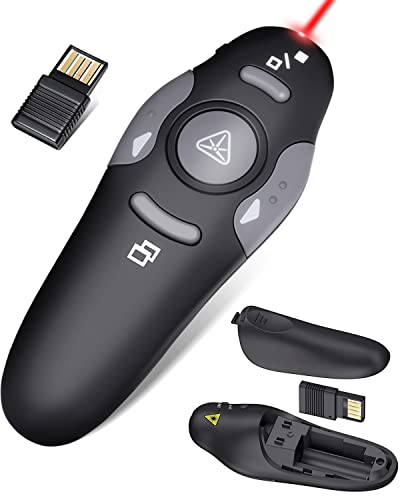
- ✓ Ergonomic and compact
- ✓ Easy plug-and-play
- ✓ Long range laser pointer
- ✕ Laser brightness can drain battery
- ✕ Basic button layout
| Connectivity | USB wireless dongle (no drivers required) |
| Operating Range | 98 ft / 30 m (control distance) |
| Laser Pointer Range | up to 328 ft / 100 m |
| Power Source | 1 x AAA battery (battery included); estimated runtime ~2 months |
| Compatibility | Windows (2003, XP, Vista, 7, 8, 10), Mac OS, Linux; supports Keynote, Google Slides, PowerPoint, Word, Excel, PDFs |
You’re mid-presentation, a room full of faces on the screen and a whispered countdown in your ear. You tap the compact CLIKBUTM PPT clicker from your pocket, and the laser slice through the slide like a pointer you actually trust.
The device feels slim in hand, with a dark gray button layout that doesn’t scream for attention yet delivers when you need it.
The USB dongle tucks neatly inside the battery compartment, a thoughtful touch I appreciate when you’re hopping between rooms. You don’t fuss with drivers—you plug, press connect, and you’re off to switch slides with a confident click.
It handles PowerPoint, Keynote, and Google Slides without drama, which is exactly what you want in a fast-paced talk.
Holding it, you notice the ergonomic curve fits your grip, reducing fatigue during longer sessions. The size is travel-friendly, weighing in at 38g with the battery, and it slips into a pocket or small bag without turning into clutter.
The laser pointer is bright enough to stand out in a mid-day conference hall, yet unobtrusive enough for classroom use.
In a pinch, you can rely on a solid wireless range—nearly 30 meters—so you’re not tethered to the podium. One AAA battery lasts roughly two months of normal use, which is a sweet balance between replacements and performance.
The simple on/off and connect button keeps setup quick, so you spend more time engaging, less time fiddling.
Pros: – Ergonomic and compact – Easy plug-and-play – Long range laser pointer
Cons: – Laser brightness can drain battery – Basic button layout
Presentation Clicker Case Storage, Wireless Presenter

- ✓ Easy setup, no software
- ✓ Ergonomic, tactile buttons
- ✓ Reliable 2.4GHz range
- ✕ Limited backlight visibility
- ✕ Case could be tighter
| Wireless Technology | 2.4 GHz wireless |
| Operating Range | up to 179 feet (54.6 meters) |
| Power Source | 2x AAA batteries (included) |
| Connectivity | Plug-and-play USB receiver |
| Compatible Software/Platforms | Windows, Mac OS, Linux, Android; Works with PowerPoint, Keynote, Prezi, Google Slides, etc. |
| Package Includes | 1 presentation remote with USB receiver, 2x AAA batteries, storage case, user manual |
You’ve probably heard that wireless clickers are all style and no substance. This one starts by debunking that myth with a pocketable case and a sturdy, tactile feel that actually makes sense in a live rush.
From the moment you grab the remote, you’ll notice the ergonomic grip and well-placed buttons. The forward/back and start/end controls give you confident, solid feedback with a satisfying click.
The included case storage slips into your bag without bulging, and the two AAA batteries are a nice bonus right out of the box.
Setup feels almost magical in its simplicity. Plug the small USB receiver into your Mac, press the power switch, and you’re connected—no software fuss required.
It’s a Plug and Play moment that actually works, even when you’re juggling notes and a glass of water during a pitch.
The 2.4GHz link delivers a reliable range that’s easy to rely on, whether you’re in a medium-sized meeting room or a bigger conference hall. The range, combined with the simple volume and slide controls, keeps you in the moment instead of fiddling with tech.
Compatibility is broad enough to cover your day-to-day needs. PowerPoint, Keynote, Google Slides, and more are all controllable from the clicker, with universal compatibility across Windows, Mac OS, Linux, and even Android.
It’s the kind of tool you reach for when you’re presenting to teammates, clients, or a small audience.
In short, this isn’t just a neat gadget. It’s a practical, ready-to-go companion for Mac presentations, designed to disappear into your workflow when you need it most.
Presentation Clicker for PowerPoint, Wireless Presenter

- ✓ Bright laser pointer
- ✓ Plug-and-play setup
- ✓ Comfortable grip
- ✕ Limited Bluetooth options
- ✕ Battery not rechargeable
| Connectivity and Range | Plug-and-play USB receiver, wireless control up to 98 ft (30 m) for slides, 328 ft (100 m) laser pointer range |
| Power and Battery | Uses two AAA batteries (included); on/off switch to conserve power |
| Compatibility and Software | Compatible with Windows 2003–10, Mac OS, Linux; supports Google Slides, MS Word, Excel, PowerPoint/PPT |
| Ergonomics and Build | Ergonomic grip with large buttons; weight 58 g; portable and lightweight design |
| Laser Pointer Specifications | Integrated laser pointer with up to 100 m range |
| Physical Features | USB receiver stores in the remote; compact wireless presenter suitable for travel |
You’re up front in the room, and the first thing you notice is how the laser pointer cuts through ambient light like a tiny beacon. As you lean away from the laptop, you can feel the clicker’s weight settle in your hand, the ergonomic grip making it easy to hold without fatigue.
Moments later, you press a big, confident button and your slide shifts with zero lag, the laser dot landing exactly where you want the audience to look.
What surprised me is how simple this is to set up. No drivers, no messy installs—just plug the USB receiver into your Mac or PC and you’re good to go.
The remote nests neatly in the handle when you’re not using it, so there’s no rattling dongle bouncing around in your bag. It’s light enough to pocket, but sturdy enough to survive a few throws into a briefcase.
In a real room, the range comes in handy. You’re able to roam the stage or classroom without chasing a corner of the room, and the laser pointer is bright enough to cut through brighter projectors.
The slide control buttons are generously sized, which means fewer accidental presses when you’re gesturing or pointing at a chart. I appreciated the on/off switch too—battery life feels longer than you’d expect from a device this affordable.
If you’re balancing a Mac, Windows, or Linux setup, the compatibility is reassuring. It handles Google Slides and PowerPoint alike, and you won’t get tangled in software quirks just to advance a slide.
The price point makes this a smart add-on for quick-room presentations, especially if you circulate and engage rather than crowd around a laptop.
Overall, it feels like you get a reliable, no-fruss setup you can rely on in the moment you need it most. It’s not flashy, but it’s dependable and comfortable for long sessions.
DinoFire USB Type C Wireless Presentation Clicker, BT&RF

- ✓ Quick BT/RF switch
- ✓ Dual USB-C/A connectors
- ✓ Long range performance
- ✕ Batteries not included
- ✕ No power button to wake from sleep
| Connectivity Modes | Bluetooth (BT) and RF 2.4 GHz dual modes with automatic sleep after 30 seconds inactivity |
| Wireless Range | Up to 164 ft (50 m) |
| Power/Battery Requirements | Requires 2 AAA batteries (not included) |
| USB Connectivity | Dual USB-A and USB-C connectors integrated for universal plug-and-play compatibility |
| Control Features | Page forward/backward, full screen/black screen, volume control, hyperlink activation, window switching |
| Receiver Storage | 2.4 GHz RF receiver stored in proximity to battery compartment for portability |
You catch a glimpse of the DinoFire clicker’s tiny red laser as you pull it from the box, and you think, “this is pocket-sized.” The moment you click the switch for RF and then back to Bluetooth, the quick mental test is over—this thing just works without fuss. It feels sturdy enough to survive a classroom sprint across the stage, yet light enough to forget you’re holding it.
The dual USB-A/USB-C dongle trick is cooler than you expect. You can hand it to a colleague with a different laptop and it just links up, no awkward dongle juggling or extra drivers.
The rubberized buttons are large and satisfyingly squishy, and you’ll notice the raised bumps that make it easy to click without looking down.
In practice, the built-in functions feel like a natural extension of your slides. You’ll flip pages, toggle full screen, and even blast a quick laser highlight when you need to call attention to a chart.
There’s volume control and window switching too, which is handy if you’re live-editing on the fly or need to pause for a quick audio cue.
Battery and sleep behavior are simple: no power button to fumble with, it sleeps after 30 seconds of inactivity and wakes with any button press. The 164-foot range is real, so you can roam the room to point out details or step away for a breath without losing control of the presentation.
One practical note: the receiver lives next to the battery compartment, a small design detail that keeps everything together when you’re packing up. Two AAA batteries aren’t included, so you’ll want to stock up.
Overall, if you’re searching for a budget-friendly, versatile presenter that plays nicely with Mac setups and large rooms, this DinoFire model earns its keep with real-world reliability and thoughtful touches.
What Is Remote Desktop and How Does It Function on Mac?
Remote Desktop is defined as a technology that allows a user to connect to and control a computer from a different location via a network connection. This functionality enables users to access their desktop environment, applications, and files on a remote machine as if they were physically present at that computer.
According to Microsoft, Remote Desktop services allow users to connect to a computer over the internet, enabling access to applications and data regardless of physical location (Microsoft, “Remote Desktop Services”). This is particularly useful for individuals or businesses that require flexibility in their work arrangements, such as remote employees or IT professionals managing multiple systems.
Key aspects of Remote Desktop technology include the use of protocols such as Remote Desktop Protocol (RDP), which is predominantly used by Microsoft systems, and Virtual Network Computing (VNC), which is platform-independent. On Mac, users can utilize various applications like Microsoft Remote Desktop, TeamViewer, and AnyDesk to establish these connections. These applications typically feature a graphical interface that displays the remote computer’s desktop, allowing users to operate it with their local mouse and keyboard. Security measures, such as encryption and multi-factor authentication, are also integral to protecting remote sessions.
This technology impacts a wide range of sectors by enhancing productivity and enabling seamless collaboration. For instance, businesses can maintain operational continuity during unforeseen events, such as natural disasters or pandemics, by allowing employees to work from home. Furthermore, remote desktop solutions are invaluable for IT support teams, enabling technicians to troubleshoot issues directly on users’ machines without needing to be physically present.
As of recent statistics, the global remote desktop software market is projected to grow significantly, with estimates suggesting it could reach nearly $5 billion by 2025 (Market Research Future). This growth underscores the increasing reliance on remote access solutions in the evolving digital workplace.
Benefits of using remote desktop solutions include cost savings from reduced office space needs, flexibility in work arrangements, and improved access to resources and applications. Best practices for effective use include ensuring strong password policies, keeping software updated to mitigate security vulnerabilities, and regularly reviewing access permissions to safeguard sensitive data.
What Features Are Essential in a Remote Desktop Application for Mac?
The essential features for a remote desktop application for Mac include:
- User-Friendly Interface: A clean and intuitive interface is crucial for users to navigate the application easily. This allows for efficient access to features and settings without overwhelming the user, ultimately enhancing the overall experience.
- High-Quality Graphics: The ability to transmit high-resolution graphics smoothly is important for tasks that require visual detail, such as graphic design or video editing. A good remote desktop application should minimize lag and maintain clarity during screen sharing, ensuring productivity is not compromised.
- Multi-Platform Support: Compatibility with various operating systems is essential, as users may need to connect to Windows, Linux, or other devices. A remote desktop application that supports multiple platforms ensures that users can access their work regardless of the device they are using.
- File Transfer Capabilities: Seamless file transfer between the local and remote machines is a key feature for efficient workflow. This allows users to easily send documents, images, and other files back and forth without needing additional tools, saving time and effort.
- Security Features: Strong security measures such as encryption, two-factor authentication, and secure connections are vital to protect sensitive data. A reliable remote desktop application should prioritize user privacy and data security to prevent unauthorized access and data breaches.
- Session Recording and Playback: The ability to record remote sessions can be beneficial for training, troubleshooting, or compliance purposes. This feature allows users to review their interactions and actions taken during the session, providing valuable insights for future reference.
- Multi-Monitor Support: For users who work with multiple monitors, the ability to view and manage several screens simultaneously is essential. A remote desktop application that supports multi-monitor setups enhances productivity by allowing users to switch between screens or view them all at once.
- Customization Options: Customizable settings for resolution, keyboard shortcuts, and display preferences allow users to tailor the application to their specific needs. This flexibility can significantly improve usability and efficiency, making the remote desktop experience more comfortable.
What Are the Leading Remote Desktop Applications Available for Mac Users?
The best remote desktop applications for Mac users offer a variety of features and capabilities suited for different needs.
- TeamViewer: A popular choice for remote access, TeamViewer is known for its user-friendly interface and robust security features.
- Microsoft Remote Desktop: This application allows Mac users to connect to Windows PCs seamlessly and is favored for its reliability and integration with Windows environments.
- AnyDesk: AnyDesk offers low latency and high-quality connections, making it ideal for real-time collaboration and remote support.
- Chrome Remote Desktop: As a browser-based solution, Chrome Remote Desktop is easy to set up and use, providing basic remote access without the need for additional software.
- LogMeIn: This application is feature-rich and includes tools for file transfer and remote printing, catering to professionals who need comprehensive remote access solutions.
TeamViewer stands out for personal and commercial use alike, allowing users to connect to various platforms with ease, making it an ideal choice for tech support and collaboration.
Microsoft Remote Desktop excels in environments where Windows PCs are prevalent, providing a smooth connection for Mac users to access their workstations remotely with minimal configuration.
AnyDesk is recognized for its speed and efficiency, utilizing a proprietary codec to minimize lag, which is particularly beneficial for tasks that require quick responses, such as graphic design and video editing.
Chrome Remote Desktop leverages the Google Chrome browser to facilitate remote connections, making it a convenient option for users who prefer simplicity and quick access without installing heavy software.
LogMeIn combines remote access with advanced features like file management and comprehensive security measures, making it a suitable solution for businesses that require secure and versatile access to their systems.
How Does TeamViewer Excel as a Remote Desktop Solution for Mac?
TeamViewer excels as a remote desktop solution for Mac due to its robust features, user-friendly interface, and high compatibility.
- Cross-Platform Compatibility: TeamViewer supports multiple operating systems including Windows, Linux, and mobile platforms, allowing Mac users to connect with devices running different software. This flexibility is crucial for users who often collaborate with friends or colleagues using various systems.
- Easy Installation and Setup: The installation process for TeamViewer on Mac is straightforward, requiring minimal technical knowledge. Users can quickly set up their accounts and begin remote sessions with just a few clicks, making it accessible for users of all skill levels.
- High-Quality Performance: TeamViewer provides a stable and high-quality connection, even with limited bandwidth. Its adaptive technology optimizes the connection quality based on network conditions, ensuring smooth performance, whether for simple file transfers or high-resolution screen sharing.
- Strong Security Features: TeamViewer employs end-to-end encryption and two-factor authentication, ensuring that remote sessions are secure. Users can trust that their data and privacy are protected, which is essential for both personal and professional use.
- File Transfer Capabilities: Users can easily transfer files between connected devices with drag-and-drop functionality. This feature simplifies the process of sharing documents or media during remote sessions, enhancing productivity and collaboration.
- Remote Support Features: TeamViewer’s remote support tools allow users to provide technical assistance or troubleshoot issues on a Mac from anywhere. This is particularly beneficial for IT professionals or anyone needing to support family and friends with technical difficulties.
- Multi-Session Support: TeamViewer allows users to manage multiple remote sessions simultaneously. This feature is advantageous for support teams or individuals who need to assist several users at once, streamlining the workflow and increasing efficiency.
- Customizable Interface: Users can personalize the TeamViewer interface to suit their preferences, which can improve usability during remote sessions. Customization options include adjusting the layout and choosing specific tools to enhance the user experience.
How Reliable Is Microsoft Remote Desktop for Mac Users?
Microsoft Remote Desktop is a popular choice among Mac users for accessing Windows machines remotely, but its reliability can vary based on several factors.
- Compatibility: Microsoft Remote Desktop is designed specifically for Mac users, providing a seamless experience when connecting to Windows systems.
- User Interface: The application offers a user-friendly interface that allows easy navigation and management of remote connections.
- Performance: Performance can vary based on network conditions, but generally, Microsoft Remote Desktop is known for stable connections and good responsiveness.
- Security: The app includes robust security features, including encryption, which helps protect sensitive data during remote sessions.
- Features: It supports multiple features such as clipboard sharing, file transfer, and customizable resolutions to enhance the remote desktop experience.
- Support and Documentation: Microsoft provides extensive support and documentation, making it easier for users to troubleshoot issues and optimize their setup.
Compatibility: Microsoft Remote Desktop is designed specifically for Mac users, providing a seamless experience when connecting to Windows systems. It supports various versions of Windows, ensuring that users can connect to almost any Windows environment without compatibility issues.
User Interface: The application offers a user-friendly interface that allows easy navigation and management of remote connections. Users can quickly add new connections, organize them into groups, and access frequently used connections with minimal clicks.
Performance: Performance can vary based on network conditions, but generally, Microsoft Remote Desktop is known for stable connections and good responsiveness. Users typically report a smooth experience, although latency can increase with slower internet connections.
Security: The app includes robust security features, including encryption, which helps protect sensitive data during remote sessions. This is particularly important for users accessing confidential information or working in regulated industries.
Features: It supports multiple features such as clipboard sharing, file transfer, and customizable resolutions to enhance the remote desktop experience. These features make it easier for users to work efficiently across different platforms without losing functionality.
Support and Documentation: Microsoft provides extensive support and documentation, making it easier for users to troubleshoot issues and optimize their setup. The availability of online resources and community forums further enhances user confidence in resolving any challenges they may encounter.
What Unique Advantages Does Splashtop Offer Mac Users?
Splashtop offers several unique advantages for Mac users looking for the best remote desktop solution.
- High Performance and Low Latency: Splashtop is designed to deliver fast and responsive connections, ensuring that users experience minimal lag when accessing their Mac remotely. This performance is especially beneficial for tasks that require real-time interaction, such as video editing or gaming.
- Cross-Platform Compatibility: Splashtop supports a wide range of devices and operating systems, allowing Mac users to connect not only to their Macs but also to Windows PCs, tablets, and mobile devices seamlessly. This flexibility makes it easier for users to access their files and applications from virtually anywhere.
- Robust Security Features: Splashtop employs advanced security protocols, including TLS and 256-bit AES encryption, to protect user data during remote sessions. Additionally, it offers features like two-factor authentication, ensuring that only authorized users can gain access to the Mac.
- User-Friendly Interface: The interface of Splashtop is intuitive and easy to navigate, making it accessible even for those who may not be tech-savvy. This simplicity helps streamline the remote access experience, allowing users to connect quickly without extensive configuration.
- File Transfer Capabilities: Splashtop enables users to easily transfer files between their local devices and their remote Macs. This feature simplifies workflows, allowing users to work on projects from different locations without the hassle of email or cloud services.
- Multi-Monitor Support: For Mac users who utilize multiple monitors, Splashtop offers support for accessing and managing multiple displays remotely. This feature enhances productivity by allowing users to see their entire workspace, just as they would when sitting in front of their Mac.
- Affordable Pricing Options: Splashtop is competitively priced, offering various subscription plans that cater to different user needs, from individual users to businesses. This affordability makes it an attractive option for Mac users looking for quality remote desktop software without breaking the bank.
What Challenges Do Mac Users Encounter with Remote Desktop Applications?
Mac users often encounter several challenges when using remote desktop applications.
- Compatibility Issues: Many remote desktop applications are primarily designed for Windows, which can lead to compatibility issues on macOS. Users might find that certain features are not available or function incorrectly, limiting their productivity.
- User Interface Differences: Remote desktop applications may have user interfaces that differ significantly between macOS and Windows. This inconsistency can cause confusion for Mac users who are accustomed to the Mac ecosystem, making navigation and usage less intuitive.
- Performance Limitations: Some remote desktop solutions may not perform optimally on Mac, leading to lagging or slower response times. This can be particularly frustrating for users who require real-time interaction, such as in graphic design or video editing tasks.
- Security Concerns: While many remote desktop applications offer secure connections, Mac users may still face security challenges. They need to ensure that the software they choose complies with the latest security protocols to protect sensitive data from potential vulnerabilities.
- Support and Resources: Finding adequate support for remote desktop applications on macOS can be difficult. Many resources and troubleshooting guides are tailored for Windows users, leaving Mac users with fewer options for resolving issues.
How Can You Enhance Your Remote Desktop Experience on Mac?
To enhance your remote desktop experience on Mac, consider the following tools and practices:
- Microsoft Remote Desktop: This app allows Mac users to connect to Windows PCs seamlessly, offering a user-friendly interface and excellent performance.
- TeamViewer: Known for its ease of use, TeamViewer provides remote access and support capabilities, making it a great choice for quick connections and troubleshooting.
- AnyDesk: This lightweight remote desktop software ensures fast connectivity with low latency, making it suitable for tasks that require real-time collaboration.
- Splashtop: With a focus on high-quality streaming and remote access, Splashtop is perfect for users needing to access multimedia applications remotely.
- VPN Configuration: Setting up a Virtual Private Network can enhance security and performance by encrypting your connection and allowing access to resources on a private network.
- Dual Monitor Support: Utilizing multiple monitors can significantly improve productivity by allowing you to manage multiple applications or sessions side by side.
- Keyboard Shortcuts: Familiarizing yourself with keyboard shortcuts specific to your remote desktop software can streamline your workflow and reduce time spent navigating menus.
- Adjusting Display Settings: Modifying display settings such as resolution and color depth can enhance clarity and responsiveness, leading to a smoother experience.
Microsoft Remote Desktop is particularly beneficial as it directly integrates with Windows environments, allowing you to access files and applications as if you were physically at your Windows machine. The app supports multiple connections and has features like the ability to save your connection details for easy access.
TeamViewer excels in remote support scenarios, where users can share their screen with someone else for assistance. Its cross-platform capabilities mean you can connect from Mac to virtually any other operating system, making it versatile for various users.
AnyDesk stands out due to its low latency and high frame rates, which are crucial for tasks like video editing or gaming remotely. Its simplicity and lightweight installation make it a favorite among users who prioritize speed and efficiency.
Splashtop’s high-quality audio and video streaming make it ideal for users who need to run resource-intensive applications remotely, such as design software or multimedia editing tools. It also includes features for file transfer and remote printing, enhancing its utility.
Using a VPN not only secures your connection when accessing remote desktops but can also improve performance by providing a stable and fast connection to your resources. This is particularly useful if you are working with sensitive information.
Dual monitor support enables users to extend their workspace, making it easier to multitask and manage multiple applications effectively. This layout can be especially advantageous for professionals who rely on comparative analysis or simultaneous data entry.
Mastering keyboard shortcuts can significantly reduce the time spent navigating remote desktop interfaces, allowing for a more efficient workflow. Each remote desktop application typically has its own set of shortcuts that can enhance user interaction.
Lastly, adjusting display settings such as resolution can alleviate issues with screen clarity and responsiveness, ensuring a more comfortable viewing experience. Finding the optimal settings tailored to your specific needs can make a significant difference in usability.
Related Post: