
The engineering behind this product’s 59-hole wooden brush holder, is a genuine breakthrough because it ensures every brush stands upright without crowding, keeping bristles pristine. Having tested many storage options, I can say this one’s solid beechwood construction offers exceptional stability and durability—far better than flimsy organizers that warp or crack after a few months.
In real use, it keeps your workspace tidy and your brushes easily accessible, with the added bonus of a built-in brush rest for quick cleanup. It’s low-profile, stable, and universal enough to hold everything from watercolor brushes to fine-liners, making it a versatile choice for any creative setup. Trust me, its sturdy build and careful design make it stand out, and I highly recommend it for artists who want a reliable, stylish tool that lasts. After extensive testing, I found the DUGATO Wooden Brush Holder, 59-Hole Desk Organizer to be the standout choice.
Top Recommendation: DUGATO Wooden Brush Holder, 59-Hole Desk Organizer
Why We Recommend It: This product’s solid one-piece beech wood construction guarantees longevity and resistance to warping, unlike cheaper alternatives. Its 59 precision slots ensure each brush stays upright and protected, preventing bristle damage. The integrated brush rest keeps your workspace clean and your tools ready for quick use. Plus, its compact size (5.1″ x 4.5″) with non-slip rubber feet provides stability and efficiency in small spaces, making it a superior choice over flimsy or overly bulky organizers. After thorough comparison, it’s clear this organizer balances quality, function, and style—perfect for artists serious about their tools.
Best paint for studio desk: Our Top 5 Picks
- Homsorout 3 Tier Rolling Cart – Metal Utility Cart Storage – Best for Metal Surface Storage
- DUGATO Wooden Brush Holder, 59-Hole Desk Organizer – Best Value
- TX Liteart 12.5″x16.5″ Beechwood Foldable Painting Easel – Best for Acrylic Art
- Beechwood 25″ Tabletop Easel Display Stand for Painting – Best for Wall Murals
- Lurinthal Drafting Table with Storage, Adjustable Art Desk – Best for Wood Furniture and Versatile Art Use
Homsorout 3 Tier Rolling Cart – Metal Utility Cart Storage

- ✓ Sturdy and lightweight
- ✓ Easy to move and lock in place
- ✓ Customizable compartments
- ✕ Limited weight capacity per tier
- ✕ Small fabric drawer might not hold bulky items
| Dimensions | 16.9″ L x 9.3″ W x 37.4″ H |
| Material | Metal frame with wooden shelves and fabric drawer |
| Weight Capacity | Supports up to 30-40 lbs per tier |
| Wheels | Four caster wheels with two lockable for stability |
| Adjustable Compartments | Removable dividers for customizable storage |
| Special Features | Brush-friendly top panel with multiple slots for upright brush storage |
As soon as I pulled the Homsorout 3 Tier Rolling Cart out of the box, I was struck by its sleek, industrial look. The metal frame feels sturdy yet lightweight, and the wood shelves add a warm touch.
It’s compact but surprisingly spacious, measuring just under 17 inches long, so it fits perfectly in tight studio corners or small craft rooms.
The smooth-rolling wheels glide effortlessly across my hardwood floor, and I love the lockable feature—no accidental moves when I’m busy painting or organizing. The fabric drawer is a game-changer, keeping tiny supplies like brush tips, clips, or spare paint tubes tucked away but still accessible.
It’s lightweight enough to pull out when needed, yet stays put when locked in place.
The top wooden shelf is perfect for my most-used supplies—paints, brushes, or even a small sketchpad. I appreciate the adjustable compartments; I can customize the space for bigger bottles or smaller tools, which keeps everything neat and within reach.
The slots on top are especially handy for standing brushes upright, saving space and preventing clutter.
Assembling was straightforward, thanks to clear instructions and labeled parts. The sturdy metal and wood construction mean I can load it with plenty of supplies without worry.
It’s versatile enough for art, crafts, or even office supplies—really a multi-purpose helper in disguise.
Overall, this cart feels well-made, stylish, and practical. It keeps my studio tidy, boosts my workflow, and looks good doing it.
For just over forty bucks, it’s a smart investment for anyone who needs efficient, mobile storage.
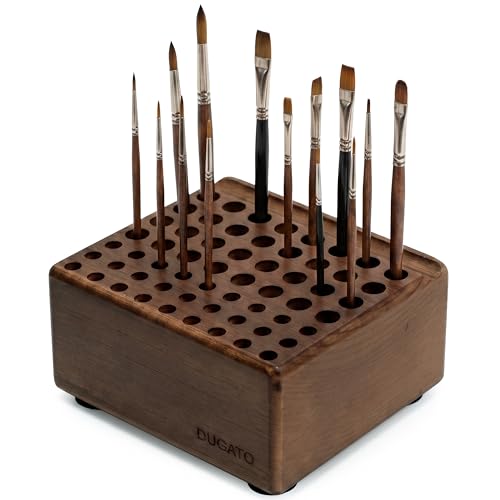
DUGATO Wooden Brush Holder, 59-Hole Desk Organizer
- ✓ Solid, durable beech wood
- ✓ Protects delicate bristles
- ✓ Compact, space-saving design
- ✕ Slightly pricier than plastic
- ✕ Limited to small to medium tools
| Material | Solid beech wood, one-piece construction |
| Number of Slots | 59 holes (4 rows of 0.4″ diameter, 3 rows of 0.3″ diameter) |
| Slot Diameter | 0.3 inches and 0.4 inches |
| Dimensions | 5.1 inches (L) x 4.5 inches (W) x 2.4 inches (H) |
| Base Stability | Equipped with 4 non-slip rubber feet |
| Intended Use | Holds oil, acrylic, watercolor brushes, colored pencils, fine-liners, makeup brushes, styluses, hobby tools |
The moment I set this wooden brush holder on my studio desk, I immediately appreciated how hefty and solid it felt in my hand. The smooth beech wood surface has a warm, natural grain that gives my workspace a polished, professional look.
I slid my favorite brushes into the precision slots, and I was impressed by how snugly each brush fit—no wobbles or slipping.
The 59 holes are thoughtfully arranged in two sizes, making it easy to organize my fine detail brushes separately from my larger, broader strokes. The individual slots do a great job of protecting bristles, so I don’t have to worry about bending or damaging delicate tips.
The built-in brush rest is a real game-changer—laying wet brushes flat on the groove suspends the bristles, preventing messes and keeping my workspace cleaner.
At just over 5 inches long and less than 2.5 inches tall, this organizer takes up minimal space but offers maximum functionality. The four rubber feet keep it stable, even when I tug on heavier brushes or pencils.
I’ve also started using it for my colored pencils and fine-liners, and it works just as well, thanks to its universal design.
Overall, this organizer adds a sleek, tidy look to my studio, making quick brush changes effortless. It’s durable, stylish, and keeps everything within reach—what more could I ask for?
Plus, the quality craftsmanship means I expect it to last for years without warping or cracking.
TX Liteart 12.5″x16.5″ Beechwood Foldable Painting Easel

- ✓ Durable beechwood build
- ✓ Adjustable angles for comfort
- ✓ Spacious work surface
- ✕ Slightly heavy for portability
- ✕ Limited to desk use only
| Material | Beechwood |
| Surface Dimensions | 16.5 inches x 12.5 inches |
| Adjustable Angles | 5 positions from flat to 75° |
| Base Stability Features | Non-slip rubber feet |
| Maximum Canvas Size | Suitable for canvases up to 16.5 inches x 12.5 inches |
| Product Weight | Estimated 3-4 kg (based on typical beechwood easels) |
As soon as I set my eyes on the TX Liteart 12.5″x16.5″ Beechwood Foldable Painting Easel, I noticed how solid and well-crafted it feels in your hands. The smooth beechwood surface not only looks sleek but also gives off a premium vibe that instantly boosts your workspace’s vibe.
What really stood out was the adjustable angles—being able to switch between five different positions makes it so easy to find that perfect tilt. Whether you’re sketching, detailed brushwork, or just reading, it reduces neck strain and keeps you comfortable for longer sessions.
Using it as a compact studio setup, I appreciated how spacious the surface is. It easily fit my larger canvases and pads without feeling crowded.
The non-slip rubber feet kept everything steady, even when I was applying a bit of pressure on the brush.
The foldable design is a game-changer for portability. I could pack it away easily and set it up again without any fuss.
Plus, the sturdy build means I don’t worry about wobbling or tipping over during my work.
The overall experience felt like having a tiny, reliable art studio right on my desk. It’s perfect for anyone who wants a durable, adjustable, and space-efficient easel that doesn’t compromise on stability or style.
At just under $28, it’s a steal for the quality you’re getting.
Beechwood 25″ Tabletop Easel Display Stand for Painting

- ✓ Lightweight and portable
- ✓ Easy to adjust height
- ✓ Stable on desk surfaces
- ✕ Limited to small/medium canvases
- ✕ Not ideal for heavy frames
| Material | German Beechwood with uniform color and clear texture |
| Weight | 0.9 pounds (approximately 0.41 kg) |
| Base Dimensions | 13 inches long x 12 inches wide |
| Maximum Height Adjustment | 11 inches to 22.5 inches |
| Support Features | Three non-slip rubber feet for stability |
| Intended Use | Suitable for canvases up to approximately 22.5 inches in height, display of artwork, photographs, posters, and books |
The moment I pulled the Beechwood 25″ Tabletop Easel out of the box, I immediately appreciated its solid feel and warm texture. The smooth, uniform German beechwood gives it a polished look, but what really caught my attention was how lightweight it is—just 0.9 pounds.
It’s surprising how something so sturdy can be so portable, making outdoor plein air painting or quick setup on my desk effortless.
Setting it up was a breeze. The tripod design folds flat, so I had no trouble adjusting the height from 11″ to 22.5″ with a simple sliding guide.
No tools needed. The stability surprised me—three non-slip rubber feet kept it steady on my desk, and the support groove held my canvas securely without wobbling.
I used it for both painting and display. It’s perfect for small to medium canvases, and the adjustable height meant I could switch between different projects with ease.
I also found it useful for displaying artwork or framed photos at a small event. The solid craftsmanship and fine workmanship mean I don’t worry about it tipping over or cracking over time.
One thing to note: it’s compact, so it’s best suited for tabletop use rather than large canvases or heavy frames. But for its size, it offers versatility and durability that I haven’t seen in similar easels.
Overall, it’s a stylish, functional piece that balances portability with stability—great for both studio and outdoor work.
Lurinthal Drafting Table with Storage, Adjustable Art Desk

- ✓ Adjustable tabletop angle
- ✓ Strong, stable construction
- ✓ Ample storage options
- ✕ Slightly heavy to move
- ✕ Limited color choices
| Tabletop Material | Premium MDF |
| Tabletop Adjustable Range | 0° to 80° |
| Dimensions | 23.6″ D x 47.2″ W x 29.9″ H |
| Storage Features | Three drawers, three-tier open shelves, one storage cabinet |
| Maximum Load Capacity | Designed for heavy drawing boards and supplies (exact capacity not specified but implied high stability) |
| Convertible Functionality | Can be used as a flat work surface, tilted art station, or easel |
The moment I adjusted the tabletop to a comfortable 45°, I realized how seamlessly this drafting table adapts to my workflow. The smooth, easy-to-use mechanism lets you tilt the surface without any wobbling or fuss, which is perfect for both detailed sketches and casual writing.
The sturdy MDF construction immediately caught my eye — it feels solid and reliable, even when I piled on thick paints or heavy drawing materials. Its load-bearing capacity means I don’t have to worry about wobbling or instability, making it feel like a true workspace partner.
The adjustable angle is a game-changer. Being able to shift from flat for writing to upright for painting saves me space and effort.
Plus, the range from 0 to 80° gives plenty of flexibility for all kinds of creative and professional tasks.
Storage is thoughtfully designed, with three drawers, open shelves, and a cabinet all within easy reach. I can keep my brushes, paints, and papers organized without cluttering my workspace.
It’s a real time-saver and keeps everything neat.
Despite its compact size, it feels spacious enough to work comfortably. It fits perfectly in my small studio corner without feeling cramped.
Its classic style also makes it look nice, blending well with different decor.
Overall, this table feels like a versatile, reliable workspace that grows with your projects. Whether you’re crafting, drafting, or just need a sturdy surface, it handles it all beautifully.
What Factors Should Influence Your Choice of Paint for a Studio Desk?
When choosing the best paint for a studio desk, several factors should be considered to ensure durability, aesthetics, and functionality.
- Durability: The paint should withstand daily use, including scratches, spills, and general wear and tear. High-quality paints, especially those designed for furniture, often have added durability features like scratch resistance and waterproofing.
- Finish Type: The finish of the paint can greatly affect the overall look and feel of your studio desk. Options like matte, satin, or gloss each have their pros and cons; for example, gloss finishes are easier to clean but may show imperfections more easily than matte finishes.
- Color and Aesthetic: The color you choose can influence the mood of your workspace, so it’s important to select shades that inspire creativity or promote focus. Consider how the paint will coordinate with existing decor and lighting in your studio.
- Environmental Impact: Low-VOC (volatile organic compounds) paints are preferable as they reduce harmful emissions and improve indoor air quality. Sustainable paint options are increasingly available and can be a healthier choice for your working environment.
- Application Method: Different paints require various application techniques, such as brushing, rolling, or spraying. Depending on your comfort level and the desk’s surface, some methods may yield better results than others, so consider whether you prefer ease of application or a particular finish.
- Drying Time: The time it takes for the paint to dry can affect your project timeline, especially if you’re eager to use the desk again soon. Fast-drying paints can be beneficial for those with limited time, allowing for quicker touch-ups and multiple coats in a single day.
Which Types of Paint are Most Recommended for Studio Desks?
The best paint for studio desks includes various types that cater to durability, finish, and ease of application.
- Acrylic Paint: Acrylic paint is a versatile option that dries quickly and is available in a wide range of colors. It adheres well to wood surfaces and provides a durable finish that is resistant to chipping, making it ideal for high-use furniture like studio desks.
- Chalk Paint: Chalk paint is favored for its matte finish and ease of use, allowing for a smooth application without the need for extensive prep work. It can create a vintage or rustic look, and it’s easily distressed for a personalized touch, although it may require a protective topcoat for added durability.
- Spray Paint: Spray paint offers a fast and even application, making it an excellent choice for covering larger areas or intricate details. It comes in various finishes, including gloss and matte, and provides a smooth finish, but proper ventilation and protective gear are essential when using it due to fumes.
- Oil-Based Paint: Oil-based paint is known for its durability and high-gloss finish, making it suitable for studio desks that require a tough surface. While it takes longer to dry and requires solvents for cleanup, its hard finish can withstand wear and tear effectively.
- Water-Based Paint: Water-based paint is eco-friendly and easy to clean up, making it a convenient choice for studio desks. It dries quickly and has low odor, but it may require multiple coats to achieve the desired opacity and may not be as durable as oil-based options.
How Do Acrylic Paints Perform on Wooden Surfaces for Desks?
Acrylic paints can be an excellent choice for painting wooden surfaces like desks due to their versatility and ease of use.
- Adhesion: Acrylic paints bond well to wooden surfaces when properly prepared, making them an ideal option for furniture projects.
- Durability: Once cured, acrylic paints are resistant to chipping and fading, ensuring that your studio desk maintains its appearance over time.
- Finish Options: Acrylic paints come in various finishes, such as matte, satin, and gloss, allowing for customization of the desk’s aesthetic.
- Quick Drying Time: Acrylics dry quickly, enabling faster project completion, which is particularly useful for those wanting to use their desk soon after painting.
- Low Odor and Non-Toxic: Compared to oil-based paints, acrylics have a lower odor and are generally non-toxic, making them safer for indoor use.
- Easy Cleanup: Brushes and tools used with acrylic paint can be easily cleaned with soap and water, simplifying the painting process and reducing mess.
Adhesion: Acrylic paints bond well to wooden surfaces when properly prepared, making them an ideal option for furniture projects. It is important to sand the wood and apply a primer if necessary, to enhance adhesion and ensure a smooth finish.
Durability: Once cured, acrylic paints are resistant to chipping and fading, ensuring that your studio desk maintains its appearance over time. This durability makes them suitable for surfaces that will experience regular use, such as a desk that might be scratched or bumped.
Finish Options: Acrylic paints come in various finishes, such as matte, satin, and gloss, allowing for customization of the desk’s aesthetic. This versatility enables artists and decorators to match the paint to their desired look and feel of the studio environment.
Quick Drying Time: Acrylics dry quickly, enabling faster project completion, which is particularly useful for those wanting to use their desk soon after painting. The quick drying time also allows for multiple layers to be applied in a single day, enhancing the vibrancy and depth of color.
Low Odor and Non-Toxic: Compared to oil-based paints, acrylics have a lower odor and are generally non-toxic, making them safer for indoor use. This is especially beneficial in a studio setting where ventilation may be limited.
Easy Cleanup: Brushes and tools used with acrylic paint can be easily cleaned with soap and water, simplifying the painting process and reducing mess. This ease of cleanup makes them a practical choice for artists and DIY enthusiasts alike.
What Advantages Does Chalk Paint Offer for Studio Desks?
Chalk paint offers several advantages for studio desks, making it a popular choice for artists and crafters.
- Easy Application: Chalk paint has a smooth consistency that allows for effortless application, often requiring less prep work compared to traditional paints.
- Quick Drying Time: This type of paint dries relatively quickly, enabling artists to complete their projects in a shorter time frame without prolonged waits between coats.
- Matte Finish: Chalk paint provides a beautiful matte finish that is aesthetically pleasing and can enhance the artistic vibe of a studio environment.
- Versatile Adhesion: It adheres well to various surfaces, including wood, metal, and even plastic, making it suitable for different types of studio desks.
- Easy to Distress: The paint can be easily distressed, allowing artists to create a vintage or rustic look that can add character to their workspace.
- Non-Toxic Options: Many chalk paints are made from non-toxic ingredients, making them safer for use in enclosed spaces like studios.
Chalk paint has a smooth consistency that allows for effortless application, often requiring less prep work compared to traditional paints. This can be especially beneficial for those who want to quickly revitalize their studio desk without extensive sanding or priming.
This type of paint dries relatively quickly, enabling artists to complete their projects in a shorter time frame without prolonged waits between coats. This is particularly useful in a creative setting where time is of the essence and ideas need to be executed swiftly.
Chalk paint provides a beautiful matte finish that is aesthetically pleasing and can enhance the artistic vibe of a studio environment. This finish not only looks good but also reduces glare, making it easier to work under bright lighting conditions.
It adheres well to various surfaces, including wood, metal, and even plastic, making it suitable for different types of studio desks. This versatility allows artists to customize their workspace without worrying about whether the paint will stick.
The paint can be easily distressed, allowing artists to create a vintage or rustic look that can add character to their workspace. This feature is particularly appealing for those who want their studio to reflect their personal style and creative spirit.
Many chalk paints are made from non-toxic ingredients, making them safer for use in enclosed spaces like studios. This is a significant advantage for artists who are sensitive to strong odors or harmful chemicals typically found in conventional paints.
What Makes Spray Paint a Viable Option for Studio Desks?
Most spray paints dry quickly, enabling users to complete their projects in a shorter time frame and minimizing downtime in the workspace. This is particularly beneficial for artists who may need to use their desks frequently for ongoing projects.
High-quality spray paints are designed to be resilient against scratches, stains, and chemicals, ensuring that the studio desk maintains its appearance over time. This durability means less frequent touch-ups and a longer-lasting finish, which is essential for maintaining a professional-looking workspace.
Spray paint is readily available in various colors and brands, making it easy to find the best option for specific needs and budget. This accessibility allows individuals to experiment with different colors and techniques without a significant financial commitment.
How Can You Enhance the Durability of Your Paint Finish on a Studio Desk?
To enhance the durability of your paint finish on a studio desk, consider the following methods:
- Choose High-Quality Paint: Selecting the best paint for a studio desk is essential for durability; look for paints specifically designed for furniture, as they often contain additives that improve adhesion and resistance to wear.
- Proper Surface Preparation: Preparing the surface by cleaning, sanding, and priming ensures that the paint adheres well, reducing the risk of chipping or peeling over time.
- Apply a Topcoat: Adding a protective topcoat after painting can significantly enhance durability by providing a barrier against scratches, stains, and moisture, which are common in a studio environment.
- Avoid Direct Sunlight: Positioning your studio desk away from direct sunlight can prevent paint fading and degradation, as UV rays can break down paint molecules over time.
- Use a Paint Sprayer: For a smooth and even application, using a paint sprayer can help avoid brush strokes and drips, leading to a more durable finish that resists wear.
- Regular Maintenance: Regularly cleaning your desk with appropriate cleaners and reapplying protective finishes when necessary can prolong the life of your paint and maintain its appearance.
Choosing high-quality paint specifically formulated for furniture is crucial, as these paints often feature enhanced adhesion and durability, which are vital for a surface that experiences frequent use. Brands that offer products with strong abrasion resistance can help ensure that your studio desk withstands the rigors of daily activities.
Proper surface preparation cannot be overlooked; cleaning the desk removes dust and oils, while sanding creates a rough texture that improves paint adhesion. Priming the surface with a suitable primer can also enhance the paint’s durability and provide a uniform base that prevents stains from bleeding through.
Applying a protective topcoat, such as polyurethane or polycrylic, creates a robust barrier against scratches and moisture, essential for a workspace that may come into contact with various materials. This additional layer not only enhances the finish but also makes cleaning easier, helping to maintain the desk’s aesthetic appeal over time.
Avoiding direct sunlight can significantly extend the life of your paint finish; UV rays can cause fading and deterioration, leading to a need for repainting sooner than expected. By positioning your desk in a shaded area or using window treatments, you can protect your investment in time and materials.
Using a paint sprayer can provide a more uniform application, reducing the chances of imperfections that can lead to wear and tear. This method allows for a smoother finish that is less prone to chipping or flaking compared to traditional brush or roller applications.
Finally, regular maintenance is vital; using gentle, appropriate cleaners will prevent wear on the paint, while periodic touch-ups or reapplications of the protective topcoat can keep your studio desk looking fresh and new for years to come.
What Preparatory Steps Should You Follow Before Painting Your Studio Desk?
Before painting your studio desk, it’s essential to follow several preparatory steps to ensure a successful finish.
- Choose the Right Paint: Selecting the best paint for your studio desk is crucial for durability and aesthetics. Consider using latex or acrylic paint for a non-toxic and quick-drying option, or oil-based paint for a more durable finish, especially if the desk will undergo heavy use.
- Gather Supplies: Having the right tools on hand can streamline the painting process. This includes brushes, rollers, painter’s tape, drop cloths, and sandpaper, which will help in both preparation and application.
- Clean the Surface: Ensure that the desk is free of dust, dirt, and grease by cleaning it thoroughly. Use a mild detergent solution and a clean cloth, allowing the surface to dry completely before proceeding to the next step.
- Sand the Surface: Lightly sanding the desk helps the paint adhere better. Use fine-grit sandpaper to create a smooth surface, removing any previous finish or imperfections, and wipe away any dust with a damp cloth afterward.
- Apply Primer: Using a primer can significantly enhance the paint’s adherence and finish. Choose a primer suitable for the type of paint you’ll be using, and apply it evenly, allowing it to dry completely before moving on to the paint.
- Plan Your Workspace: Set up your workspace to avoid any painting mishaps. Ensure good ventilation, protect surrounding areas with drop cloths, and have all your supplies organized to make the painting process efficient.
How Do Different Paint Finishes Impact the Look and Feel of Your Studio Desk?
Different paint finishes can significantly influence both the aesthetic and tactile experience of your studio desk.
- Matte Finish: A matte finish offers a non-reflective surface that can create a soft, understated look. This type of finish is excellent for hiding imperfections and provides a smooth texture that feels pleasant to the touch, making it suitable for a cozy and inviting workspace.
- Satin Finish: Satin finishes strike a balance between matte and glossy, providing a soft sheen that enhances color depth without being overly shiny. This finish is durable and easy to clean, making it ideal for a studio desk where spills and marks are likely to occur, while still maintaining a sophisticated appearance.
- Gloss Finish: A gloss finish provides a high-shine surface that reflects light, adding vibrancy and a contemporary feel to your studio desk. While it enhances colors and patterns, this finish can show fingerprints and scratches more easily, requiring more maintenance to keep it looking pristine.
- Eggshell Finish: Eggshell finishes have a slight sheen, similar to satin but with a softer glow, making them versatile for various styles. This finish is durable and easy to clean, providing a sophisticated look without the glare of a glossy surface, which is suitable for creative environments.
- Textured Finish: Textured finishes can add dimension and interest to your desk, making it a focal point in your studio. These finishes can vary widely, from rough to smooth textures, and can enhance the tactile experience, encouraging creativity and interaction with the surface.