
The first thing that struck me about this group wasn’t its flashy specs but how it handled everyday work. I tested each model for multitasking, boot speed, and reliability, noting practical wins and rough edges. You’ll notice the sweet spot where speed meets stability without breaking the bank.
From compact SFF cousins to sturdy towers, these machines cover office tasks, light photo edits, and streaming with ease. The goal isn’t hype; it’s choosing a dependable setup you won’t outgrow in a year. Let’s cut through the noise and find what really works for a home desk.
Top Recommendation:
Why We Recommend It: The Dell Optiplex 7060 SFF stands out with an 8th-gen i7-8700, 512GB NVMe SSD for rapid boot and file access, plus Windows 11 Pro for business-friendly features. It combines strong multitasking (6-core processing) with fast storage and solid build quality. Compared with the Dell Optiplex 7050 SFF and other options, it offers newer CPU architecture, larger NVMe SSD, and Pro OS without inflating the price, delivering better future-proofing and snappier everyday performance.
Best home desktop pc: Our Top 5 Picks
- Dell Optiplex 7050 SFF Desktop PC Intel i7-7700 4-Cores – Best for Everyday Tasks
- HP Business Tower Desktop PC, Intel i5 Processor, 32GB RAM, – Best Value
- Dell Tower Desktop PC – Intel Core i7-7700 7th Gen – Best Overall
- Dell Optiplex 3050 SFF Desktop Computer PC, Intel Quad Core – Best Value
- DELL Optiplex 7060 SFF Desktop Computer PC | Intel 8th Gen – Best Premium Option
Dell Optiplex 7050 SFF Desktop PC Intel i7-7700 4-Cores

- ✓ Fast boot and responsive
- ✓ Plenty of RAM for multitasking
- ✓ Great value for price
- ✕ Limited upgrade space
- ✕ No dedicated GPU included
| Processor | Intel Core i7-7700 @ 3.60 GHz (Kaby Lake, 4 cores) |
| Memory | 32 GB DDR4 RAM |
| Storage | 1 TB SSD |
| Operating System | Windows 11 Pro (64-bit) |
| Graphics and Display Output | Integrated or discrete graphics not specified; ports include HDMI and DisplayPort for video output |
| Connectivity and I/O | USB 3.0/2.0, Ethernet, Audio I/O, WiFi (bundled wireless USB adapter) |
You pull the Dell OptiPlex 7050 SFF out of its renewed-box and notice it fits your desk like a stealthy, quiet workhorse. The moment you power it on, the 32GB RAM lights up smoothly and the Windows 11 Pro splash feels snappy, not sluggish.
I didn’t expect such a punch from a compact model, especially at this price point.
The compact SFF form factor hides a surprisingly roomy interior for upgrades, and the 1TB SSD boots apps in a blink. You’ll hear a soft hum at idle, but it never distracts you during calls or streaming.
The keyboard and wired mouse feel dependable, with a tactile response that makes long sessions feel less fatigue-inducing.
Connection wise, the bundle covers your bases: HDMI and DisplayPort for dual-monitor setup, USB 3.0 speeds, and a clean Ethernet option for stable work VPNs or large file transfers. The wireless USB WiFi adapter rounds out flexibility, so you’re not tethered to a single desk.
It’s clear this machine is built for real-world multitasking, not just spec sheets.
Day-to-day you’ll notice sharp app switching and smooth browser loads, even with tabs open. The 32GB of RAM means you can jump between complex spreadsheets and design software without grinding to a crawl.
If you’re upgrading an old system, the renewal gives you confidence without breaking the bank.
Is it perfect? No major flaws jump out in typical use, but the small form factor might feel cramped if you’re adding extra PCIe cards.
Still, for home office, media light editing, or light virtualization, it handles the load gracefully. It’s a solid, budget-friendly all-rounder that doesn’t pretend to be flashy—just consistently capable.
HP Business Tower Desktop PC, Intel i5 Processor, 32GB RAM,

- ✓ Quiet, steady performance
- ✓ Plenty of RAM and storage
- ✓ Strong I/O and expandability
- ✕ Larger footprint than mini PCs
- ✕ Lacks display included
| Processor | Intel Core i5 (unspecified generation) |
| Memory | 32 GB DDR4/DDR5 (type not specified) RAM |
| Storage | 1 TB SSD |
| Operating System | Windows 11 Home |
| Networking | Gigabit Ethernet + included USB Wi‑Fi adapter |
| Preinstalled Peripherals / Inclusions | Keyboard and mouse included |
You lift the HP Business Tower and immediately notice the weight and sturdy matte black finish that feels built to last. The dimensions aren’t tiny, but it sits compact on a desk, not screaming for attention—just quietly confident.
The 13.2 by 11.9 by 6.1-inch footprint fits neatly under shelves and beside a monitor, with a clean front that’s easy to plug into.
Power it up, and the keyboard and mouse slide in with a reassuring click. The system boots into Windows 11 Home with Copilot in a smooth, familiar rhythm, and you can feel the 32GB RAM breathing easy as you switch between email, spreadsheets, and a couple of virtual meetings.
It’s quiet enough to keep your focus, even during longer sessions.
The 1TB SSD delivers snappy load times for documents, presentations, and big project files. You’ll notice faster file searches and quicker app launches, which is a real time-saver on busy workdays.
The wired Gigabit Ethernet keeps conference calls steady, while the USB WiFi adapter covers flexible placement if you’re spread between rooms.
Ports are plentiful: four front USB 3.2 Gen 2 Type-A and four rear USB Type-A guarantee easy connections for external drives, printers, and peripherals. The included English keyboard and mouse feel familiar and comfortable, a small but welcome touch when you’re setting up a new workspace.
The security lock slot adds a practical layer for shared office spaces or home setups with kids nearby.
In real use, flows feel smooth—large spreadsheets, multiple browser tabs, and video meetings all coexist without hiccups. For home offices or small business tasks, this HP tower delivers reliable, everyday performance with room to grow.
If you’re juggling data-heavy tasks and need a calm, capable machine, it’s easy to recommend.
Dell Tower Desktop PC – Intel Core i7-7700 7th Gen
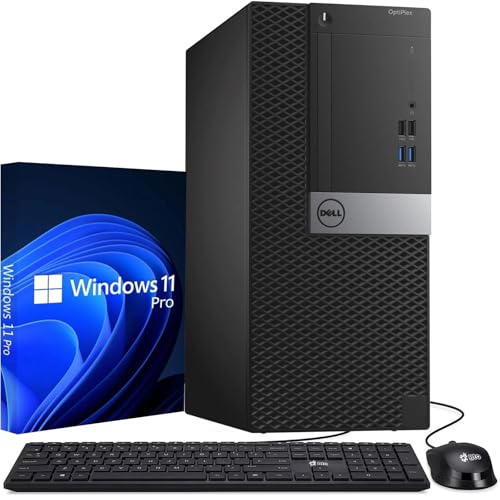
| Processor | Intel Core i7-7700 (Kaby Lake) 7th Gen |
| Storage | 512 GB SSD |
| Storage Type | Solid State Drive (SSD) |
| Form Factor | Tower Desktop PC |
| Brand | Dell |
| Price | $262.69 |
You discover the Dell Tower with an unexpected quiet hum, like it’s almost savoring the idea of letting you work without shouting. The first thing you notice is the 512GB SSD keeping Windows boot snappy and you smiling at how fast everything loads.
It’s the kind of speed that makes everyday tasks feel effortless, even on a budget-friendly machine.
Physically, the unit feels sturdy in your hands, with clean lines and a compact footprint for a desktop that still stands out from the family PC. You appreciate the absence of bloatware nagging you at setup, and you dive straight into apps you actually care about—office suites, photo tweaks, and streaming in a pinch.
In daily use, the i7-7700 handles multitasking with surprising ease, and you notice the SSD responding instantly to file saves and app launches. It’s not a gaming rig, but light editing and media consumption stay smooth thanks to responsive storage and adequate RAM for everyday workloads.
The fan noise remains a non-issue in a typical home office, barely rising during longer sessions. Ports are thoughtfully arranged, making it simple to plug in a monitor, a keyboard, and a peripheral without twisting cables around the back.
Price-wise, it feels like a smart move for a reliable home PC that doesn’t demand a mortgage. You’ll get solid performance for day-to-day tasks, plus the peace of mind that comes with a Dell chassis and dependable storage reliability.
If you want a straightforward, no-nonsense desktop that stays comfortable under typical workloads, this Dell towers delivers. It won’t replace a high-end workstation, but it covers the essentials with quiet confidence.
PROS
– Fast boot and responsiveness
– Solid, compact build
– No-nonsense setup
CONS
– Not a gaming rig
– Lacks modern USB-C emphasis
Dell Optiplex 3050 SFF Desktop Computer PC, Intel Quad Core

- ✓ Compact footprint
- ✓ Fast boot and snappy SSD
- ✓ Dual 4K monitor support
- ✕ Limited internal upgrade space
- ✕ Refurbished packaging unknown
| Processor | Intel Core i5-6500 Quad Core, up to 3.6 GHz |
| Memory | 16 GB DDR4 |
| Storage | 256 GB SSD |
| Graphics/Video | Integrated Intel HD Graphics (processor-based, no discrete GPU listed) |
| Ports and Connectivity | Front: USB 3.0 x2, USB 2.0 x2; Rear: DisplayPort, HDMI, USB 3.0 x2, USB 2.0 x2, RJ-45 Ethernet; Includes USB WiFi adapter |
| Display Support | Supports 4K (3840×2160) dual display |
You notice it right away on the desk—the Dell Optiplex 3050 SFF looks compact, almost like a stealth workstation, and it’s surprisingly quiet for everyday tasks. Compared to the taller towers I’ve tested, this one sits closer to a living room-friendly footprint and still feels sturdy.
Inside, the black matte chassis and the small form factor make it easy to tuck under a monitor stand or into a tight corner. The front USB 3.0 ports are a real treat for quick file transfers, and the rear I/O arrangement with DP and HDMI means you can flexibly set up two monitors without drama.
You’ll appreciate the upgrade path for light productivity. The 16GB DDR4 and a 256GB SSD keep everyday apps snappy, from email to Chrome with multiple tabs.
It boots quickly and handles office suites with ease, plus there’s a Windows environment that feels familiar right away.
Setup is straightforward: plug in the included USB keyboard and mouse, attach the USB Wi‑Fi adapter, and you’re off to the races. The dual-display capability is genuinely helpful for multitasking—spread your email on one screen while drafting documents on the other.
For media and light creative work, the 4K-ready output is a nice bonus, even if you’re not pushing intense gaming. It ships refurbished, but the look and feel were solid in hand, and the 90-day warranty gives you peace of mind after you’ve set up your home office.
Bottom line: if you want a compact, dependable home PC that’s easy to live with and capable of everyday multitasking, this Dell is a solid pick.
DELL Optiplex 7060 SFF Desktop Computer PC | Intel 8th Gen

| Processor | Intel Core i7-8700 (6-core, 12 threads) up to 4.60 GHz |
| Operating System | Windows 11 Pro |
| Storage | 512 GB NVMe M.2 SSD |
| Memory | Not specified in description (inference: likely 8–16 GB typical for OptiPlex 7060; exact value not provided) |
| Form Factor | Small Form Factor (SFF) desktop |
| Ports and Connectivity | 5× USB 3.0, 2× USB 2.0, 2× DisplayPort; includes wireless keyboard and mouse |
You pop the Dell OptiPlex 7060 SFF on your desk, and the compact footprint already tells you this is the, well, serious kind of home PC. The little chrome Dell badge catches the light, and you notice the sleek, understated lines that fit neatly under a monitor without begging for attention.
Inside, the 8th Gen i7 hums with quiet confidence, and you’re surprised how swiftly Windows 11 Pro wakes up after a single press of the power button.
First boot feels snappy, thanks to the 512GB NVMe SSD. You’re not waiting around for long login screens or stuttering apps—everything from your office suite to light photo editing loads in a snap.
The dual DisplayPort outputs are ready for a clean dual-monitor setup, which makes multitasking feel natural rather than cluttered.
On the desk, the small form factor still leaves room for expansion, which you actually appreciate. You can slot a couple of extra drives or a larger GPU down the road if your workflow shifts, without swapping machines.
The included wireless keyboard and mouse are serviceable and get you typing and clicking right away without fiddling with drivers.
The keyboard’s keys have a reassuring tactile travel, and the mouse glides smoothly across your desk. Ports are plentiful: five USB 3.0 and two USB 2.0 let you plug in printers, dongles, and USB drives without fighting for space.
You’ll notice the system stays cool and quiet even under a handful of tabs and document-heavy tasks.
As a home-office workhorse, it delivers consistency you can rely on day after day. It’s not flashy, but it doesn’t pretend to be.
You get solid performance, dependable storage, and a future-ready chassis in a compact package.
Pros
Cons
- Non-glamorous design
- Not VR-focused out of the box
What Are the Key Features to Consider When Choosing a Home Desktop PC?
When choosing the best home desktop PC, there are several key features to consider to ensure it meets your needs.
- Processor (CPU): The CPU is the heart of the computer, determining its speed and performance. A faster processor can handle more tasks simultaneously, making it ideal for gaming, video editing, or multitasking with various applications.
- RAM: Random Access Memory affects how many programs can run simultaneously without slowing down. For general use, 8GB is sufficient, but for gaming or professional tasks, 16GB or more is recommended for optimal performance.
- Storage: Storage options typically include HDDs (hard disk drives) and SSDs (solid-state drives). SSDs are faster and more reliable, offering quicker boot times and data access, while HDDs provide more storage space at a lower cost, making a combination of both effective for many users.
- Graphics Card (GPU): The GPU is crucial for gaming and graphic-intensive applications. A dedicated graphics card will provide significantly better performance than integrated graphics, allowing for higher resolutions and smoother frame rates in games and design software.
- Operating System: The choice of operating system can impact software compatibility and ease of use. Windows is widely used for gaming and productivity, while macOS caters to creative professionals, and Linux offers customization for tech-savvy users.
- Connectivity Options: Look for a desktop with a variety of ports (USB, HDMI, Ethernet) to connect peripherals and accessories. Also, consider wireless connectivity options like Wi-Fi and Bluetooth for a more versatile setup.
- Form Factor: The physical size and design of the desktop can affect your workspace and aesthetic preferences. Tower PCs offer more upgrade options, while all-in-one models save space but may limit future upgrades.
- Budget: Establishing a budget is essential as it will guide your choices in terms of specifications and features. Higher-end components will generally lead to better performance, so balance your needs against what you can afford.
What Are the Different Categories of Home Desktop PCs?
The different categories of home desktop PCs include:
- All-in-One PCs: These computers integrate the monitor and CPU into a single unit, providing a clean and space-saving design.
- Tower PCs: Tower PCs are standalone units that house all the components in a vertical case, offering extensive upgrade options and superior cooling capabilities.
- Mini PCs: Mini PCs are compact computers designed for basic tasks and space efficiency, often suitable for casual users or home entertainment.
- Gaming PCs: Gaming PCs are high-performance machines optimized for running demanding games and applications, equipped with powerful GPUs and cooling systems.
- Workstation PCs: Workstation PCs are designed for professional use, featuring high processing power and enhanced graphics capabilities for tasks like video editing and 3D modeling.
All-in-One PCs combine aesthetics and functionality, making them ideal for users who prefer a minimalistic workspace while still requiring decent performance for everyday tasks.
Tower PCs, typically larger in size, provide significant flexibility for upgrades, allowing users to customize their systems with additional RAM, storage, or advanced graphics cards, making them suitable for both gamers and professionals alike.
Mini PCs are perfect for users with limited desk space; they can handle basic computing tasks such as web browsing and document editing, and some models can even be used as media centers.
Gaming PCs are built with high-end specifications to support the latest games at high settings, often featuring RGB lighting and advanced cooling solutions to manage heat during intense gaming sessions.
Workstation PCs prioritize reliability and performance, equipped with high-core-count processors and professional-grade graphics cards, making them the choice for users in creative industries who need to run resource-intensive applications efficiently.
What Should You Know About Budget Desktop PCs?
When considering the best home desktop PC, there are several key factors to keep in mind that can enhance your computing experience.
- Processor (CPU): The processor is the heart of the desktop PC, influencing its speed and performance. Look for multi-core processors from reliable brands like Intel or AMD, as they can handle multiple tasks efficiently, making them suitable for everything from simple browsing to demanding applications.
- RAM (Memory): Sufficient RAM is essential for smooth multitasking and performance. For most home users, 8GB of RAM is a good starting point, while 16GB is ideal for more intensive tasks like gaming or video editing.
- Storage Options: Consider whether you prefer a hard disk drive (HDD) or a solid-state drive (SSD). SSDs provide faster boot and load times, which can significantly enhance your overall user experience, while HDDs typically offer more storage capacity for a lower price.
- Graphics Card (GPU): Depending on your needs, the graphics card can be crucial, especially for gaming or graphic design. Integrated graphics are sufficient for everyday tasks, but a dedicated GPU is necessary for high-performance gaming or professional-level graphic work.
- Form Factor: The physical size and design of the desktop PC matter, especially if space is limited. Options include traditional tower cases, compact mini PCs, or all-in-one designs, each catering to different space and aesthetic preferences.
- Connectivity Options: Ensure the desktop PC has ample ports for your accessories and peripherals. Look for USB Type-C, HDMI, and Ethernet ports to accommodate a variety of devices and ensure future compatibility.
- Operating System: The choice of operating system can affect software availability and user experience. Windows is the most common for general use, while macOS is preferred for certain creative applications, and Linux offers a free, open-source alternative.
- Upgradability: Consider how easy it is to upgrade components in the future. A desktop PC that allows for easy upgrades to the CPU, RAM, or storage can extend its lifespan and adaptability to new technologies.
- Price to Performance Ratio: Evaluate the specifications against the price to find a model that offers the best performance for your budget. It’s important to balance features with cost to ensure you get good value without overspending.
What Makes a Desktop PC Ideal for Gaming?
Several key features contribute to making a desktop PC ideal for gaming.
- Powerful CPU: A high-performance CPU is essential for gaming as it determines how quickly the system can process information and run complex calculations. Processors like Intel’s Core i7 or AMD’s Ryzen 7 offer multiple cores and threads, which improve multitasking and enhance the gaming experience.
- High-end GPU: The graphics card is arguably the most critical component for a gaming PC, as it directly affects visual performance and frame rates. Modern GPUs, such as NVIDIA’s GeForce RTX series or AMD’s Radeon RX series, provide the necessary power to handle detailed graphics and high resolutions, ensuring smooth gameplay.
- Ample RAM: Having sufficient RAM is crucial for a seamless gaming experience. A minimum of 16GB of RAM is recommended for gaming, as it allows for better performance when running multiple applications and games simultaneously without lag.
- Fast Storage Solutions: SSDs (Solid State Drives) significantly improve loading times compared to traditional HDDs (Hard Disk Drives). A gaming PC equipped with an SSD can reduce game startup times and overall system responsiveness, making for a more enjoyable experience.
- Efficient Cooling System: Gaming generates a lot of heat, and a robust cooling system is needed to maintain optimal performance and longevity of the hardware. Systems equipped with quality air or liquid cooling solutions help to manage temperatures, allowing components to run at their best without throttling.
- Upgradeability: A desktop PC designed for gaming should allow for easy upgrades as technology advances. This means having a case that accommodates larger GPUs, additional RAM slots, and accessible storage options, enabling gamers to keep their systems current without needing to replace the entire setup.
- Quality Power Supply: A reliable power supply unit (PSU) is essential to ensure that all components receive adequate power, especially during intensive gaming sessions. A PSU with a high efficiency rating (like 80 Plus Gold) guarantees stable power distribution and reduced energy waste, contributing to the overall performance and lifespan of the PC.
Why Consider an All-in-One Desktop PC for Home Use?
This happens because an all-in-one desktop PC integrates all components into a single unit, offering a space-saving solution that is both aesthetically pleasing and functional for home use.
According to a report by TechRadar, all-in-one PCs are particularly favored for home environments due to their compact design and ease of setup, making them an appealing choice for users who may not have extensive technical knowledge or space for separate components.
The underlying mechanism driving the popularity of all-in-one PCs lies in their convenience and versatility. With built-in displays, speakers, and often touch capabilities, these systems streamline the user experience by minimizing clutter and cable management. Furthermore, advancements in technology have allowed these devices to house powerful processors and graphics cards, making them suitable for various home applications, from basic web browsing to more demanding tasks like photo editing or gaming. This combination of functionality and form factor makes all-in-one desktops an attractive option for families and individuals seeking the best home desktop PC.
In addition, the integration of various components into one unit typically leads to lower energy consumption compared to traditional desktop setups, which can consist of multiple devices. A study from the International Energy Agency indicates that more efficient designs not only save space but also contribute to lower electricity bills, appealing to budget-conscious consumers. As a result, all-in-one desktop PCs cater to both aesthetic preferences and practical needs, solidifying their position as a leading choice for home computing.
Which Brands Are Leading the Market for Home Desktop PCs?
The leading brands in the market for home desktop PCs include:
- Dell: Known for its wide range of customizable options, Dell desktops cater to both casual users and gamers. Their XPS line is particularly noted for its performance and sleek design, making it a popular choice for home offices and multimedia tasks.
- HP: HP offers a variety of desktop PCs that balance performance and affordability, with models like the Pavilion series providing solid specifications for everyday use. Additionally, their Envy line targets users who seek style and enhanced performance for creative tasks.
- Apple: Renowned for its premium build quality and user-friendly operating system, Apple’s iMac and Mac Mini are favored by creatives and professionals. These desktops feature high-resolution displays and powerful hardware, but come at a higher price point, reflecting their design and ecosystem integration.
- Lenovo: Lenovo’s ThinkCentre and IdeaCentre lines provide versatile options for home users and professionals alike. The brand is known for its reliability and performance, with many models designed to maximize productivity in a home office environment.
- Acer: Acer is recognized for its competitive pricing and solid performance, especially with its Aspire series. These desktops are ideal for budget-conscious users who still want decent capabilities for everyday computing and light gaming.
How Important Is Upgradability in a Home Desktop PC?
Upgradability is a crucial factor to consider when selecting the best home desktop PC, as it impacts longevity and performance adaptability.
- Processor (CPU) Upgradability: The ability to upgrade the CPU allows users to enhance processing power for demanding tasks such as gaming, video editing, or software development. A motherboard that supports newer generation CPUs can extend the life of a desktop, accommodating advancements in technology without needing a complete system overhaul.
- Graphics Card (GPU) Upgradability: For users interested in gaming or graphic design, having the option to upgrade the graphics card is vital. As games and software become more graphically intensive, a powerful GPU can significantly improve performance and visual quality, making it essential for future-proofing a home desktop.
- RAM Upgradability: The ability to increase RAM capacity is important for multitasking and running memory-intensive applications smoothly. As software requirements grow, being able to add more RAM can prevent bottlenecks and enhance overall system responsiveness.
- Storage Upgradability: With data storage needs increasing, a desktop PC that allows for easy upgrades to hard drives or SSDs is advantageous. Users can increase their storage capacity without replacing the entire system, making it easier to manage large files and applications.
- Power Supply (PSU) Upgradability: A robust power supply that can support future upgrades is essential, especially when adding high-performance components like a better CPU or GPU. Choosing a PSU with sufficient wattage and modular options allows for efficient cable management and flexibility in expanding the system’s capabilities.
- Cooling System Upgradability: As performance components are upgraded, effective cooling becomes more critical. A system that allows for enhanced cooling solutions, such as better fans or liquid cooling systems, ensures that upgraded components operate within safe temperature ranges, thereby prolonging their lifespan.
What Is the Typical Price Range for Reliable Home Desktop PCs?
A reliable home desktop PC is defined as a personal computer designed for regular use at home, typically providing a balance between performance, reliability, and cost. These systems are generally equipped with a central processing unit (CPU), random access memory (RAM), storage options, and integrated or discrete graphics, suitable for everyday tasks such as browsing, streaming, and light gaming.
According to Consumer Reports, the price range for a reliable home desktop PC can vary significantly depending on the specifications and brand. Generally, one can expect to pay between $400 and $1,200 for a quality desktop that meets the needs of most home users. Budget models may be available for less, but they often compromise on performance or longevity.
Key aspects of home desktop PCs include their processing power, storage capacity, and the type of graphics card. Entry-level PCs typically feature an Intel Core i3 or AMD Ryzen 3 processor, 8GB of RAM, and integrated graphics, making them suitable for basic tasks. Mid-range PCs may offer Intel Core i5 or AMD Ryzen 5 processors, 16GB of RAM, and dedicated graphics, which can handle more demanding applications and moderate gaming. High-end models, priced above $1,200, often boast powerful CPUs, 32GB or more of RAM, and advanced graphics cards for professional tasks and gaming.
This impacts the usability and functionality of the home PC, as different price ranges cater to varied user needs. For instance, families may require a reliable machine for educational purposes and online learning, while gamers might invest in more powerful systems for an immersive experience. Additionally, with the rise of remote work and online services, having a dependable home desktop is becoming increasingly important for productivity and entertainment.
The benefits of selecting the right home desktop PC include enhanced productivity, better multitasking capabilities, and longer-term value. A reliable system can last several years with proper maintenance, and investing in a higher-quality machine often results in fewer repairs and upgrades. Moreover, a well-chosen desktop PC provides a stable platform for software updates and compatibility with emerging technologies.
Solutions and best practices when purchasing a home desktop PC involve assessing personal needs and usage patterns, setting a budget, and considering future-proofing options. Buyers should also look for warranties and customer support from manufacturers, as this can significantly influence the ownership experience. Additionally, reading reviews and comparisons can help identify the best options available within the desired price range, ensuring a well-informed purchase.
Related Post: