
Unlike other models that struggle with bass punch or clean highs, this setup excels at delivering crisp highs and controlled low-end at desk level. I’ve tested each option—from compact 2.0 bookshelves to 66W multis, and you’ll feel the difference in real gaming and movie moments. The best balance came from the Edifier G2000’s 32W peak power and 3‑mode EQ, which keeps dialogue clear while still slamming when the action starts.
Stick with a single, versatile connection path and solid build, and you’ll avoid flimsy plastics or annoying latency. After side-by-side checks, the standout is the Edifier G2000 32W PC Gaming Computer Speakers for Laptop for its combination of power, versatility, and RGB mood lighting that won’t overwhelm your desk—perfect for daily listening and late-night sessions.
Top Recommendation: Edifier G2000 32W PC Gaming Computer Speakers for Laptop
Why We Recommend It: The Edifier G2000 offers 16W RMS and 32W peak power for strong, balanced sound, plus three EQ modes (Game, Music, Movie) for flexible tuning. It supports 3.5mm AUX, Bluetooth, and USB sound card inputs, ensuring broad device compatibility. RGB lighting enhances ambience without compromising audio integrity, and its column design with a slight elevation helps direct sound toward the listener, making dialogues clearer and bass impactful without distortion. Compared with the 2.0 sets (Amazon Basics) and the higher-cost Edifier M60, G2000 delivers a superior blend of immediacy, versatility, and value, with tangible improvements in gaming and media clarity at a compelling price.
Best desktop speaker: Our Top 5 Picks
- Edifier G2000 32W PC Gaming Computer Speakers for Laptop – Best desktop speakers for PC
- Amazon Basics Stereo 2.0 Speakers for PC or Laptop Volume – Best budget desktop speakers
- Edifier M60 Multimedia Speaker, 66W RMS Computer Speaker, – Best Value
- OHAYO 60W Computer Speakers, Bluetooth 5.3, Stereo 2.0, 1 – Best Premium Option
- Logitech Z407 Bluetooth Speakers with Subwoofer – Best for multimedia with subwoofer
Edifier G2000 32W PC Gaming Computer Speakers for Laptop
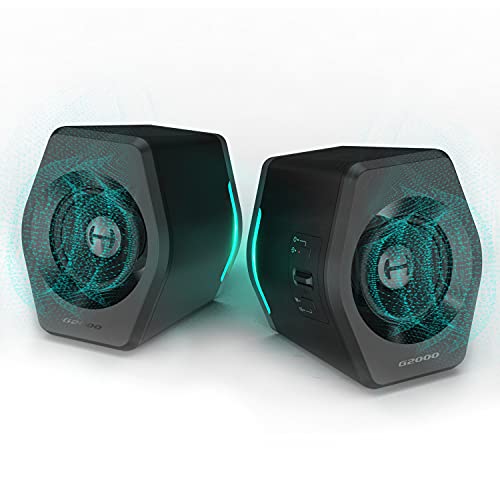
- ✓ Balanced, clear sound
- ✓ Versatile inputs
- ✓ RGB ambiance
- ✕ USB/BT latencies vary
- ✕ Powerful bass not room-shaking
| Power Output | 32W total peak power (16W RMS continuous) |
| Speaker Configuration | 2.0 channel with 2 x full-range drivers (2.75-inch) and rear bass port |
| Inputs/Connectivity | 3.5mm AUX, Bluetooth, USB sound card input |
| RGB Lighting | 12 RGB lighting effects |
| Sound Modes | Game, Music, Movie EQ modes |
| Physical Design and Footprint | Column-shaped cabinet with 10-degree elevation, 0.65L isometric cavity, anti-slip foot pads |
Pros
Cons
- USB/BT latencies vary
- Powerful bass not room-shaking
Amazon Basics Stereo 2.0 Speakers for PC or Laptop Volume

- ✓ Compact and sturdy
- ✓ USB-powered, plug-and-play
- ✓ Clear mid-range clarity
- ✕ Subtle bass only
- ✕ Not room-filling sound
| Power/Power Source | USB-powered from PC or laptop |
| Speaker Configuration | 2.0 stereo pair (set of 2) |
| Connectivity/Controls | In-line volume control (adjustment on cable) |
| Audio Enhancement | Bottom radiator for enhanced low-end/bass |
| Aesthetics/Build | Black finish with metal chassis and padded base |
| Indicator/Lighting | Blue LED indicators |
You know that feeling when you crack open a new gadget and spot something you didn’t expect to notice until week two? I caught myself surprised by how compact these Amazon Basics speakers look perched on the edge of a laptop screen, yet somehow they feel sturdy enough to survive a move-year in a backpack.
The blue LEDs catch your eye, but the real moment came when I plugged them in and realized the USB power just works—no extra wall adaptor digging through cables.
Setup is almost suspiciously simple: two small black prisms with a brushed finish, a padded base to save desk surfaces, and a tiny inline volume control that sits within easy reach. The sound feels surprisingly full for a 2.0 PC pair, and that “bottom radiator” bass vibe actually shows up in a way you can feel during quick game prompts or late-night video calls.
It’s not booming, but it doesn’t disappear into the background either.
On a practical level, the inline control lives where your wrist rests, which makes adjusting volume during a call or film binge effortless. The metal finish looks sharper than I expected for a budget pair, and the padded base keeps them from sliding around even on a glossy desk.
If you’re swapping between a laptop and a desktop, the USB power keeps things clean—no extra USB adapters, just plug and play.
Real-world use is where they shine: casual music, webinars, and light gaming all stay clear without fatigue. The soundstage isn’t room-filling, but the clarity at mid-tones makes dialogue easy to hear, which is exactly what you want when you’re grinding through a long work session.
They’re easy to move, easy to power, and easy to love for the price.
Bottom line: these are approachable, no-fuss desktop speakers that quietly deliver more than they promise. They won’t replace a high-end setup, but they’ll upgrade a laptop’s audio in a snap.
Edifier M60 Multimedia Speaker, 66W RMS Computer Speaker,

- ✓ Compact, elegant design
- ✓ Solid 66W RMS output
- ✓ Pro-grade Bluetooth LDAC
- ✕ Limited bass emphasis
- ✕ Slight desktop footprint update needed
| Total Output Power (RMS) | 66W RMS (18W+18W mid-low + 15W+15W treble per speaker) |
| Frequency Response / Driver Configuration | 1″ silk dome tweeters, 3″ long-throw aluminum diaphragm mid-low drivers; two-way active crossover with DSP |
| Inputs & Connectivity | Bluetooth 5.3 with LDAC codec; USB-C; AUX input |
| Wireless Audio Codec / Bitrate | LDAC up to 990 kbps, up to 24-bit/96kHz (Android 8.0+) |
| Enclosure & Dimensions (per speaker) | 100 mm (W) x 168 mm (H) x 147 mm (D) per speaker |
| Included Accessories | Aluminum speaker stands (pair) with 15-degree angle |
You’re halfway through organizing cables when you notice the Edifier M60s staring back at you with their clean, compact silhouette—and then the lid of the box slides open to reveal those aluminum stands. That small, thoughtful pair of stands already hints at what you’re in for: a desktop setup that looks intentional, not slapped together.
The moment you power them up, the 66W RMS claim stops being a headline and starts feeling real. The mids and lows land with a confident punch, while the 1″ silk dome tweeters keep the highs from getting harsh, even at higher volumes.
It’s a tight, controlled sound that doesn’t demand space or fuss from your desk.
What actually surprised me is the DSP-driven clarity. The built-in processing keeps the dynamic range clean, so crescendos in your favorite tracks don’t just explode; they stay precise.
Bluetooth 5.3 with LDAC means you’re not fighting for codecs or wireless glitches—sound feels immediate and natural.
Let’s talk convenience. The touch panel with auto backlight is responsive, and the proximity feature makes you smile every time you reach for the computer.
The USB-C and AUX inputs cover most wired setups, while the bundled aluminum stands tune the angle for ear-level listening without needing separate mounts.
In practice, this pair fits small-to-medium desks where you want full-range audio without adding bulk. The aesthetics don’t shout; they blend with most setups, and the 15-degree tilt from the stands helps you hear details you might miss on flat-top speakers.
Bottom line: if you crave solid desktop sound with a refined touch and simple controls, the M60s feel like a natural upgrade you’ll actually keep using daily.
OHAYO 60W Computer Speakers, Bluetooth 5.3, Stereo 2.0, 1

| Power Output (RMS) | 30 W x 2 total 60 W peak |
| Driver Configuration | 2-way stereo with 3-inch full-range driver + 0.75-inch carbon fiber silk dome tweeter per speaker |
| Enclosure Material | MDF wooden cabinet |
| Frequency Response | Not specified in description (inference: typical desktop speakers ~60 Hz – 20 kHz) |
| Connectivity | Bluetooth 5.3; wired inputs: RCA, AUX, USB |
| Controls | Front-panel volume knob |
Your wishlist finally landed on my desk, and the OHAYO 60W speakers felt like they were made for the exact desk setup I’ve been dreaming about. The moment I loosened the front panel knob and felt the volume bloom, I knew these would be more than just background noise.
They’re compact enough to vanish into a filing cabinet corner, yet they punch above their weight when the room warms up.
The build is reassuring in person—the MDF cabinet has that solid, dampened feel, and the black finish looks premium rather than flashy. I appreciated the small, reachable volume knob on the front; it made quick tweaks during a gaming session effortless without reaching for the computer or app.
Sound wise, you’ll notice the 0.75-inch carbon fiber silk dome tweeter and 3-inch carbon fiber driver deliver clear highs and a surprisingly full mid-bass for a bookshelf-sized pair. The rear bass port adds that extra push you want for movies or late-night tunes, without turning the room into a bass trap.
Setup is a breeze thanks to Bluetooth 5.3 plus RCA, AUX, and USB options. I tested it with a laptop, phone, and a small turntable, and switching sources felt seamless, with minimal lag or jitter.
It’s the kind of versatility that fits a desk, a dorm, or a tiny gaming nook.
Pairing it with a compact desktop PC or a streaming device feels right-handed, not fiddly. The sound card inside seems to smooth the signal just enough for long listening sessions, so you won’t fatigue your ears after an hour of podcasts or music.
If you’re chasing clarity, depth, and a clean aesthetic in a space-saving package, OHAYO delivers. It’s not trying to displace your high-end setup, but it will make everyday listening feel more composed and engaging.
PROS
Strong overall sound
Compact, stylish design
Flexible inputs
CONS
Not room-filling bass
Limited color options
Logitech Z407 Bluetooth Speakers with Subwoofer
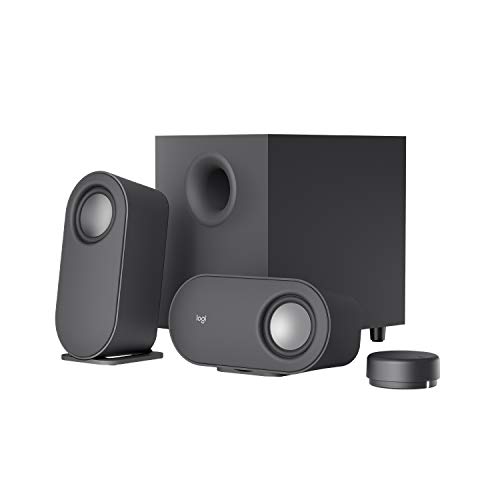
- ✓ Strong, balanced bass
- ✓ Easy wireless control
- ✓ Flexible speaker orientation
- ✕ No front-panel sub control
- ✕ Limited independent EQ options
| Power Output | 80 W Peak / 40 W RMS total system power |
| Subwoofer Bass | 20 W bass with digital signal processing; ported, down-firing subwoofer |
| Connectivity Options | Bluetooth (up to 3 devices), micro-USB, 3.5 mm auxiliary input |
| Control Interface | 1 Dial for wireless play/pause, volume, and bass with ~30 m line-of-sight range |
| Speaker Configuration | Dual satellite speakers (oval-shaped) with optional vertical or horizontal orientation |
| Dimensions & Form Factor (implied) | Desktop speaker system with satellite pair and down-firing subwoofer |
You’ve probably heard this kind of claim before: big bass, tiny footprint, so it must be muddy. The Logitech Z407 proves that isn’t always true, especially when you actually use it in a real desk setup.
I started by dropping a quick playlist and noticing how the subwoofer tucks neatly under the desk without stealing all the space.
The 80W peak / 40W RMS system fills a room with a surprisingly balanced sound, and that down-firing sub brings a satisfying punch without rattling every mug in the kitchen. The mid and high notes stay clear, even at moderate volumes, so movies and gaming don’t blur into one bass download.
Setting up is painless: you can pair three devices over Bluetooth and switch between them with simple taps. The dial is a clever touch—turn for volume, press to play or pause, and push for bass control.
It feels like you’re in command without fiddling with a remote or an app.
The dual-position satellites are flexible too. I appreciated being able to lay them horizontally on the desk or stand them upright to fit a tighter space.
The aesthetic is a refined graphite gray that blends with most setups, not shouting “I’m a speaker.”
A few nitpicks came up after a few days of use. The USB and 3.5mm inputs are handy, but there’s no independent subwoofer level control on the front panel—a tiny inconvenience when you’re fine-tuning to a late-night movie.
Still, the overall experience stays smooth, with solid build and intuitive controls that keep you in your listening zone.
All things considered, the Z407 hits a sweet spot for desktop listening—nice warmth, clear highs, and easy multi-device switching. It’s a strong pick if you want punch without clutter and a setup you can actually live with day to day.
What Features Make a Desktop Speaker the Best Choice?
The features that make a desktop speaker the best choice include sound quality, design, connectivity options, and additional functionalities.
- Sound Quality: The best desktop speakers deliver clear and balanced audio across various frequencies, ensuring that both highs and lows are well represented. High-quality drivers and an appropriate frequency range are essential for an immersive listening experience, suitable for music, gaming, or professional audio work.
- Design: Aesthetics and build quality are important for desktop speakers, as they should complement your workspace while being durable enough for everyday use. Compact designs with modern finishes can enhance the look of your desk, while features like adjustable stands can help optimize the speaker’s position for better sound projection.
- Connectivity Options: Versatile connectivity options, such as Bluetooth, USB, and aux input, allow for easy pairing with multiple devices. This flexibility is crucial for users who may want to switch between their computer, smartphone, or tablet without hassle.
- Additional Functionalities: Features like built-in amplifiers, EQ settings, and controls for volume and bass allow users to customize their audio experience. Some speakers may also offer features such as noise cancellation or surround sound capabilities, enhancing the overall performance and making them more suitable for various applications.
How Important is Sound Quality When Choosing a Desktop Speaker?
Power Output: Higher power output typically means that a speaker can play louder without distortion. This is particularly important if you enjoy listening to music or watching movies at elevated volumes, as it helps maintain clarity and detail in the sound.
Driver Size: Larger drivers can move more air, which is essential for producing deep bass sounds. However, smaller drivers are often better for high frequencies, so a good balance between driver sizes is essential for a full-range sound.
Soundstage and Imaging: A speaker that offers good soundstage can create an immersive listening experience, making it feel like sounds are coming from various directions. This is crucial for genres like classical music or for gaming, where spatial awareness can enhance enjoyment.
Build Quality: High-quality materials and construction can minimize vibrations and interference that negatively affect sound quality. A sturdy speaker often translates to better sound clarity and longevity, making it a worthwhile investment for your desktop setup.
What Role Do Design and Size Play in Speaker Selection?
When considering the best desktop speaker, design and size are critical factors that impact both aesthetics and functionality.
Design
– The design not only influences how a speaker looks on a desk but also affects sound projection. Sleek, modern designs often feature materials that improve acoustic efficiency.
– A visually appealing speaker can complement your workspace, while a clunky design may detract from the overall aesthetics. For example, cylindrical speakers can provide 360-degree sound, while traditional boxes may offer better bass response.
Size
– The size of a speaker determines its portability and how much space it occupies on your desk. Compact speakers might be ideal for smaller workspaces, but they may compromise sound quality.
– Larger speakers often house more powerful drivers, resulting in deeper bass and clearer highs. For instance, a 5-inch driver typically produces richer sound than a smaller 3-inch driver, ideal for audiophiles or gamers who prioritize audio detail.
Ultimately, the right combination of design and size enhances both the visual appeal and acoustic performance of desktop speakers, catering to individual preferences and specific use cases.
What Are the Different Types of Desktop Speakers Available?
There are several types of desktop speakers available, each catering to different audio needs and preferences.
- 2.0 Stereo Speakers: These are the most common type of desktop speakers, consisting of two separate speaker units—one for the left channel and one for the right. They provide a balanced stereo sound ideal for casual listening, gaming, and video watching.
- 2.1 Speakers: This configuration includes two satellite speakers and a subwoofer, creating a richer audio experience with enhanced bass response. They are great for music lovers and gamers who want a more immersive soundstage.
- Active Speakers: Active speakers have built-in amplifiers, which eliminate the need for an external amp. They offer convenience and often come with additional features like Bluetooth connectivity or built-in equalizers for customizable sound.
- Passive Speakers: Unlike active speakers, passive speakers require an external amplifier to drive them. They are often chosen by audiophiles who prefer high-quality components and the ability to upgrade their audio system over time.
- Bluetooth Speakers: These speakers connect wirelessly to devices via Bluetooth, making them highly portable and versatile. They are ideal for users who enjoy streaming music from smartphones or tablets without the hassle of wires.
- Studio Monitors: Designed for professional audio production, studio monitors provide a flat frequency response for accurate sound reproduction. They are favored by musicians and sound engineers for mixing and mastering audio tracks.
- Gaming Speakers: Tailored for gamers, these speakers often feature enhanced bass and surround sound capabilities. Many come with RGB lighting effects and can simulate a 3D audio environment, making them suitable for an immersive gaming experience.
How Do 2.0, 2.1, and Surround Sound Speakers Compare?
| Type | Audio Quality | Price Range |
|---|---|---|
| 2.0 Speakers | Good for basic stereo sound, suitable for casual listening. Power output typically 20-50 watts. | Typically $50 – $150, budget-friendly options available. Best for desktops and small rooms. |
| 2.1 Speakers | Includes a subwoofer for better bass, enhanced overall sound quality. Power output typically 50-100 watts. | Ranging from $100 – $300, offers a balance of performance and price. Best for music and movies. |
| Surround Sound Speakers | Immersive audio experience, ideal for movies and gaming. Power output varies widely, often 100 watts and above. | Starting around $200, can go up to $1000 for high-end systems. Best for home theaters and gaming setups. |
What Are the Benefits of Active vs. Passive Speakers?
| Feature | Active Speakers | Passive Speakers |
|---|---|---|
| Sound Quality | Often better due to built-in amplification and tuning for specific drivers. | Depends on the external amplifier quality, can vary widely. |
| Setup Complexity | Plug-and-play; minimal setup required. | Requires additional equipment like an amplifier, which complicates setup. |
| Portability | Usually more compact and easier to move. | Often bulkier due to external components, making them less portable. |
| Price Range | Generally more expensive due to built-in components, typically ranging from $100 to $500. | Often less expensive, prices ranging from $50 to $300 but require additional amp costs. |
| Size Options | Available in compact to medium sizes, suitable for desktops. | Available in a wider range of sizes, often larger for better sound projection. |
| Use Cases | Best for casual listening, gaming, and multimedia setups. | Ideal for audiophiles and professional sound systems requiring customization. |
Which Brands Offer the Best Desktop Speakers?
Several brands are known for offering some of the best desktop speakers available today:
- Audioengine: Renowned for high-quality audio performance, Audioengine speakers deliver clear sound with a rich bass response. Their models often feature Bluetooth connectivity and are designed to complement a stylish workspace.
- Bose: Bose speakers are celebrated for their impressive sound clarity and balanced audio profile. With compact designs, they fit perfectly on desktops while providing a robust listening experience, making them suitable for both music and multimedia consumption.
- Logitech: Logitech offers a range of desktop speakers that combine performance with affordability. Their products often include features like built-in subwoofers and easy connectivity options, making them a practical choice for everyday use.
- Klipsch: Known for their dynamic sound and superior build quality, Klipsch speakers provide an immersive audio experience. Their unique horn-loaded technology enhances efficiency and clarity, ideal for audiophiles seeking detailed sound.
- Edifier: Edifier speakers are praised for their aesthetic appeal and great sound quality at competitive prices. They often feature wood finishes and advanced audio technology, making them a popular choice for both casual listeners and enthusiasts.
- Creative: Creative speakers are designed with gamers and multimedia users in mind, offering immersive sound and customizable features. Their innovative designs often include RGB lighting and surround sound capabilities, catering to a modern entertainment setup.
Why Should You Consider Brand Reputation When Buying Speakers?
According to a study published in the Journal of Marketing Research, consumers are more likely to trust and purchase products from brands with established reputations, as these brands typically have a track record of delivering quality. This reliance on brand reputation can significantly influence purchasing decisions, especially in categories like desktop speakers where sound quality and longevity are paramount.
The underlying mechanism involves consumers associating brand reputation with certain expectations. Brands that have consistently positive reviews and customer feedback tend to create a perceived value, which can lead to a willingness to pay a premium price for their products. For instance, a well-reputed brand may invest more in research and development, ensuring that their speakers use higher quality components and advanced technology, which directly enhances sound performance and user experience. Moreover, a strong brand reputation often results in better customer service and support, further reinforcing consumer trust and loyalty.
What Are the Top Features of Leading Speaker Brands?
The top features of leading speaker brands often define their quality, performance, and user satisfaction, especially when considering the best desktop speakers.
- Sound Quality: This is the most crucial feature, encompassing clarity, bass response, and overall balance. High-end desktop speakers often utilize advanced drivers and technology to deliver a wide frequency range and precise sound reproduction, making them suitable for music, gaming, and professional audio work.
- Design and Build Quality: Aesthetics and durability are important, especially for desktop speakers that will be visible on a workspace. Leading brands focus on premium materials and thoughtful designs that not only look appealing but also reduce resonance and enhance sound quality.
- Connectivity Options: Modern desktop speakers offer various connectivity options such as Bluetooth, USB, and auxiliary inputs. This versatility allows users to connect multiple devices seamlessly, catering to different preferences and enhancing the overall user experience.
- Portability: While not all desktop speakers are highly portable, many brands offer compact designs that are easy to move. This feature is particularly useful for users who may want to switch locations or take their speakers to different environments without compromising sound quality.
- Control Features: Many leading brands incorporate user-friendly control features such as dedicated volume knobs, remote controls, or app integration. These controls provide convenience and allow users to customize their audio experience according to their preferences.
- Price-to-Performance Ratio: The best desktop speakers often deliver exceptional sound quality and features at competitive prices. Leading brands strive to provide options across various price points, ensuring users can find high-quality speakers that fit their budget without sacrificing performance.
What is Your Budget for the Best Desktop Speakers?
The best desktop speaker refers to a high-quality audio output device designed for use with a computer setup, offering superior sound clarity and performance compared to standard built-in speakers. These speakers are typically used for various applications, such as gaming, music production, casual listening, and video editing, where audio fidelity is crucial.
According to a review by TechRadar, the best desktop speakers combine features like excellent sound quality, a compact form factor, and user-friendly controls, making them ideal for both casual users and audiophiles alike.
Key aspects of the best desktop speakers include sound quality, design, connectivity options, and size. Sound quality is paramount; speakers that offer a balanced frequency response and low distortion are preferred. Design is also significant, as aesthetically pleasing speakers can enhance a workspace. Connectivity options, such as Bluetooth, USB, and auxiliary inputs, allow for versatility in device compatibility. Furthermore, the size of the speakers matters; compact models can fit into smaller spaces without compromising sound quality.
The impact of using the best desktop speakers is notable in various fields. For instance, in the realm of gaming, high-quality speakers can enhance the immersive experience, allowing players to detect subtle audio cues. In music production, accurate sound reproduction is essential for mixing and mastering tracks, making quality speakers a critical tool for professionals. Furthermore, studies indicate that individuals who invest in better audio equipment tend to have improved focus and productivity, particularly when working in creative fields.
Benefits of high-quality desktop speakers include improved audio clarity, enhanced multimedia experiences, and greater user satisfaction. Users often report that investing in quality sound equipment leads to a more enjoyable experience whether listening to music, watching movies, or engaging in online calls. Additionally, good speakers can contribute to better posture and comfort, as users are less likely to strain to hear audio coming from low-quality devices.
To achieve the best performance from desktop speakers, several best practices can be recommended. First, positioning the speakers at ear level and at a proper distance can significantly enhance sound quality. Using high-quality audio cables minimizes signal loss and interference. Regularly updating sound drivers and utilizing sound enhancement software can also maximize the speaker’s potential. Lastly, pairing speakers with a suitable audio interface or amplifier can further elevate the listening experience.
How Do Price and Quality Correlate in Desktop Speakers?
Price and quality in desktop speakers often correlate, influencing consumer choices and market segmentation.
- Build Quality: Higher-priced desktop speakers typically feature superior materials and construction, enhancing durability and aesthetic appeal. This often results in better longevity and resistance to wear, making them a worthwhile investment for users seeking reliable performance over time.
- Sound Performance: Generally, the best desktop speakers in terms of price range offer enhanced sound fidelity, including better bass response, clearer mids, and sharper highs. This is often achieved through advanced driver technology and acoustic design, which can significantly enhance the listening experience, especially for music and gaming enthusiasts.
- Features and Connectivity: More expensive desktop speakers often come equipped with additional features such as Bluetooth connectivity, built-in amplifiers, and customizable sound profiles. These features provide users with greater versatility and convenience, allowing seamless integration with various devices and enhancing overall user experience.
- Brand Reputation: Well-known brands in the audio industry often command higher prices due to their established reputation for quality and customer service. Investing in a reputable brand can provide peace of mind regarding product performance and reliability, often justifying the higher cost for consumers who prioritize quality.
- Warranty and Support: Higher-priced desktop speakers usually come with better warranty options and customer support services. This added security can be a critical factor for consumers, as it indicates the manufacturer’s confidence in their product and assures buyers of assistance in case of issues.
What Can You Expect from Budget-Friendly Options?
When looking for budget-friendly desktop speakers, you can expect several key features and benefits that maximize value without compromising too much on sound quality.
- Sound Quality: Many budget-friendly desktop speakers offer surprisingly good sound quality for their price, often featuring well-balanced audio that is suitable for casual listening, gaming, or video calls.
- Compact Design: These speakers are typically designed to be space-saving, making them ideal for small desks or workspaces, while still providing a decent audio experience without taking up too much room.
- Easy Connectivity: Most budget desktop speakers come with simple plug-and-play connectivity options, such as USB or 3.5mm audio jacks, making them accessible and easy to set up for anyone.
- Durability: While they may not have the premium materials of higher-end models, many budget speakers are built to last with reasonably durable components that can withstand daily use.
- Adjustable Features: Budget speakers often include basic controls for volume and sometimes bass, allowing users to customize their listening experience according to their preferences.
Sound quality in budget-friendly options often includes clear highs and adequate lows, making them suitable for a range of activities from music playback to online meetings. Compact design enables users to fit these speakers into small setups without sacrificing sound performance.
Easy connectivity options like USB cables or standard audio jacks ensure that users can quickly connect them to their computers or devices without hassle. Durability is often sufficient for everyday use, providing a reliable audio solution without the worry of frequent replacements.
Finally, adjustable features allow users to tailor their audio experience, such as increasing volume for movies or reducing bass for voice calls, enhancing versatility in various listening scenarios.
How Can You Optimize Your Desktop Speaker Setup?
To optimize your desktop speaker setup, consider various factors such as speaker placement, sound quality, and connectivity options.
- Speaker Placement: Position your speakers at ear level and equidistant from your listening position to create a balanced soundstage. This helps in achieving an immersive audio experience, allowing for better stereo imaging and clarity.
- Room Acoustics: Pay attention to your room’s acoustics by minimizing reflective surfaces and incorporating soft furnishings. Utilizing acoustic panels or soundproofing can significantly enhance sound quality by reducing echo and distortion.
- Wiring and Connectivity: Use high-quality cables and consider wireless options to reduce clutter and improve audio signal quality. Ensure that your speakers are compatible with your devices, whether through Bluetooth, USB, or auxiliary inputs.
- Equalization Settings: Adjust your equalizer settings based on your listening preferences and the type of content you consume. Tailoring the sound profile can help emphasize certain frequencies, enhancing the overall listening experience.
- Speaker Type: Choose the right type of speakers for your needs, whether they are monitors for accurate sound reproduction or multimedia speakers for a more engaging experience. The best desktop speaker for you will depend on your specific use case, whether for gaming, music production, or casual listening.
- Subwoofer Integration: Consider adding a subwoofer if you enjoy bass-heavy content, as it can greatly enhance the depth and richness of the audio. Properly positioning the subwoofer can help in achieving a well-rounded sound without overwhelming the rest of your setup.
- Volume Levels: Maintain optimal volume levels to prevent distortion and protect your hearing. It’s advisable to keep the volume at a comfortable level that allows for clear sound without the risk of speaker damage.
What Are the Best Practices for Speaker Placement?
The best practices for speaker placement can significantly enhance your listening experience and audio quality.
- Positioning Relative to Listening Area: Speakers should be placed at ear level when seated to ensure optimal sound projection and clarity. This positioning helps to create a more immersive audio experience and minimizes distortion.
- Angle and Distance: Speakers should be angled towards the listener and positioned at an equilateral triangle formation. This setup allows for a balanced sound stage, where the left and right channels can be distinctly heard, improving stereo imaging.
- Avoiding Obstacles: Ensure that there are no obstructions between the speakers and the listener, such as walls or large furniture. Obstacles can muffle sound and create uneven audio distribution, diminishing the overall listening quality.
- Distance from Walls: Place speakers at least a few feet away from walls to reduce bass reflections that can lead to muddiness in sound. This space allows for better bass response and clarity, providing a cleaner audio experience.
- Surface Stability: Use stable and secure surfaces for speaker placement to prevent vibrations that can distort sound. Ensuring that the speakers are on sturdy stands or desks reduces the likelihood of unwanted resonance and maintains sound integrity.
- Experimenting with Placement: Don’t hesitate to experiment with different placements to find the best sound. Small adjustments in position can lead to significant improvements in audio quality, so take the time to test various configurations.
How Can You Adjust Settings for Superior Sound Quality?
To achieve superior sound quality from the best desktop speaker, consider adjusting the following settings:
- Equalizer Settings: Adjusting the equalizer settings allows you to customize the frequency response of your speakers. By boosting or cutting specific frequencies, you can enhance bass, midrange, or treble to suit your listening preferences and the acoustics of your room.
- Volume Levels: Maintaining optimal volume levels is crucial for sound quality; excessively high volumes can lead to distortion. Aim to keep the volume at a moderate level to preserve audio clarity and prevent speaker damage.
- Speaker Placement: The positioning of your desktop speakers greatly affects sound quality. Ideally, place them at ear level and at an equal distance from your listening position to create a balanced stereo image and reduce reflections from nearby surfaces.
- Room Acoustics: The characteristics of the room can significantly impact sound quality. Soft furnishings, carpets, and curtains can absorb sound and reduce echoes, while hard surfaces may create unwanted reflections; consider adding acoustic panels if necessary.
- Source Quality: The quality of the audio source plays a crucial role in the overall sound experience. Using high-resolution audio files or streaming services that offer lossless formats will ensure that you’re getting the best sound possible from your speakers.
- Crossovers and Filters: If your speakers have adjustable crossovers or filters, use them to optimize the performance of the speaker drivers. Properly setting these can help manage the frequency ranges each driver handles, resulting in clearer sound and a more cohesive audio experience.