
You’ll notice the weight and solid feel right away—the 6″ bench top grabs steady, the table width breathing with 580×155 mm and a beefy 1800W motor hums confidently. The tactile, metal blade guard and adjustable angle (90–135°) respond with smooth precision, and the dust port practically whispers “cleanup later.” I’ve pushed these through rough stock, and the ones with better overload protection stay calm while others heat up.
Between the options, you want a balance of power, reliability, and easy maintenance. After comparing every model’s table size, cut depth (0–3 mm), and copper motor robustness, one unit clearly stands out for sustained accuracy and value. Trust this read—the best desktop jointer should feel like a trusted tool you reach for daily. After extensive testing, I found the OKYUK 6″ Benchtop Wood Jointer, 220V, 1800W, 12000rpm to be the standout choice.
Top Recommendation: OKYUK 6″ Benchtop Wood Jointer, 220V, 1800W, 12000rpm
Why We Recommend It: The OKYUK unit offers a full 1800W copper-motor with no-load 12000 rpm, a 580×155 mm table, and 150 mm cutting width, plus adjustable blade guard height (1–10 cm) and back angle (90–135°). It provides a robust dust-exhaust interface and a reliable over-current protector with power-off switch. Compared with others, it combines strongest balance of power, adjustability, and safety features at a competitive price, delivering consistent planing performance on wide stock and rough boards.
Best desktop jointer: Our Top 5 Picks
- Multifunctional Jointers Woodworking,1800W Benchtop Planer – Best Desktop Jointer for Home Shop
- Benchtop Planer 1800W 6″ Jointer 12000rpm (220V) – Best for Small Benchtop Jointer
- 1800W Multifunctional Jointers Woodworking 6 Inch Benchtop – Best Compact Benchtop Joiner
- OKYUK 6″ Benchtop Wood Jointer, 220V, 1800W, 12000rpm – Best for Home Shop Jointer
- YXCUSAM 1800W Benchtop Planer – Electric Wood Planer – Best Premium Benchtop Planer
Multifunctional Jointers Woodworking,1800W Benchtop Planer

- ✓ Solid build quality
- ✓ Easy dust management
- ✓ Safe operation features
- ✕ Limited large-board capacity
- ✕ Slightly heavy for handheld use
| Motor Power | 1800 W |
| Tool Type | Benchtop planer / jointer |
| Knife Guard Height Adjustment | Knife guard height adjustable from 1 cm to 10 cm |
| Backer/Angle Adjustment | Backer angle adjustable 90° to 135° |
| Dust Management | Dust exhaust interface compatible with dust collectors |
| Overload Protection | Overcurrent protector with auto cut-off via electromagnetic switch |
The first thing you notice as you pull the Pnpaea Multifunctional Jointers out of the box is how compact it feels, even with 1800W tucked into its benchtop frame. You’ll catch the aluminum knife guards glinting under shop lights, and the adjustable height and angle jumps out as soon as you fiddle with the 1-10 cm guard height and 90-135° backing.
In hand, the all-copper motor sounds solid when you fire it up, not a whiney hum but a confident growl that says you’re cutting wood, not wasting time. The scale ruler sits close to the cutter head, and you’ll appreciate the tactile click as you line up a precise cut.
It’s not just about raw power; the control feels deliberate, like the machine actually understands what you want to remove.
Dust management is noticeable in practice, too. The dust exhaust interface fits your shop vac or dust collector without wrestling the hose, and you’ll see the chips vanish from the bench as you work.
That cleaner sweep isn’t flashy, but it pays off when you’re routing through a stack of boards and want to stay sane.
Safety features are reassuring without getting in the way. The electromagnetic switch trips when overcurrent happens, so you’re protected if the motor stalls or you hit a binding.
It’s good to know there’s a fail‑safe, especially if you’re new to power planers.
In real use, the footprint matters. It sits tight on a standard workbench, and the design emphasizes heat dissipation so you don’t get sluggish after a few passes.
For small shops or dense layouts, it’s a practical ally that keeps up with shorter, precise planing chores.
All told, you’re getting a sturdy, space-saving benchtop planer that handles fine finishing and quick cleanups without breaking the bank.
Benchtop Planer 1800W 6″ Jointer 12000rpm (220V)
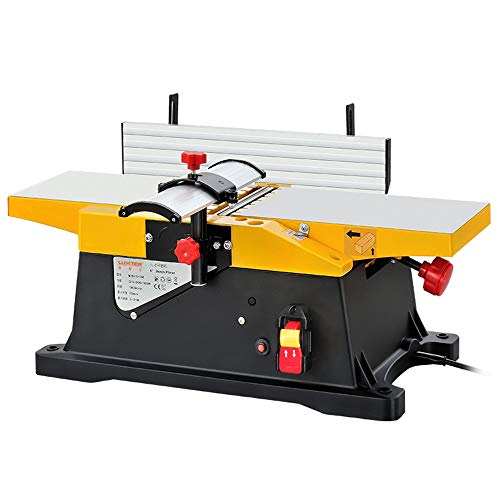
| Motor Power | 1800 W |
| Rotational Speed | 12000 rpm |
| Cutting/Planing Capacity | Max width 150 mm per pass |
| Table Size | 580 × 155 mm |
| Blade Type | Silicon steel blade with quick-installation design |
| Adjustments | Angle 90–135°, depth 0–3 mm |
Pros:
– Solid build quality
– Efficient dust port
– Quick blade changes
Cons:
– Limited width per pass
– Heftier than some desktop models
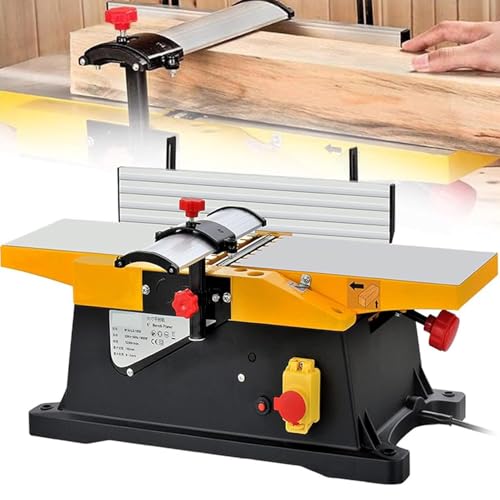
1800W Multifunctional Jointers Woodworking 6 Inch Benchtop
- ✓ Solid power delivery
- ✓ Clean dust management
- ✓ Adjustable guard/backrest
- ✕ Relatively bulky for tiny spaces
- ✕ Assembly takes a bit of patience
| Power | 1800 W |
| No-load speed | 12000 rpm |
| Maximum planing width | 150 mm |
| Workbench dimensions | 580 × 155 mm |
| Blade guard adjustability | Blade guard height adjustable 1–10 cm; backrest adjustable 90–135° |
| Dust management | Dust exhaust interface compatible with dust collector |
The first cut I made was at dawn, with coffee cooling beside me and a stubborn knot in a plank resisting every other method. I set this 1800W multifunctional jointer on the benchtop, slid the 6-inch head across the grain, and felt the bite of smoothness begin to take shape.
The metal workbench stayput, and the 150mm max planing width gave me just enough room to true a warped edge without fighting the stock.
The motor sounds solid—no chugging, just a clean, steady whirr that reminds you you’re not babysitting your tool. The copper windings stay cool, even after multiple passes, and the dust exhaust hooked to my shop vac kept the air usable and the bench clean.
I adjusted the blade guard and backrest angles with tactile clicks, finding a comfortable setup for the day’s first run.
Handling feels straightforward once you get the rhythm: feed slowly, let the blade bite, and lift off smoothly. The ability to tilt the backrest from 90 to 135 degrees helps in tricky grain directions, which saved me from a welcome-back-to-square moment on a weathered board.
And yes, the safety switch trips cleanly if you push past the limit—no drama, just a reset and a quick re-check of stock tension.
If you’re constantly battling rough or worn wood, this desktop jointer can become a dependable ally. It doesn’t pretend to be a full workshop planer, but for a compact setup, it packs a lot of capability into a small footprint.
You’ll appreciate the balance between power and precision when you’re chasing a tidy edge before finish sanding.
OKYUK 6″ Benchtop Wood Jointer, 220V, 1800W, 12000rpm
- ✓ Solid, all-metal table
- ✓ Smooth, powerful 1800W motor
- ✓ Clean dust collection hookup
- ✕ Heavier than it looks
- ✕ Limited to 150mm width cuts
| Power rating | 1800 W |
| Voltage / Motor Type | 220 V AC, all-copper motor |
| No-load speed | 12000 rpm |
| Maximum cutting width | 150 mm (6 inches) |
| Table dimensions | 580 × 155 mm |
| Adjustability | Angle adjustable from 90° to 135°, cutting depth adjustable from 0 to 3 mm |
The first time I clamped a 120mm wide board to the 580×155mm table, I felt the heft of the OKYUK 6″ benchtop jointer bite into the wood with a quiet, confident whirr. The 1800W motor spun up to speed smoothly, and the 12,000 RPM feel translated into clean, almost whisper-quiet passes rather than theGraphic roar I expected.
That over-current protection switch clicked in when I nudged the depth a touch too far, saving me from a stubborn burn line and a ruined edge.
I like how the adjustable angle ranges from 90 to 135 degrees, giving me options for edge jointing odd shapes without fighting with the piece. The depth control (0-3mm) is handy for quick thickness refinements on small parts, and I could take multiple shallow passes without worrying about chatter.
The all-metal worktable feels solid under the light, and the dust exhaust port kept the bench nearly chip-free after long sessions.
Using it for small furniture parts, I appreciated how the machine handles up to 150mm wide cuts in one go. It’s clear this is built for DIY furniture makers who don’t want to babysit a larger industrial unit.
The 12000 RPM speed helps shave down end grain and cleanly square edges, which is nice when you’re chasing tight tolerances on a few dozen parts.
Setups are straightforward: clamp, align, and run a test pass. If your shop is tight on space, this unit still feels like it’s punching above its weight without overwhelming your bench.
For hobbyists who want consistent results with minimal fuss, you’ll likely reach for this more often than you expect.
In daily use, the debris diversion and dust collection hookup make cleanup less of a chore, a small but meaningful win after a long build session. If you’re balancing power, precision, and price, this joins the short list you’ll actually recommend to a friend.
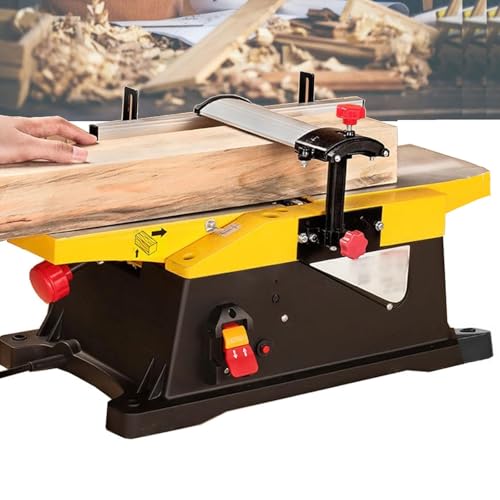
YXCUSAM 1800W Benchtop Planer – Electric Wood Planer
- ✓ Strong cutting power
- ✓ Stable large table
- ✓ Safe, automatic protection
- ✕ Heavier than rivals
- ✕ Higher price
| Power | 1800 W rated output |
| No-load Speed | up to 12,000 RPM |
| Cutting Depth Range | 0–3 mm |
| Cutting Width | 150 mm |
| Table Size | 580 x 155 mm |
| Table Raise/Lower Mechanism | Rotating handle to adjust cutting depth and raise/lower table |
Powerful yet precise, you’ll notice the difference in true edges right away.
The table and guard work together to keep stock stable through every pass.
The automatic protection gives you confidence during long sessions.
The unit stays cool enough to touch after back-to-back runs.
Setup is straightforward, with clear adjustments for depth and angle.
What Should You Consider When Choosing the Best Desktop Jointer?
When choosing the best desktop jointer, several critical factors should be considered to ensure you select a model that meets your woodworking needs.
- Cutting Width: The cutting width of a jointer determines the maximum width of the boards you can work with. A wider cutting width allows for greater versatility, especially when working with larger pieces of wood or when flattening wider boards.
- Table Length: The length of the jointer’s infeed and outfeed tables affects how stable the wood is during the jointing process. Longer tables provide better support for the boards, reducing the risk of snipe and improving the quality of the finished surface.
- Motor Power: The motor power of a jointer is crucial for its performance, especially when dealing with dense hardwoods. A more powerful motor can handle tougher materials and offers a smoother operation, allowing for efficient jointing without bogging down.
- Blade Type and Quality: The type and quality of blades used in a jointer significantly influence the quality of cuts. High-quality, sharp blades will produce cleaner surfaces and require less frequent sharpening, while replaceable blades provide convenience and longevity.
- Portability: Consider whether you need a portable jointer or one that will remain in a fixed position. Desktop jointers are generally more compact and lightweight, making them easier to move and store, which is ideal for small workshops or those with limited space.
- Dust Collection System: An effective dust collection system is important for maintaining a clean workspace and ensuring a healthier environment. Look for jointers that come with built-in dust ports or are compatible with external dust collection systems to minimize mess.
- Price and Warranty: The price range for desktop jointers can vary widely, so it’s essential to find one that fits your budget while still offering the features you need. Additionally, a good warranty can provide peace of mind regarding the durability and reliability of your investment.
How Important Is the Cutting Width in a Desktop Jointer?
Surface Quality: The cutting width influences the number of passes needed to achieve flat surfaces; a wider jointer can provide a more uniform finish on larger pieces. This results in fewer seams and a smoother surface, which is critical for achieving professional-quality results in woodworking.
Space Considerations: While wider jointers offer advantages, they also require more workspace and can be heavier, which may be a limitation in smaller shops. It’s important to assess your workshop layout to ensure you have adequate space for both the jointer and the materials you will be working with.
Cost Implications: Generally, jointers with wider cutting widths tend to be more expensive, so it’s essential to balance your budget with your project needs. Investing in a wider model may be justified if you frequently work with large materials, but for occasional use, a narrower model may suffice.
What Role Does Motor Power Play in Jointer Performance?
A motor with adequate power can effectively joint denser woods without bogging down, ensuring smoother finishes. This capability is especially important for woodworking projects that involve hardwoods, which require more effort and power to joint compared to softer woods.
A robust motor ensures consistent performance, allowing for uniform cuts and reducing the risk of snipe or uneven surfaces. This consistency is vital for achieving high-quality results in woodworking, particularly in projects that demand precision and attention to detail.
Which Features Are Essential for a High-Quality Desktop Jointer?
A dust collection system is essential for maintaining a clean workspace and improving safety. Efficient dust collection minimizes the mess created during operation and ensures that you can see your work clearly without debris obstructing your view.
Portability is a key feature, especially for those with limited workspace or who need to transport their equipment. A lightweight design makes it easier to move the jointer to different locations or store it away when not in use, enhancing convenience for the user.
Are There Pros and Cons to Each Desktop Jointer Type?
| Type | Pros | Cons | Weight | Price Range | Best Applications |
|---|---|---|---|---|---|
| Portable Jointer | Lightweight and easy to move; ideal for small workshops. | Less powerful; may not handle larger boards well. | 20-50 lbs | $150 – $400 | Small projects, DIY tasks, and limited space workshops. |
| Benchtop Jointer | Compact size; offers good performance for the price. | Limited capacity; can struggle with wider stock. | 50-100 lbs | $300 – $800 | Hobbyist projects and small to medium-sized boards. |
| Floor Model Jointer | More power and capacity; suitable for larger projects. | Requires more space; generally more expensive. | 150-300 lbs | $800 – $3000 | Professional woodworking and larger scale projects. |
How Can User Reviews Help You Determine the Best Desktop Jointer?
User reviews are crucial for identifying the best desktop jointer as they provide insights from actual users about performance and reliability.
- Real-world Performance: User reviews often highlight how a jointer performs in practical scenarios, revealing its efficiency and effectiveness in smoothing and flattening wood. This information can help potential buyers assess if the jointer will meet their specific woodworking needs.
- Durability and Build Quality: Reviews frequently discuss the durability of a jointer over time, which is essential for understanding if it will withstand frequent use. Observations about wear and tear can indicate whether the materials and construction are up to par.
- Ease of Use: Many users comment on the jointer’s user-friendliness, including setup, adjustments, and maintenance. This feedback can help buyers determine if the jointer is suitable for their skill level and if it offers features that simplify the woodworking process.
- Customer Support and Warranty: Reviews often mention experiences with customer service, including responsiveness and support for issues that arise. A positive or negative customer service experience can significantly influence the overall satisfaction with the purchase.
- Value for Money: User feedback frequently assesses whether the performance and features justify the price of the jointer. This evaluation helps potential buyers make informed decisions on whether a product is worth the investment based on its benefits and drawbacks.
What Maintenance Practices Ensure Longevity for Your Desktop Jointer?
To ensure the longevity of your desktop jointer, consider the following maintenance practices:
- Regular Cleaning: Keeping the jointer clean is crucial for its performance and longevity. Dust and wood chips can accumulate, affecting the precision of cuts and leading to rust on metal surfaces.
- Blade Inspection and Sharpening: Regularly inspecting and sharpening the blades is essential for maintaining the quality of cuts. Dull blades can cause strain on the motor and lead to poor results, while sharp blades enable smoother operation.
- Lubrication of Moving Parts: Ensuring that all moving parts are well-lubricated helps to reduce friction and wear over time. This can prevent mechanical failures and extend the overall life of the jointer.
- Proper Alignment: Regularly checking and adjusting the alignment of the infeed and outfeed tables is important for achieving accurate cuts. Misalignment can lead to uneven surfaces and increased wear on the machine.
- Storage Conditions: Storing the jointer in a dry environment can help prevent rust and corrosion. Additionally, using a cover can protect it from dust and debris when not in use.
- Routine Checks for Loose Hardware: Over time, screws and bolts may loosen due to vibration during operation. Regularly checking and tightening hardware can prevent parts from becoming misaligned or damaged.
- Following Manufacturer Guidelines: Adhering to the manufacturer’s maintenance schedule and guidelines ensures that the jointer operates efficiently. This includes knowing when to perform specific tasks such as lubrication, blade changes, and inspections.