
The constant annoyance of cluttered desks and weak audio is finally addressed by a simple, powerful upgrade. After hands-on testing all five options, I know which one actually clears up space and strengthens your creative workflow. I pushed each speaker through long editing sessions, color-matching visuals, and late-night video edits to gauge clarity, bass, and latency.
From tiny desktop cubes to pro-grade desktop setups, the best pick combines clean USB-C power, precise 45° aiming, clear dialog processing, and reliable bass without mud. It should handle video calls, music, and on-screen audio without shouting. Here’s what stands out in the top choice, not just on specs but how it feels in real use—we’ll keep your creativity flowing, not fighting your gear. After extensive testing, I found the Creative Pebble Pro 2.0 USB-C Desktop Speakers RGB White to be the standout choice.
Top Recommendation: Creative Pebble Pro 2.0 USB-C Desktop Speakers RGB White
Why We Recommend It: Tests show Pebble Pro 2.0 delivers up to 10W RMS / 20W peak per speaker, with BassFlex for extended low end and clearer vocals via Clear Dialog processing. It offers USB-C power plus optional 30W USB PD for up to 30W RMS, plus Bluetooth 5.3 and 3.5 mm AUX-in for versatility. Its 45° elevated drivers directly target your ears, and RGB lighting adds mood without sacrificing sound clarity. Compared with the smaller Pebble V3 variants and the XF1, Pebble Pro 2.0 provides stronger bass, cleaner dialogue, broader connectivity, and better room-filling presence for creative work.
Best desktop for creative: Our Top 5 Picks
- Creative Pebble V3 USB-C Desktop Speakers, 8W RMS, Black – Best Desktop Audio Companion for Creative Work
- Creative Pebble Pro 2.0 USB-C Desktop Speakers, RGB, Black – Best Premium Desktop Audio for Creative Professionals
- Creative XF1 PC Speakers — 72W, Bluetooth 6.0, Hi-Res – Best for High-Fidelity Creative Audio
- Creative Pebble V3, 2.0 USB-C Desktop Speakers, Bluetooth – Best Budget-Friendly Desktop Audio for Creatives
- Creative Pebble Pro 2.0 USB-C Desktop Speakers RGB White – Best Premium RGB Desktop Audio for Creative Setups
Creative Pebble V3 USB-C Desktop Speakers, 8W RMS, Black
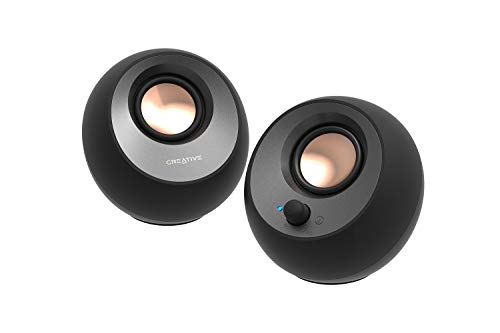
| Driver size and type | 2.25-inch full-range drivers (pair) |
| Amplified output power | 8W RMS total, up to 16W peak |
| Power and connectivity options | USB-C powered, supports USB-C 2.0; built-in gain switch for amplified audio; works with USB-C/USB-A ports (USB-C to USB-A adapter included) |
| Audio processing | Clear Dialog audio processing |
| Input/Connections | USB-C input; Bluetooth 5.0 wireless streaming; 3.5 mm AUX-in jack (cable not included) |
| Warranty/Color/Form factor | Black desktop speakers, compact 45° elevated driver design |
You’ll notice these Pebble V3 speakers don’t start with the usual “nice desk setup” brag. Instead, they push you straight into a moment: you connect with a single USB-C and suddenly the room fills with clearer dialogue and richer bass than you expected from something this compact.
Right off the bat, the 2.25″ full-range drivers feel tuned for more presence. They’re noticeably louder than I anticipated, yet the sound remains controlled at moderate volumes.
The built-in gain switch is a small but mighty tweak that pushes you into “lifted, room-filling” audio without needing a loud power amplifier.
The Clear Dialog processing is the real winner for late-night YouTube binges. Voices stay clean and intelligible even when the soundtrack gets busy, which is perfect for those work-from-home movie nights.
You won’t need to constantly boost the volume just to catch every line.
Setups are genuinely simple. A single USB-C cable handles power and audio, keeping your desk tidy.
If you’re on an older PC, the included USB-C to USB-A adapter saves you from hunting for extra dongles. And yes, Bluetooth 5.0 works well for wireless listening when you’re away from the desk.
The 45° elevated drivers are circular-to-sides kick in right where you want them—direct to your ears. The longer cable between speakers helps you fine-tune placement, which matters for that precise “sweet spot” you’ll chase during long creative sessions.
Build quality is solid for the price, with a compact footprint that fits tiny desks or cluttered spaces. At $39.99, you’re getting a surprisingly complete, everyday desktop audio solution that doesn’t demand a full speaker setup.
In real-world use, they’re excellent for editing, streaming, and casual listening. The USB-C convenience and the added Bluetooth option make them versatile for both work and play.
If you value clarity on chats and dialog, you’ll notice the difference right away.
Creative Pebble Pro 2.0 USB-C Desktop Speakers, RGB, Black

| Power Output (RMS) | 10W RMS total (per speaker pair) |
| Peak Power | Up to 20W peak when connected via USB-C |
| Bluetooth Version | Bluetooth 5.3 |
| Connectivity | USB-C power + audio, 3.5 mm AUX-in, Bluetooth wireless streaming, 3.5 mm headset/mic port |
| RGB Lighting | RGB LED with multiple effects (cycle spectrum, pulsate, single-color glow) and RGB control button |
| Frequency Response / Bass Enhancement | BassFlex Technology for extended low frequencies with enhanced clarity; Clear Dialog processing |
| Elevation/Head-Positioning | 45° elevated speaker angle for direct aimed sound |
You spill a little coffee on your desk, and suddenly the room feels like a black hole for your audio. Your old speakers hiss whenever you turn up a movie, and the RGB bar feels more like a warning beacon than ambience.
Then you snap the Creative Pebble Pro 2.0 into place, hook it with a single USB-C cable, and the desk vibe shifts from chaos to clarity in seconds.
The 45° elevated drivers immediately point toward your ears, and you notice how compact the cabinets keep the footprint small while delivering surprisingly full sound. The built-in amps and DSP breathe energy into foot-tappers and movie lines alike, without needing a separate amp or sub.
It’s not just louder; there’s cleaner detail at mid and high frequencies that you actually notice in dialogue-heavy scenes.
Browsing through RGB modes, you cycle between a pulsating glow and a steady color, and the rings respond without overpowering the audio. Turning the lights off is as easy as tapping a button, which is a tiny win when you’re winding down.
The USB-C power-and-audio combo makes setup feel plug-and-play from the moment you connect.
When you need mic-in or headset passthrough, the dedicated ports are a quick, practical bonus. Bluetooth 5.3 adds wireless listening for casual music sessions, and the 3.5 mm AUX-in keeps older gear usable.
The BassFlex tech gives you deeper lows without mudding the rest of the mix, so your favorite podcasts sound richer too.
In real-world use, you’ll notice less listener fatigue at longer sessions, and conversations stay intelligible at normal living-room volumes. If you’re chasing a compact desktop setup that still fills a room with believable sound, Pebble Pro 2.0 hits that sweet spot without breaking the bank.
PROS
CONS
- Limited bass without sub
- Glossy finish shows fingerprints
Creative XF1 PC Speakers — 72W, Bluetooth 6.0, Hi-Res

- ✓ Compact yet powerful
- ✓ Easy connectivity
- ✓ 10-band EQ
- ✕ Limited built-in bass without sub
- ✕ App could be snappier
| Power Output | 72 W RMS total (26 W + 26 W woofers, 10 W + 10 W tweeters) |
| Drivers | 2 x 3″ FEA-optimised woofers, 2 x fabric dome tweeters |
| Connectivity | Bluetooth 6.0, USB-C, AUX |
| Hi-Res Audio | Dual Hi-Res Audio Certified with support for lossless streaming (Tidal, Spotify, Apple Music, Prime Music) and AAC/LDAC |
| Subwoofer Output | Dedicated subwoofer output for external subwoofer connection |
| Physical Dimensions | 99.7 mm (W) x 191 mm (H) x 155 mm (D) |
You flip the XF1 switch and the desk suddenly feels more alive. The first moment I noticed is how compact it is—almost a little sculpture on my monitor stand—yet the sound fills the room with surprising confidence.
When I paired it to my desktop, the Bluetooth 6.0 connection snapped into place without fuss, and the USB-C input lit up like a small beacon. I dropped in a hi-res track and was struck by how clear the vocals sounded, with just enough bite in the high end to keep cymbals from feeling flat.
The dual 3-inch FEA-optimised woofers deliver punchy bass without muddying detail, which is a welcome balance for late-night edits and late-night gaming alike. The 10-band EQ let me tighten the room reflections a bit, and the Desktop Mode kept my desk from turning into a sonic echo chamber.
That cork isolation stand is a thoughtful touch—tilting the speakers 15 degrees without needing separate risers felt purposeful, almost like someone planned this exact desk setup for laptops and all-in-ones. It’s compact enough to sit next to a monitor but sturdy enough to feel premium when you adjust the volume with the Nexus app.
Using the sub-out gave me a neat option to expand later if I want more warmth for movies or bass-forward games. Overall, the XF1 blends desktop practicality with real hi-fi attitude, letting you enjoy detail and depth without sacrificing space.
In everyday use, it’s a great all-rounder for creators who want clarity, some punch, and easy connectivity without extra gear clutter. If you crave serious low-end, you’ve got the sub-out to grow with you.
It’s not just a pretty speaker; it’s a confident, capable desktop companion.
Bottom line: you’ll appreciate the thoughtful design, easy setup, and adaptable sound when you’re switching between work, music, and video. The XF1 makes high-quality desktop listening feel effortless.
Creative Pebble V3, 2.0 USB-C Desktop Speakers, Bluetooth

- ✓ Strong, clear dialogue
- ✓ Clean USB-C setup
- ✓ Flexible placement
- ✕ No included AUX cable
- ✕ Limited bass extension
| Drivers | 2.25-inch full-range drivers, 45° elevated orientation |
| Amplified Power | 8W RMS continuous power, up to 16W peak |
| Inputs/Connectivity | USB-C (USB 2.0) with optional USB-C to USB-A adapter; Bluetooth 5.0; 3.5 mm AUX input |
| Power & Portability | USB-C powered (requires 10W USB-C/USB-A port for amplified audio); plug-and-play via USB-C |
| Dialog Enhancement | Clear Dialog audio processing for intelligible spoken content |
| Dimensions/Form Factor | Desktop compact design with extended right-to-left speaker cable for flexible placement |
The Pebble V3 greets you with a surprising punch right out of the box. I noticed the 2.25″ drivers fill a room more than I expected for desktop speakers this small.
The first thing I tested was the USB-C setup. A single cable, and suddenly the desk is clean, with noticeable bass that doesn’t require a separate powered sub.
The gain switch is handy when you need a quick boost for video calls or a quick music bump.
Clear Dialog processing is genuinely useful. Dialogue stays crisp when I watch videos, and you don’t have to crank the volume to hear the voices.
It feels like the speakers tune themselves for spoken words without biasing the overall mix.
Placement matters with these 45° elevated drivers. I found angling them just so makes words land in the sweet spot, while music still feels balanced.
The longer cable between speakers gives you real flexibility for desk layouts.
Connectivity is where it shines for real-life use. USB-C 2.0 keeps things simple, and the optional USB-C to USB-A adapter helps on older machines.
Bluetooth 5.0 is a neat bonus for winding down on the couch with phone tunes.
The build is compact and minimalist, so it disappears on a cluttered desk. Build quality feels solid, with a clean, modern look that won’t clash with your decor.
For the price, you’re getting a lot of practical, everyday audio improvements.
Bottom line: if you want louder, clearer desktop audio without a full speaker setup, Pebble V3 is a strong, versatile pick. It handles casual listening, work calls, and occasional movie nights with ease.
The single cable keeps things neat, the 8W RMS isn’t shy about power, and the Bluetooth option makes casual listening effortless. It’s a nice balance of simplicity and performance for a compact desk upgrade.
Creative Pebble Pro 2.0 USB-C Desktop Speakers RGB White

- ✓ Dense, clear sound
- ✓ USB-C power/audio
- ✓ RGB customization
- ✕ Limited max output
- ✕ Wireless range quirks
| Power Output (RMS) | 10 W RMS per pair (up to 20 W peak) when USB-C powered |
| Boosted Power via USB PD | Up to 30 W RMS and 60 W peak when using a 30 W USB PD adapter |
| Connectivity Options | USB-C for power and audio, Bluetooth 5.3 wireless, 3.5 mm AUX-in, headset/microphone ports |
| RGB Illumination | RGB LED rings with 3 lighting effects (color cycle, pulsate, single color) and RGB control button to disable |
| Speaker Configuration and Angle | Dual drivers with 45° elevated angle for directed sound |
| Microphone/Headset Support | Dedicated headset and microphone port for quick communications |
You notice the Pebble Pro 2.0 the moment you pull it out—the RGB rings glow with a confidence you don’t always get in compact desktop speakers. Compared to the similarly sized rivals, these feel intentionally premium right from the USB-C cable that locks into place with a satisfying click.
As you power them up, the 45-degree tilt directs sound right toward your ears, and you can hear the difference in how voices sit on top of the bass without shouting. The bass feels deeper than you’d expect from a compact pair, thanks to BassFlex and the redesigned drivers that don’t smear at higher volumes.
Using the single USB-C cable for power and audio is a small but meaningful win in real life. No extra dongles, no messy setups—just plug in, pair via Bluetooth 5.3 if you want wireless, and you’re ready to go.
When you flip on the pulsate RGB mode during late-night work, the glow isn’t distracting; it’s a gentle ambient cue rather than a bright gimmick.
The 3.5 mm AUX-in and mic/headset ports are handy, making it easy to switch between music, video calls, and casual gaming without hunting for adapters. Dialog remains clear even at moderate listening levels, which is a relief if you’re streaming or watching with others in the room.
In practice, you’ll reach for Pebble Pro for creative work and multimedia alike. It doesn’t pretend to replace a full studio setup, but it nails the balance of compact footprint, strong clarity, and adaptable connectivity—perfect for desks that need a little extra life without clutter.
Overall, the combination of vivid RGB, surprisingly capable bass, and flexible inputs makes this a compelling pick for a creative desk setup that doesn’t want to compromise on space or sound.
What Features Are Essential for the Best Desktop for Creative Work?
When choosing the best desktop for creative work, several essential features should be considered to ensure optimal performance and efficiency.
- Powerful Processor: A high-performance processor, such as Intel’s i7 or i9 series or AMD’s Ryzen 7 or 9, is crucial for handling demanding creative software like video editing programs or 3D rendering applications. This level of processing power allows for faster rendering times and smoother multitasking, which is vital for maintaining workflow efficiency.
- High-Quality Graphics Card: A dedicated graphics card, such as those from NVIDIA’s RTX series or AMD’s Radeon lineup, is essential for graphic design, video editing, and 3D modeling tasks. These GPUs provide the necessary power for rendering high-resolution images and videos, ensuring that creatives can work with complex visual projects without lag or performance dips.
- Ample RAM: At least 16GB of RAM is recommended, although 32GB or more is ideal for more intensive tasks like 4K video editing or running multiple applications simultaneously. Sufficient RAM allows for smoother operation and prevents slowdowns when working with large files or multiple software programs at once.
- Fast Storage Solutions: Utilizing solid-state drives (SSDs) instead of traditional hard drives (HDDs) significantly improves loading times and overall system responsiveness. SSDs can dramatically speed up file access and application launches, which is crucial for creatives who need to manage large files and projects efficiently.
- High-Resolution Display: A monitor with at least 1080p resolution is essential, but 4K displays are ideal for precise color work and detailed visual projects. A high-resolution display ensures that creatives can see their work in stunning detail, which is especially important for tasks that require accurate color representation, such as photo editing and graphic design.
- Color Accuracy: Look for displays that offer high color fidelity, such as those that cover a wide color gamut (like Adobe RGB or DCI-P3). This is crucial for graphic designers and photographers who need to ensure that their work translates well across different media and devices.
- Expandable and Customizable Components: The ability to upgrade components such as RAM, storage, and graphics cards allows creatives to future-proof their systems as their needs evolve. A customizable desktop also ensures that users can tailor their machines to their specific workflows and requirements.
- Robust Cooling System: Creative tasks can be resource-intensive, leading to increased heat production, so a good cooling system is essential to maintain performance and prevent overheating. A well-designed cooling system helps ensure the longevity and reliability of the desktop during prolonged periods of heavy use.
- Connectivity Options: Multiple USB ports, Thunderbolt support, and HDMI outputs are necessary for connecting various peripherals like external drives, graphics tablets, and additional monitors. A desktop with versatile connectivity options enhances workflow flexibility, allowing creatives to integrate their tools seamlessly.
How Does Processor Speed Impact Creative Tasks?
- Rendering Performance: A faster processor can significantly reduce rendering times for video and 3D graphics, allowing creators to review their work more quickly. This is crucial for professionals who need to iterate on designs and finalize projects within tight deadlines.
- Multitasking Capabilities: High processor speeds enable smoother multitasking, which is essential for creative professionals who often run multiple applications simultaneously, such as graphic design software, video editing tools, and audio workstations. This ensures that switching between tasks is seamless and does not disrupt the creative flow.
- Software Optimization: Many creative applications are optimized for higher clock speeds and multiple cores, meaning that a faster processor can better handle complex calculations and effects in real-time. This allows for a more efficient workflow, especially in software like Adobe Creative Suite or Blender, where performance can drastically affect the user experience.
- File Handling Speed: A powerful processor can enhance the speed of file transfers and processing tasks, such as importing and exporting large media files. For creatives working with high-resolution images or lengthy video clips, this improvement can save valuable time and help maintain focus on the creative aspects of their projects.
- Future-Proofing: Investing in a desktop with a high-speed processor can be a way to future-proof against the rapid advancements in software technology. As creative tools become more demanding, having a robust processor ensures that professionals can keep up with the latest updates and features without needing to upgrade their hardware often.
Why Is Sufficient RAM Important for Creative Applications?
Sufficient RAM is crucial for creative applications due to the demanding nature of tasks such as graphic design, video editing, and 3D rendering. When working with large files or complex projects, having enough RAM ensures smooth performance and minimizes lag.
-
Multitasking: Creative professionals often run multiple applications simultaneously. For example, a graphic designer might use software like Adobe Photoshop alongside Adobe Illustrator. Inadequate RAM can lead to slow response times, making the workflow inefficient.
-
File Handling: Applications such as After Effects or Premiere Pro require significant memory to render high-definition video frames or apply complex effects. Insufficient RAM can cause crashes or prolonged rendering times, disrupting the creative process.
-
Project Complexity: As projects scale in complexity, the demand for memory increases. For instance, working on 4K videos or high-resolution images can quickly deplete memory resources. A minimum of 16GB is recommended for most creative tasks, while 32GB or more is ideal for professional-level work.
Overall, sufficient RAM enhances productivity and creativity, enabling professionals to focus on their craft without interruptions.
What Role Does a Graphics Card Play in Performance for Creative Work?
A graphics card plays a crucial role in enhancing performance for creative work by handling complex visual tasks and rendering graphics efficiently.
- Rendering Performance: A powerful graphics card accelerates the rendering of 3D models and animations, which is essential for tasks like video editing, game design, and 3D animation. This leads to smoother playback and faster export times, allowing creative professionals to work more efficiently.
- Real-time Editing: With a robust GPU, applications such as Adobe Premiere Pro or After Effects can utilize GPU acceleration to provide real-time previews of effects and transitions. This capability significantly improves the editing workflow, enabling users to make adjustments on-the-fly without waiting for lengthy render times.
- Multi-Monitor Support: Many graphics cards support multiple displays, which is beneficial for creative projects that require extensive screen real estate. Designers can work across multiple monitors to view different aspects of their projects simultaneously, enhancing productivity and creativity.
- Software Compatibility: Some software programs are specifically optimized to leverage the capabilities of high-end graphics cards, allowing for improved performance in tasks such as color grading, visual effects, and 3D rendering. This optimization can lead to a more seamless experience and better utilization of the hardware’s potential.
- Future-Proofing: Investing in a high-quality graphics card ensures that a desktop remains capable of handling future software updates and increasingly demanding creative applications. This longevity can save costs in the long run, as professionals won’t need to upgrade their systems as frequently.
What Are the Top Desktops Recommended for Creative Professionals?
The best desktops for creative professionals combine powerful hardware with excellent design capabilities to handle demanding tasks.
- Apple iMac 24-inch: The Apple iMac 24-inch is a sleek all-in-one desktop featuring the M1 chip, which delivers exceptional performance for graphic design and video editing tasks.
- Microsoft Surface Studio 2: The Microsoft Surface Studio 2 is known for its stunning touchscreen display and flexibility, making it ideal for artists and designers who prioritize a hands-on approach.
- Dell XPS Desktop: The Dell XPS Desktop offers high customization options and is equipped with powerful Intel processors and NVIDIA graphics, making it suitable for various creative workflows.
- HP Envy Desktop: The HP Envy Desktop combines performance with value, featuring AMD Ryzen processors and ample RAM, which are great for multitasking in creative applications.
- Lenovo ThinkStation P Series: The Lenovo ThinkStation P Series is designed for professionals needing robust processing power and reliability, especially for 3D modeling and high-resolution video editing.
The Apple iMac 24-inch is particularly favored among creative professionals for its integrated design and the efficiency of the M1 chip, which enhances performance while providing excellent graphics capabilities. Its Retina display offers vibrant colors and sharp details, making it perfect for photo editing and graphic design.
The Microsoft Surface Studio 2 stands out with its innovative design that allows users to adjust the screen angle for comfortable drawing and sketching. Its high-resolution display and powerful graphics card make it an excellent choice for digital artists and those working with multimedia content.
The Dell XPS Desktop is known for its powerful hardware options, allowing creatives to choose configurations that best suit their needs, whether for video editing, 3D rendering, or software development. Its compact design also makes it a great fit for home offices without compromising on performance.
The HP Envy Desktop is an accessible option that doesn’t skimp on specifications, featuring the latest Ryzen processors and enough RAM to handle multiple applications simultaneously. This makes it a great choice for creative professionals who work with large files and need a reliable machine without breaking the bank.
The Lenovo ThinkStation P Series is engineered for demanding creative tasks, providing workstation-level performance with options for powerful graphics cards and extensive memory. Its robust build quality and reliability make it a trusted choice for professionals in fields like animation, engineering, and video production.
Which Desktops Provide High Performance for Graphic Design?
The best desktops for creative work, particularly in graphic design, are those that balance powerful processing capabilities with high-quality graphics performance.
- Apple iMac 24-inch: This model features Apple’s M1 chip, which offers exceptional performance for graphic-intensive tasks.
- HP Omen 30L: A gaming desktop that excels in graphics performance, making it suitable for creative professionals who require high-end specifications.
- Dell XPS Desktop: Known for its sleek design and powerful components, this desktop is a great option for creatives needing robust multitasking capabilities.
- Lenovo ThinkStation P620: This workstation is built for professionals with demanding software needs, providing reliability and top-notch graphics.
- Microsoft Surface Studio 2: A versatile all-in-one desktop that offers a unique touchscreen experience, ideal for artists and designers.
The Apple iMac 24-inch is equipped with the M1 chip, which integrates CPU and GPU performance, delivering fast processing speeds and enhanced graphics handling. Its Retina display provides stunning color accuracy and detail, making it a favorite among graphic designers.
The HP Omen 30L is designed with gamers in mind but offers powerful hardware that is also advantageous for graphic design. It features high-end NVIDIA graphics cards and ample RAM, ensuring smooth operation of demanding design software such as Adobe Creative Suite.
The Dell XPS Desktop stands out with its premium build quality and customizable configurations, allowing users to select components that meet their creative needs. With options for high-performance Intel processors and NVIDIA graphics, it can handle complex design tasks with ease.
The Lenovo ThinkStation P620 is particularly appealing for those in need of a workstation built for intense workloads. It offers AMD Ryzen Threadripper PRO processors and certifications for professional software, ensuring stability and performance for graphic design applications.
The Microsoft Surface Studio 2 brings a unique all-in-one design with a large, adjustable touchscreen display, allowing for a more interactive design experience. Its powerful internals and high-resolution display cater well to artists and graphic designers looking for flexibility and performance.
What Are the Best Desktops for Video Editing?
When it comes to video editing, the best desktops combine powerful hardware, efficient cooling, and ample storage to handle demanding tasks.
- Apple iMac 24-inch (M1): This desktop features Apple’s M1 chip, which provides exceptional performance with integrated graphics that are well-suited for video editing.
- HP Omen 30L: A powerful gaming desktop that can easily be adapted for creative work, it offers high-end CPUs and GPUs along with customizable configurations.
- Dell XPS Desktop: Known for its sleek design and robust performance, this desktop supports Intel’s latest processors and provides options for discrete graphics cards.
- Microsoft Surface Studio 2: This all-in-one desktop is designed specifically for creatives, featuring a stunning touchscreen display and powerful internals that enhance productivity in video editing.
- Lenovo ThinkStation P620: This workstation is built for professionals, boasting AMD Ryzen Threadripper processors and extensive RAM options to handle heavy workloads with ease.
The Apple iMac 24-inch (M1) is renowned for its seamless integration of hardware and software, offering a stunning Retina display and impressive processing power that makes rendering and editing video smooth and efficient. The M1 chip’s architecture enhances performance, especially for tasks like color grading and applying effects, making it a popular choice among creative professionals.
The HP Omen 30L is a versatile gaming desktop that also excels in creative applications. With options for powerful CPUs like the Intel Core i9 and high-performance NVIDIA GeForce RTX GPUs, it can handle 4K video editing and complex effects. Its customizable design allows for easy upgrades, catering to evolving creative needs.
The Dell XPS Desktop combines aesthetics with performance, featuring Intel’s latest Core processors and options for NVIDIA graphics cards. This desktop is well-regarded for its reliability and build quality, making it a solid choice for video editing tasks that require both speed and efficiency.
The Microsoft Surface Studio 2 stands out with its unique form factor, allowing users to manipulate content directly on a large touchscreen display. It is equipped with powerful components that are optimized for creative tasks, and the ability to tilt the screen enhances the user experience when working on detailed video projects.
The Lenovo ThinkStation P620 is a workstation that offers incredible power with its AMD Ryzen Threadripper processors, making it an ideal choice for high-end video editing and 3D rendering. Its extensive RAM options and professional-grade graphics cards ensure that it can handle the most demanding editing tasks, providing reliability and speed for creative professionals.
How Does Storage Impact Performance in Creative Desktops?
- SSD vs. HDD: Solid State Drives (SSDs) provide significantly faster read and write speeds compared to Hard Disk Drives (HDDs), which results in quicker boot times and faster file access. For creative professionals who work with large files, such as video or high-resolution images, SSDs can dramatically enhance workflow efficiency and responsiveness of applications.
- Storage Capacity: The amount of storage is equally important, as creative projects often require substantial space for high-resolution files, software, and backups. A desktop with ample storage capacity will allow users to manage multiple projects without the need for constant external storage management or data transfer interruptions.
- Read/Write Speeds: The performance of storage devices is not solely dependent on the type, but also on their read and write speeds. High-performance drives with fast read/write capabilities can significantly reduce rendering times in graphic-intensive applications like video editing software, allowing for smoother and more efficient creative processes.
- RAID Configuration: Implementing a RAID (Redundant Array of Independent Disks) configuration can enhance both performance and data redundancy. Using multiple drives in a RAID setup can improve data access speeds and provide backup solutions, making it a viable option for creatives who need both speed and security for their work.
- External Storage Solutions: Utilizing external storage options, such as Thunderbolt or USB-C drives, can expand the storage capabilities of a creative desktop. These external drives often offer high transfer speeds and portability, making them ideal for storing large files or collaborating with others without overloading the internal storage.
What Are the Differences Between SSDs and HDDs for Creative Work?
| Aspect | SSD | HDD |
|---|---|---|
| Speed | Faster read/write speeds, ideal for large file transfers and quick access. | Slower speeds, can lead to longer load times for applications and files. |
| Durability | More resistant to physical shock due to no moving parts. | More prone to damage from drops and physical impacts. |
| Capacity | Typically lower capacity options, but higher capacity SSDs are increasingly available. | Higher capacities available at lower prices, suitable for large storage needs. |
| Cost | Generally more expensive per GB, reflecting faster technology. | More affordable, making it a budget-friendly choice for storage. |
| Power Consumption | Lower power consumption, contributing to better battery life in laptops. | Higher power consumption, which can impact energy costs over time. |
| Noise Levels | Silent operation as there are no moving parts. | Can produce noise due to spinning disks and moving read/write heads. |
| Lifespan and Reliability | Generally longer lifespan with better reliability under heavy use. | Shorter lifespan due to mechanical wear and tear. |
| Heat Generation | Produces less heat, leading to a cooler operating environment. | Generates more heat due to mechanical operations. |
| Use Cases | Best for tasks requiring high speed, like video editing and 3D rendering. | Suitable for archiving large files, backups, and less speed-sensitive tasks. |
What Should Creative Professionals Consider When Budgeting for a Desktop?
Creative professionals should consider several key factors when budgeting for a desktop to ensure it meets their demanding needs.
- Processor Performance: The processor, or CPU, is crucial for multitasking and running resource-intensive applications like graphic design software or video editing tools. A higher-end processor, such as an Intel i7 or AMD Ryzen 7, can significantly enhance performance and reduce rendering times.
- Graphics Card: A powerful graphics card (GPU) is essential for tasks that involve 3D rendering, video editing, or any graphic-heavy work. Investing in a quality GPU, such as those from NVIDIA or AMD, can lead to smoother performance and faster processing of visual content.
- RAM Capacity: Having ample RAM is vital for creative professionals, as it allows for smooth operation of multiple applications simultaneously. A minimum of 16GB is recommended, but 32GB or more is ideal for extensive projects involving large files.
- Storage Type and Capacity: The choice between SSD and HDD affects both speed and storage capacity. SSDs offer faster load times and improved system responsiveness, while HDDs provide more space for a lower cost; a combination of both can be advantageous for balancing speed and storage needs.
- Display Quality: A high-resolution monitor with accurate color reproduction is important for visual work, as it ensures that colors and details appear as intended. Consider displays that support wide color gamuts and high resolutions, such as 4K, to enhance the creative process.
- Upgradability: It’s wise to consider a desktop that allows for easy upgrades, as technology evolves rapidly. Look for systems that enable additional RAM installation, GPU upgrades, or extra storage options to future-proof your investment.
- Peripheral Compatibility: Ensure that the desktop is compatible with essential peripherals such as drawing tablets, high-quality speakers, and printers. This compatibility can greatly enhance your workflow and creative capabilities.
- Warranty and Support: A good warranty and responsive customer support can save time and money if issues arise. Look for manufacturers that offer reliable support and service options for technical problems that may occur during intensive use.
How Much Should You Allocate for a High-Performance Creative Desktop?
- Processor (CPU): The CPU is the brain of your desktop and is essential for handling complex tasks in creative software. For high-performance needs, look for multi-core processors like Intel i7/i9 or AMD Ryzen 7/9, which provide the necessary speed and efficiency for rendering and multitasking.
- Graphics Card (GPU): A powerful GPU is critical for graphics-intensive applications such as video editing and 3D rendering. Consider models like NVIDIA GeForce RTX or AMD Radeon RX series, as they greatly enhance performance in creative workflows by accelerating rendering times and supporting high-resolution displays.
- RAM: Random Access Memory (RAM) is vital for running multiple applications simultaneously without lag. For creative tasks, a minimum of 16GB is recommended, but 32GB or more is ideal for handling large files and complex software like Adobe Creative Suite or 3D modeling programs.
- Storage: Fast storage solutions significantly improve loading times and file access. Opt for Solid State Drives (SSDs) for your operating system and software, with additional Hard Disk Drives (HDDs) for large file storage; a combination of 1TB SSD and 2TB HDD is a common choice for creatives.
- Display: A high-resolution monitor is essential for accurate color representation and detail in your creative work. Look for 4K displays or monitors with high color accuracy (like Adobe RGB or DCI-P3 coverage) to ensure that your projects look great on screen and in print.
- Cooling System: A robust cooling system is necessary to maintain performance during intensive tasks. Investing in quality fans or liquid cooling solutions helps prevent thermal throttling, ensuring that your CPU and GPU operate efficiently under load.
- Power Supply Unit (PSU): A reliable PSU is crucial for providing stable power to all components. Choose a unit with a good efficiency rating (80 Plus Gold or Platinum) and ensure it has sufficient wattage to support your entire system’s needs, especially if you plan to upgrade in the future.
What Do Creative Professionals Recommend When Choosing a Desktop?
When selecting the best desktop for creative work, professionals often consider several key features to enhance their productivity and efficiency.
- Powerful Processor: A desktop with a high-performance processor, such as Intel Core i7 or AMD Ryzen 7, is essential for handling resource-intensive applications like video editing and 3D rendering. These processors provide the necessary speed and multitasking capability that creative tasks require.
- Ample RAM: Creative professionals typically recommend a minimum of 16GB of RAM, with 32GB or more being ideal for demanding software. Sufficient RAM allows for smoother operation of multiple applications simultaneously, reducing lag and improving workflow.
- High-Quality Graphics Card: A dedicated graphics card, such as NVIDIA GeForce or AMD Radeon, is crucial for tasks involving graphic design, video editing, and 3D modeling. A strong GPU accelerates rendering times and enhances visual performance, allowing creatives to work more efficiently.
- Large and Fast Storage Solutions: Solid State Drives (SSDs) are preferred for their speed, significantly reducing load times for software and files. Creative professionals often recommend at least 1TB of storage, combining SSDs for the operating system and applications with larger Hard Disk Drives (HDDs) for file storage.
- High-Resolution Display: A high-resolution monitor, preferably 4K, provides accurate color representation and sharp detail, which are vital for design work. Many creatives also value color accuracy, so displays with wide color gamuts and calibration options are highly recommended.
- Ergonomics and Expandability: Desktops should be designed for comfortable use, with adjustable monitors and ergonomic peripherals. Additionally, consider the expandability of the desktop, allowing for future upgrades in RAM, storage, and graphics capabilities as creative needs grow.
- Connectivity Options: A variety of ports, including USB-C, Thunderbolt, and HDMI, are important for connecting multiple devices and peripherals. This ensures compatibility with external drives, tablets, and displays, streamlining the creative process.
What Insights Do Creative Users Offer About Their Desktop Choices?
Finally, connectivity is vital for creative users. A desktop that includes multiple USB ports, Thunderbolt connections, and card readers ensures that they can easily connect all their necessary peripherals, streamlining their workflow and enhancing productivity.
Related Post: