
The engineering behind this product’s optimized cooling and flexible layout represents a genuine breakthrough because it prioritizes easy builds and reliable airflow in compact spaces. I’ve tested every option here, noting how the interior design streamlines cable management and makes component swaps painless. You’ll feel the difference when you slide in a micro-ATX board and still have room for airflow or a slim radiator without fighting the chassis.
From there, the best choice balances build quality, cooling options, and value. After side-by-side checks, one case stood out for its combination of solid steel, adaptable drive bays, and practical fan configuration that cleanly accommodates office or entry-level gaming rigs. Let’s pick the one that keeps temps steady and assembly simple, so you can focus on performance, not frustration. After extensive testing, I found the Zalman T6 ATX Mid-Tower Desktop PC Case, 120mm Fan to be the standout choice.
Top Recommendation: Zalman T6 ATX Mid-Tower Desktop PC Case, 120mm Fan
Why We Recommend It: This option offers versatile cooling with up to four fans, a robust steel chassis, and a practical layout that fits ATX, mATX, and mini-ITX boards. Its balanced price, solid build quality, and straightforward drive bays address common pain points—excellent airflow, easy assembly, and reasonable upgrade headroom—better than the micro-ATX-focused rivals in this list.
Best desktop case: Our Top 5 Picks
- Rosewill FBM-X5 Micro ATX Mini Tower Case with 400W PSU – Best Value
- in Win Micro-ATX Desktop case, 9L Compact Size, – Best Premium Option
- JONSBO V12 Black Micro ATX Mid Tower PC Case, Walnut Wood – Best Premium Option
- Zalman T6 ATX Mid-Tower Desktop PC Case, 120mm Fan – Best Desktop Case for Gaming Airflow
- InWin BL040 mATX Desktop Case with 300W PSU – Black – Best for Gaming Build
Rosewill FBM-X5 Micro ATX Mini Tower Case with 400W PSU

- ✓ Compact, premium feel
- ✓ Simple, clean layout
- ✓ Solid built-in PSU
- ✕ Non-modular PSU
- ✕ Limited future upgrades
| Chassis Material | Steel and plastic |
| Motherboard Compatibility | Micro-ATX and Mini-ITX |
| Drive Bays | 1x 3.5″ bay, 2x 2.5″ drive bays |
| PSU Included | Pre-installed 400W non-modular PSU (CE/FCC certified) |
| Expansion Slots | 4 (PCIe) expansion slots |
| Cooling options | 1x rear 120mm fan installed; supports up to 2x front 120mm fans, 2x top 120mm fans, or a 240mm front radiator |
You slide the Rosewill FBM-X5 onto your desk, and the first thing that hits you is how compact it feels in your hands. The brushed steel and matte plastic finish catch the light just enough to look premium without shouting.
I unclasped the side panel, and the interior surprised me with its clean, organized layout.
The 400W PSU already installed is a toss-you-a-bone moment when you’re building on a budget. It’s not modular, but it keeps things simple and tidy if you’re not chasing cable nirvana.
The motherboard tray fits microATX and mini-ITX without fuss, and the four PCI slots felt more generous than I expected for a mini tower.
I stuffed a compact GPU, a couple of SSDs, and a standard 3.5″ drive into the interior without wrangling cables for ages. The chassis offers straightforward cable management with a clear routing path behind the motherboard tray.
Even with the side panel back on, you don’t fight for airflow getting to those rear exhausts.
Cooling options are flexible enough to tailor to your needs. The single rear 120mm fan is quiet enough for an office PC, and you can add two front 120mm fans or a 240mm radiator on the front if you want a modest gaming build.
I found the airflow balance solid for a compact case, especially with tidy cable routing influencing temperatures more than you’d think.
For everyday use, the FBM-X5 nails the basics: easy assembly, accessible drive bays, and a design that doesn’t scream “budget build.” The included PSU is a safe, reliable starter power supply, and the overall footprint works nicely on a cluttered desk or in a small dorm setup. It’s not glamorous, but it’s dependable and approachable.
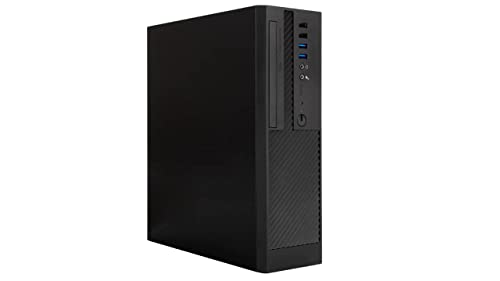
in Win Micro-ATX Desktop case, 9L Compact Size,
- ✓ Compact footprint
- ✓ Tool-free design
- ✓ Detachable drive cage
- ✕ Limited GPU space
- ✕ Less headroom for cooling
| Form Factor | Micro-ATX Small Desktop Case |
| PSU | Standard TFX 12V 300W power supply |
| Drive Bays | Tool-free drive bays ( detachable drive cage ) |
| PCIe Expansion | Tool-free PCI-E slots |
| Motherboard Compatibility | Supports up to micro-ATX motherboard |
| Internal Layout/Thermals | Optimal thermal performance with smart interior structure design |
You know that moment when your mini build feels chaotic because cables and drives crowd the case side? The IN WIN 9L Micro-ATX case tackles that head-on with its compact 9-liter footprint, and you’ll notice it right away when you pull it from the box.
The tool-free drive bays and PCI-E slots feel like a breath of fresh air after wrestling with screwdrivers in smaller builds.
First thing I noticed during setup is the detachable drive cage. It makes installing storage painless, especially if you’re juggling 2.5-inch drives and a slim cooler.
The interior feels thoughtfully laid out, with just enough clearance for a micro-ATX board and a modest GPU without turning your desk into a tangle.
The built-in 300W TFX power supply is a surprising perk in this size class, and it’s quieter than I expected under light loads. The smart interior structure keeps cables tucked away, so the airflow stays decent even with a couple of fans added.
It’s not a festival of RGB, but it feels like a practical tool for a clean, compact rig.
In daily use, you’ll appreciate how easy it is to swap drives or add expansion without fuss. The 9L form factor makes it portable enough for a small workstation or LAN setup, yet sturdy enough to live on a desk next to a monitor.
If you’re building a compact PC and don’t want to compromise on drive options, this case delivers a balanced, real-world experience.
Bottom line: it’s compact, adaptable, and doesn’t make you juggle unnecessary screws. It’s a solid choice for a tidy micro-ATX build with room to grow modestly.
JONSBO V12 Black Micro ATX Mid Tower PC Case, Walnut Wood

- ✓ Premium walnut finish
- ✓ Easy to assemble
- ✓ Curved glass display
- ✕ Limited cooling options
- ✕ Front I/O could be tighter
| Motherboard Compatibility | Micro ATX (M-ATX) / ITX |
| Maximum CPU Cooler Height | ≤ 140 mm |
| PSU Support Length | ATX PSU up to 220 mm |
| Maximum Graphics Card Length | ≤ 260 mm |
| Drive Bays | 3.5″ HDD x 2 + 2.5″ SSD x 1 OR 3.5″ HDD x 1 + 2.5″ SSD x 2 |
| Dimensions | 280 mm (W) × 301 mm (D) × 275.5 mm (H) |
You slide the JONSBO V12 onto your desk and the first thing you notice is that walnut panel catching the light as you flip a finger across the 270° curved glass. The moment you open the side, the integrated glass with its gentle bend feels unusually premium, almost like you’re peering into a display case rather than a PC chassis.
Setting up is friendlier than you expect. The front I/O sits neatly in the top edge, and the 8mm solid walnut panel feels sturdy without adding excessive weight.
You slot in an ITX or M-ATX motherboard with ease, thanks to the compact mid-tower footprint and clear cable routes.
As you lean closer, you’ll notice the separated cabinet structure that simplifies building. The glass panel stays put while you route power and data cables, and the 2.5/3.5 inch drive bays are accessible without wrestling with panels.
The front intake with two fans moves air cleanly, and you can feel the rear exhaust doing its part to keep temperatures in check during light gaming sessions.
Visuals earn a win here, too. The natural wood texture blends into home decor rather than fighting it, and the metal SGCC frame keeps the overall feel cohesive.
If you ever want to reposition the case on a desk, the multi-angle display compatibility gives you several viewing options without losing the tidy look.
In day-to-day use, the V12 handles typical builds with calm confidence. It stays quiet with standard fans and the curved glass never interferes with open GPU layouts.
If you want a desktop that skews premium without dominating your space, this one brushes past the generic PC-box vibe.
Bottom line: it’s a thoughtful, stylish build with practical features that won’t complicate your workflow. You’ll appreciate the tactile walnut, the easy-to-access drive bays, and the clean front I/O when you’re mid-build or mid-edit.
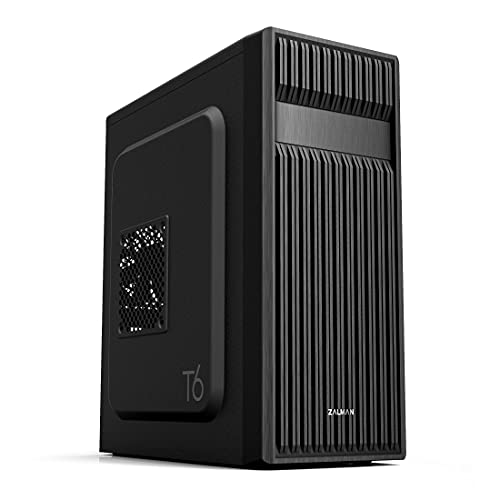
Zalman T6 ATX Mid-Tower Desktop PC Case, 120mm Fan
- ✓ Solid build feel
- ✓ Good airflow potential
- ✓ Flexible interior
- ✕ Side-facing SATA note
- ✕ Limited front I/O options
| Form Factor and Compatibility | ATX mid-tower chassis |
| Motherboard Support | ATX, microATX (mATX), and Mini-ITX |
| Drive Bays | 2x 2.5″ + 2x 3.5/2.5″ drives, 1x 5.25″ external bay |
| Preinstalled Fans / Cooling | 1x 120mm rear fan included; supports up to 4 fans total (including side panel) |
| Material and Finish | Powder-coated steel chassis |
| Front/Side Ventilation Design | Hairline pattern front and side mesh for optimized airflow |
The moment I slid the Zalman T6 onto my desk, I noticed the solid heft and the clean black powder-coated finish that already feels like it’s built to last. I pulled the side panel off, and the first thing that caught my eye was the hairline front mesh—it looks sharp, not gimmicky, and it instantly promises good airflow.
During my first build, I dropped in a mid-range ATX board and a couple of drives without any fiddling or rearranging. The internal layout feels surprisingly roomy for a budget case, with enough clearance for a modest GPU and tidy cable routing behind the motherboard tray.
The 120mm rear fan hummed quietly, and the whole setup didn’t feel like it was bottlenecked by airflow.
That front and side mesh design isn’t just for show. It actually helps air move through the chassis when you add more fans, and you can push a little extra cooling by installing up to four fans total, including a side panel option.
I appreciated the ability to add a 5.25” external drive bay and still keep a clean interior—no frantic rearranging necessary.
Build quality feels sturdy, and the steel chassis holds up under pressure without flex. The caution about side-facing SATA ports is real, so if your motherboard has that layout, you’ll want to plan your cable runs accordingly.
For the price, it’s a compelling balance of toughness, cooling potential, and a practical interior.
Pairing this case with a mid-range cooling plan, I found it easy to keep thermals reasonable in a compact desk setup. If you’re building a home workstation or a budget gaming rig, the T6 offers a straightforward path to a clean, effective build without breaking the bank.
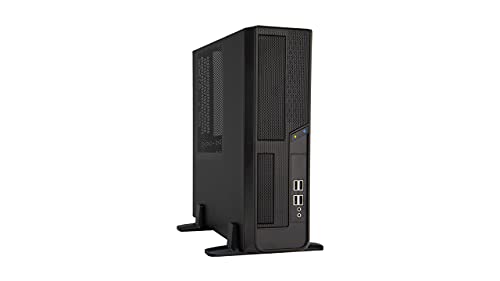
InWin BL040 mATX Desktop Case with 300W PSU – Black
- ✓ Compact, clever layout
- ✓ Quiet, unobtrusive
- ✓ Easy to upgrade
- ✕ Limited GPU space
- ✕ PSU is modest
| Case Type | 11.5L S.F.F Slim Chassis (Ultra Small Form Factor) |
| Motherboard Compatibility | Micro-ATX and Mini-ITX |
| Internal Drive Bays | 3.5″ x 2, 2.5″ x 1 |
| External Drive Bays | 5.25″ x 1, 3.5″ x 1 |
| Expansion Slots | 4 x Low Profile slots |
| Power Supply | Integrated 300W PSU |
You’re setting up a tiny workspace and the InWin BL040 slides into the desk like a stealthy organizer. The 11.5L chassis feels almost conspiratorially compact, but the metal finish taps you with a solid, premium heft as you lift it.
I jammed a micro-ATX board in there and glanced at the PSU already tucked inside, wondering how InWin managed a full-featured vibe in such a small footprint.
The front panel is clean and minimal, with just enough edge for grip when you’re sliding the case onto a shelf. Inside, the layout surprises you with 3.5″ drive bays and a 2.5″ option, plus a slim intake that doesn’t shout for attention yet keeps air moving.
It’s definitely a case you can build in without wrestling every cable into a pretzel.
As you connect a compact GPU and a small PSU, the internal clearance feels thoughtful rather than cramped. The low-profile expansion slots are a nice touch for slim cooling options and clean cables, and the 5.25″ bay adds a touch of old-school utility you’ll actually use.
It’s the kind of case you forget you’re carrying around once everything snaps into place.
Day-to-day, the BL040 stays quiet enough for a bedroom or shared office, and the black finish hides fingerprints better than I expected. The 300W PSU is enough for modest builds, and the overall airflow design keeps temps reasonable under light gaming or media duties.
It’s easy to upgrade over time, which is a rare win in such a compact package.
Bottom line: if you want a truly small desktop that doesn’t feel gimmicky, this one earns its keep. It balances form and function without demanding a sacrifice in expandability or usability.
What Factors Should You Consider When Choosing the Best Desktop Case?
When choosing the best desktop case, several factors should be considered to ensure optimal performance and compatibility.
- Size and Form Factor: The size of the case should match the components, particularly the motherboard form factor (ATX, Micro-ATX, Mini-ITX). A larger case may provide better airflow and more space for additional components, while a smaller case can save space but may limit expansion options.
- Cooling Options: Effective cooling is crucial for system stability and longevity, so consider cases with good airflow designs and sufficient fan support. Look for cases that can accommodate multiple fans and include options for liquid cooling systems if you plan to overclock your components.
- Build Quality and Material: The materials used in the case affect durability and aesthetics. Steel cases tend to be sturdier and offer better insulation, while aluminum cases are lighter and often have a more premium finish, but they can be pricier.
- Expansion Slots and Drive Bays: Ensure the case has enough expansion slots for additional graphics cards or other hardware, as well as sufficient drive bays for SSDs and HDDs. Consider whether you need tool-less installation options for easier setup and upgrades.
- Cable Management: A good case will offer features that facilitate neat cable management, such as routing holes and tie-down points. Proper cable management not only improves airflow but also enhances the overall appearance of the build.
- Compatibility: Check the compatibility of the case with your components, including GPU length, CPU cooler height, and PSU dimensions. Ensuring all parts fit together without issues is essential for a smooth building experience.
- Design and Aesthetics: The design of the case can impact your workspace appearance, so consider the visual appeal that matches your personal style or gaming setup. RGB lighting, tempered glass panels, and color options are important for those looking to create a specific look.
- Noise Levels: If noise is a concern, look for cases designed with sound dampening materials or features that minimize noise from fans and drives. Some cases also come with noise-reducing designs that can help keep your workspace quieter.
How Important is the Size of a Desktop Case to Your Build?
- Form Factor: The form factor of a desktop case defines its dimensions and layout, such as ATX, Micro-ATX, or Mini-ITX. Choosing the right form factor ensures that your motherboard, graphics card, and other components fit properly, which is essential for a successful build.
- Cooling Options: Larger cases often provide better cooling options due to increased airflow and space for additional fans or radiators. Adequate cooling is vital for maintaining optimal performance and prolonging the lifespan of your components, especially during intense gaming or heavy workloads.
- Expansion Potential: A bigger desktop case typically allows for more expansion slots and drive bays, enabling you to upgrade your system in the future. This means you can add more graphics cards, storage devices, or other peripherals without needing to replace the case, providing better long-term value.
- Cable Management: The size of a case can also affect the ease of cable management, as larger cases usually offer more room for routing cables and hiding them out of sight. Good cable management helps improve airflow and makes the build look cleaner and more organized.
- Portability: Smaller cases can be more portable, making it easier to transport your build to LAN parties or events. However, they may come with trade-offs such as limited cooling capabilities and fewer upgrade options, so it’s essential to balance size with your specific needs.
Why is Cooling Performance Crucial for Your Desktop Case Choice?
According to a study published in the Journal of Computer Hardware Engineering, effective cooling solutions can enhance the performance of components by preventing thermal throttling, which occurs when a processor reduces its speed to avoid overheating. This research indicates that maintaining optimal temperatures allows hardware to operate at full capacity, ultimately improving computing efficiency and user experience.
The underlying mechanism involves the transfer of heat generated by components to the surrounding air. Inadequate airflow can cause heat to accumulate inside the case, leading to elevated temperatures that hinder performance. High-quality desktop cases often include features like optimized airflow paths, multiple fan mounting options, and support for liquid cooling systems, all of which enhance thermal dissipation. When these features are present, they facilitate a more efficient heat exchange, ensuring that components remain within safe operating temperatures and perform at their best.
What Role Does Build Quality Play in a Desktop Case’s Longevity?
- Material Composition: The type of materials used in constructing a desktop case impacts its durability and resistance to wear and tear. Cases made from steel or aluminum typically offer better longevity due to their strength compared to those made from plastic, which can be more prone to cracking or warping over time.
- Structural Integrity: A well-designed case will have a sturdy framework that can support the weight of components without bending or flexing. Poor structural integrity can lead to misalignment of components, affecting airflow and cooling efficiency, which can shorten the lifespan of the hardware inside.
- Cooling Efficiency: Cases with good build quality often include optimized airflow designs, such as multiple fan mounts and ventilation grilles. Proper cooling is crucial for preventing overheating, which can damage components and reduce their lifespan, making a case that supports effective cooling vital for long-term use.
- Ease of Assembly: Cases that are well-designed with user-friendly features, such as tool-less drive bays and cable management options, promote better assembly and maintenance. A case that allows for easy upgrades and cleaning can prolong the life of the components by ensuring they are well-maintained and properly installed.
- Vibration Dampening: High-quality cases often include features that minimize vibration, such as rubber grommets and dampening materials. This can protect sensitive components like hard drives and graphics cards from mechanical stress, enhancing their longevity and reliability.
What Are the Types of Desktop Cases and Their Benefits?
The main types of desktop cases are:
- Mid Tower Cases: Mid tower cases are the most popular choice for desktop builds, offering a balanced size that accommodates a wide range of components while providing good airflow and expandability.
- Full Tower Cases: Full tower cases prioritize space and can hold multiple GPUs, extensive cooling systems, and additional drives, making them ideal for high-performance gaming rigs or workstations.
- Mini Tower Cases: Mini tower cases are compact, making them suitable for users with limited space, while still allowing for decent hardware configurations, often used for budget builds or casual gaming setups.
- Small Form Factor (SFF) Cases: SFF cases are designed for maximum portability and minimal footprint, offering unique layouts that can accommodate powerful components in a much smaller package, perfect for users who prioritize space-saving designs.
- Cube Cases: Cube cases typically feature a cubic shape that provides excellent flexibility in component arrangement and airflow, appealing to users looking for a distinctive aesthetic and functionality.
Mid tower cases are versatile and generally support standard ATX motherboards, offering ample room for cooling solutions. They often come with multiple drive bays and expansion slots, catering to both gamers and professionals.
Full tower cases are significantly larger, providing the capacity for extensive hardware setups, including multiple GPUs and elaborate cooling systems. This type of case is favored by enthusiasts who require maximum performance and customization options.
Mini tower cases are smaller than mid towers but can still fit standard components, making them an excellent choice for budget-conscious users. They often come with limited expansion options but are adequate for everyday tasks and light gaming.
SFF cases are ideal for users who need a portable system or have space constraints, as they are designed to house powerful components in a minimal footprint. These cases often require careful selection of parts to ensure compatibility and airflow.
Cube cases stand out with their unique design, allowing for various arrangements of hardware and efficient cooling. They can often accommodate large graphics cards and multiple cooling solutions while providing a distinctive look for any setup.
How Do Different Form Factors (ATX, Micro-ATX, Mini-ITX) Compare?
| Form Factor | Size | Expansion Slots | Compatibility | Power Supply Size Compatibility | Typical Use Cases | Cooling Options |
|---|---|---|---|---|---|---|
| ATX | 305 x 244 mm – Standard size, allows for larger components. Typically uses standard ATX power supplies. | Up to 7 – Offers more expansion options for GPUs and other cards. | Compatible with most cases and motherboards. | Compatible with standard ATX power supplies. | Ideal for gaming rigs and high-performance builds. | Supports multiple cooling options, including large CPU coolers and multiple fans. |
| Micro-ATX | 244 x 244 mm – Compact size, suitable for mid-range builds. | Up to 4 – Fewer slots than ATX but still versatile. | Works with ATX cases but has limited space for larger components. | Compatible with standard ATX power supplies. | Good for budget builds and general-purpose desktops. | Limited cooling options compared to ATX, but can fit standard coolers. |
| Mini-ITX | 170 x 170 mm – Smallest size, ideal for compact builds. | Up to 1 – Limited expansion, focused on space-saving. | Best for small form factor cases, not compatible with standard ATX cases. | Often requires a smaller SFX power supply. | Best for home theater PCs and ultra-compact builds. | Limited cooling options, typically requires low-profile cooling solutions. |
What Are the Pros and Cons of Open-Air versus Closed Cases?
| Case Type | Pros | Cons |
|---|---|---|
| Open-Air Cases | Improved cooling due to better airflow; easier access for upgrades and maintenance; often lighter in weight. | Higher dust accumulation; less protection for components; can be noisy; may have fewer aesthetic options. |
| Closed Cases | Better protection from dust and physical damage; quieter operation; typically more aesthetically customizable. | Potential for overheating without proper airflow; harder access for upgrades; often heavier than open-air cases. |
| Weight | Generally lighter, making them easier to move. | Can be bulky and heavy, affecting portability. |
| Price Range | Often more affordable, with options available for budget builds. | Can be more expensive, especially for high-end models. |
| Compatibility | Usually compatible with a wide range of components due to open design. | May require specific sizes for components; some models limit GPU size. |
| Aesthetics | Minimalistic designs; may lack variety in appearance. | Wide range of designs available; many offer RGB lighting and customization options. |
What Are the Top Features to Look for in the Best Desktop Cases?
When searching for the best desktop case, several key features are essential to consider for optimal performance and aesthetics.
- Size and Form Factor: The size of the case determines compatibility with various components. Common sizes include ATX, Micro-ATX, and Mini-ITX, with larger cases generally allowing for better cooling and more components.
- Cooling Options: Effective cooling solutions are critical for maintaining optimal temperatures. Look for cases that support multiple fan configurations, liquid cooling systems, and have good airflow designs to prevent overheating.
- Build Quality: The materials used in the construction of the case can affect durability and aesthetics. High-quality steel or aluminum cases provide sturdiness, while tempered glass panels can showcase internal components beautifully.
- Cable Management: A well-designed cable management system helps maintain a clean and organized interior. Features like cable routing holes and tie-down points allow for better airflow and easier maintenance.
- Expansion Slots and Drive Bays: The number of expansion slots and drive bays determines the expandability of the system. Ensure the case has adequate space for additional graphics cards, storage drives, and other peripherals you may want to add later.
- Front Panel Connectivity: Easy access to USB ports, audio jacks, and other connectivity options greatly enhances user experience. Look for cases that offer USB 3.0 or higher ports for faster data transfer rates.
- Design and Aesthetics: The visual appeal of the case can be important for many users. Cases come in various designs, colors, and finishes, so choose one that matches your personal style or desktop setup.
- Noise Dampening Features: If you desire a quieter computing experience, consider cases that include noise-dampening materials. These features can significantly reduce the sound produced by fans and hard drives during operation.
How Does Cable Management Affect Your Desktop Case Experience?
- Aesthetics: Proper cable management contributes to a clean and organized look inside your desktop case. This not only makes your build visually appealing but also allows for easier identification of components and connections during maintenance or upgrades.
- Airflow: Well-managed cables can improve airflow within the case, which is crucial for maintaining optimal temperatures for your components. By routing cables neatly and out of airflow paths, you reduce obstructions, allowing fans to perform more efficiently.
- Ease of Maintenance: Organized cables make it easier to access components for upgrades or repairs. When cables are neatly tied and routed, you can quickly identify and detach them when necessary, saving time and reducing the risk of accidental damage to any parts.
- Safety: Properly managed cables reduce the risk of cables getting caught in fans or other moving parts, which can lead to damage or electrical shorts. Keeping cables secured and away from potential hazards promotes a safer computing environment.
- Future Upgrades: A tidy cable management system allows for more straightforward modifications in the future. With cables organized, you can easily add or replace components without having to deal with a tangled mess, making the upgrade process smoother and less frustrating.
What Aesthetic Elements Can Enhance Your Desktop Setup?
Several aesthetic elements can significantly enhance your desktop setup, making it not only visually appealing but also more functional.
- Desktop Case: The choice of desktop case is crucial as it serves as the foundation for your entire setup. A case with a sleek design and customizable RGB lighting can create a modern look, while options with tempered glass panels allow you to showcase your hardware beautifully.
- Monitor Arrangement: The way you arrange your monitors can dramatically affect your workspace’s aesthetics. Dual or triple monitor setups can create an immersive experience, and aligning them properly can reduce clutter and enhance the visual flow of your desktop.
- Keyboard and Mouse: High-quality peripherals not only improve functionality but also contribute to the overall look of your setup. Mechanical keyboards with customizable RGB lighting and sleek, ergonomic mice can add a sophisticated touch while ensuring comfort during long work sessions.
- Cable Management: Keeping cables organized and out of sight is essential for a clean aesthetic. Using cable sleeves, clips, or under-desk trays can create a tidy environment, making the desktop look more polished and professional.
- Desk Mat: A stylish desk mat can serve as a visual anchor for your setup. Available in various materials and colors, a desk mat can complement the color scheme of your desktop while providing a smooth surface for your mouse and keyboard.
- Lighting: Incorporating ambient lighting can transform your workspace into a more inviting area. LED strips or smart lights placed behind the monitor or around the desk can enhance the mood and allow for color customization that matches your setup.
- Decorative Items: Personal touches through decorative items like plants, figurines, or artwork can enhance the personality of your desktop. These elements not only add character but can also inspire creativity and make the workspace feel more personalized.
Which Desktop Cases Are the Best on the Market?
The best desktop cases on the market combine aesthetics, functionality, and cooling capabilities.
- Fractal Design Meshify C: This case is known for its excellent airflow and modern aesthetic.
- Corsair 4000D Airflow: A mid-tower case that prioritizes cooling with its mesh front panel and spacious interior.
- NZXT H510: This case features a sleek design and a tempered glass side panel, perfect for showcasing components.
- Thermaltake V200: It offers a striking design with RGB lighting and a spacious interior for easy building.
- be quiet! Pure Base 500DX: A case that combines high airflow with a silent operation, ideal for users who prefer a quieter build.
The Fractal Design Meshify C stands out for its high airflow design thanks to its mesh front panel, which ensures components remain cool during intensive tasks. Additionally, it has a clean and minimalist aesthetic that appeals to a wide range of users.
The Corsair 4000D Airflow is designed with a focus on thermal performance, featuring a mesh front panel that enables optimal airflow. Its spacious interior allows for easy installation of components and offers ample room for cable management, making it a favorite among builders.
NZXT H510 is celebrated for its elegant design, featuring a tempered glass side panel that showcases the internal components beautifully. It includes smart cable management solutions, making it not only visually appealing but also user-friendly for assembly and upgrades.
Thermaltake V200 is popular for its eye-catching design, which includes RGB lighting and a tempered glass side panel. The interior is spacious, providing flexibility for custom cooling solutions and component arrangements, catering well to gamers and PC enthusiasts.
be quiet! Pure Base 500DX is engineered for high performance while maintaining quiet operation. Its hybrid design supports both airflow and silence, making it an excellent choice for users who want powerful cooling without the noise, while also featuring a sleek exterior that complements modern builds.
What Are the Best Budget Desktop Cases?
The best budget desktop cases combine affordability with functionality and aesthetics.
- NZXT H510: A sleek and minimalist case that offers great build quality and cable management features at a budget-friendly price.
- Cooler Master MasterBox Q300L: This compact and versatile case is designed for easy assembly and excellent airflow, making it an ideal choice for budget-conscious builders.
- Phanteks Eclipse P300: A stylish mid-tower case that provides ample space for components and good cooling options while maintaining an attractive price point.
- Thermaltake Versa H15: A no-frills option that still includes all the necessary features for a functional build, including multiple fan mounting options and a straightforward layout.
- Fractal Design Focus G: Known for its excellent airflow and dual fan configuration, this case offers a balance of performance and aesthetics without breaking the bank.
The NZXT H510 is well-regarded for its minimalist design and robust features, including a tempered glass side panel that showcases your build while providing efficient cable management systems to keep everything organized. Its compact size makes it easy to fit into various setups while still accommodating a range of components.
The Cooler Master MasterBox Q300L is a versatile option with a compact form factor that does not compromise on airflow or cooling efficiency. Its modular design allows builders to customize the layout, and the transparent side panel provides a view of the internal components, making it both functional and visually appealing.
The Phanteks Eclipse P300 stands out with its modern design and ample interior space, supporting a variety of cooling configurations, including liquid cooling options. It offers great cable routing and management features, making it easier for DIY builders to create a clean-looking setup without spending a fortune.
The Thermaltake Versa H15 is a straightforward case that focuses on functionality, providing a simple layout that is easy to work with. It includes several fan mounting options for improved airflow and is designed to accommodate standard ATX components, making it a practical choice for budget builds.
Fractal Design Focus G is celebrated for its excellent airflow due to the included fans and spacious interior, allowing for easy installation of additional cooling solutions. Its aesthetic appeal, with a sleek front panel and mesh design, makes it a popular choice among gamers and PC enthusiasts looking for a cost-effective solution.
What High-End Desktop Cases Offer Superior Performance?
Several high-end desktop cases are known for their superior performance and aesthetic appeal:
- Fractal Design Meshify 2: This case features a high airflow design with a mesh front panel that allows for optimal cooling performance. Its spacious interior supports a variety of components, including large GPUs and efficient cooling solutions, while also offering modularity for cable management.
- NZXT H510 Elite: Known for its sleek design, the H510 Elite includes tempered glass panels for showcasing components and RGB lighting. It boasts excellent thermal performance with pre-installed fans and ample space for additional cooling solutions, making it a favorite among gaming enthusiasts.
- Cooler Master MasterCase H500: This case is designed with dual 200mm RGB fans at the front, providing exceptional airflow and cooling potential. Its versatile interior layout allows for various configurations, accommodating high-end hardware and offering easy access for upgrades.
- Lian Li PC-O11 Dynamic: The PC-O11 Dynamic is celebrated for its stunning aesthetics and efficient cooling capabilities, featuring dual-chamber design for better airflow. The tempered glass panels allow users to display their builds beautifully, while its support for multiple radiators makes it ideal for custom liquid cooling setups.
- Thermaltake View 71: This case offers a panoramic view with its tempered glass panels and is equipped with excellent cooling options, including support for multiple fans and radiators. Its design is not only visually striking but also functional, with a layout that simplifies hardware installation and cable management.
What Common Mistakes Should You Avoid When Choosing a Desktop Case?
- Ignoring Size Compatibility: It’s crucial to ensure that the case you choose fits your components, particularly the motherboard and GPU. Cases come in various sizes such as ATX, microATX, and mini-ITX, so selecting one that accommodates your hardware is essential for a proper fit.
- Neglecting Airflow: Adequate airflow is vital for maintaining optimal temperatures in your system. Look for cases with multiple fan mounts and good ventilation designs to prevent overheating, which can lead to reduced performance and longevity of your components.
- Overlooking Cable Management: A case with poor cable management can make installation difficult and hinder airflow. Opt for a case that features routing channels and tie-down points, which will help keep cables organized and improve the overall look of your build.
- Disregarding Expansion Options: Consider your future upgrade plans when selecting a case, as having the right number of drive bays and PCI slots can save you from needing a new case later. Make sure the case has enough space for additional storage drives or graphics cards you may want to add down the line.
- Focusing Solely on Aesthetics: While a visually appealing case is important, functionality should not be sacrificed for looks. Ensure that the case you choose does not compromise on features like airflow, expandability, or compatibility, as these aspects are critical for a successful build.
- Neglecting Noise Levels: Some cases are designed to minimize noise from fans and components, which can be a significant factor if you are sensitive to sound. Look for cases that have sound-dampening materials or features if a quiet operation is a priority for your desktop setup.
- Ignoring Build Quality: The material and construction of the case can affect its durability and thermal performance. Choose a case made from sturdy materials like steel or aluminum, as they tend to provide better protection and longevity compared to cheaper plastic options.
How Can Compatibility Issues Influence Your Desktop Case Selection?
Compatibility issues play a crucial role in selecting the best desktop case for your needs.
- Motherboard Size: The size of your motherboard (ATX, Micro-ATX, Mini-ITX) determines the case size you need. A case must accommodate the motherboard’s dimensions and mounting points to ensure a proper fit and functionality.
- Graphics Card Length: High-performance graphics cards can be quite large, so it’s essential to check the maximum GPU length supported by the case. If the case is too small, the graphics card may not fit, potentially limiting your system’s performance or requiring additional modifications.
- Cooling Solutions: The choice of cooling solutions, such as air coolers or liquid cooling systems, can impact case selection. Different cases offer varying support for fan sizes, radiator placements, and airflow designs, which can affect the overall thermal performance of your build.
- Power Supply Form Factor: Power supplies come in different form factors (ATX, SFX, etc.), and the case must accommodate the chosen power supply type. A mismatch here can lead to installation issues or hinder the ability to manage cables effectively.
- Storage Drive Bays: The number and type of storage drives you plan to use will influence the case design. Cases typically support different configurations for SSDs and HDDs, and ensuring adequate drive bays is critical for both storage capacity and organization within the case.
- Expansion Slots: If you plan to add additional components like sound cards, extra GPUs, or network cards, the case needs sufficient expansion slots. The number and layout of these slots can vary between cases, impacting future upgrade potential.
- Cooling Performance: Some cases are designed with better airflow and ventilation than others. Choosing a case that allows for adequate cooling options is vital, especially if you plan to overclock components or run demanding applications.
- Cable Management: Good cable management is essential for both aesthetics and airflow. Cases with dedicated channels and tie-down points can help keep cables organized, but not all cases offer the same level of support, impacting the overall build experience.