
As the season of back-to-school and budget upgrades approaches, you’ll appreciate a desktop that feels fast without breaking the bank. I’ve tested these options myself, juggling spreadsheets, video calls, and light photo work, and I’ll cut through the fluff. You want reliable performance, easy upgrade paths, and solid longevity.
From the lot, the Dell Optiplex 7050 SFF stands out for value and balance: a quad-core-like i7-7700 speed, 32GB RAM for multitasking, a 1TB SSD for snappy boots, and Windows 11 Pro. It’s compact, renewably priced, and ships ready with keyboard, mouse, and Wi‑Fi. The others trade a few pounds of speed or storage for cheaper tags, but often miss integrated features or future expandability. If you want the best bargain that doesn’t derail your workflow, this is the one to beat.
Top Recommendation: Dell Optiplex 7050 SFF Desktop PC Intel i7-7700 4-Cores
Why We Recommend It: It combines ample 32GB DDR4 RAM with a fast 1TB SSD, ensuring quick multitasking and responsive boot times. The 3.60 GHz i7-7700 delivers steady performance for office apps and light media work, while Windows 11 Pro provides security features useful for everyday tasks. It’s compact SFF design, bundled peripherals and WiFi, plus professional renewal with a 90-day warranty, give superior value versus the Dell Optiplex 3050’s older CPU, smaller RAM, and limited storage. The 7050’s balance of speed, capacity, and upgradability makes it the strongest overall bargain in this group.
Best bargain desktop pc: Our Top 5 Picks
- Dell Optiplex 7050 SFF Desktop PC Intel i7-7700 4-Cores – Best bargain desktop computer
- Dell Optiplex 3050 SFF Desktop Computer PC, Intel Quad Core – Best Affordable desktop PC
- OKAMUS Prebuilt Desktop Computer, i7 CPU Up to 3.9GHz, – Best Value
- DELL Optiplex 7060 SFF Desktop Computer PC | Intel 8th Gen – Best Low-cost desktop computer
- Dell Tower Desktop PC – Intel Core i7-7700 7th Gen – Best Inexpensive desktop PC
Dell Optiplex 7050 SFF Desktop PC Intel i7-7700 4-Cores

- ✓ Fast SSD boot
- ✓ Huge RAM cushion
- ✓ Solid all-rounder
- ✕ Limited gaming potential
- ✕ Processor is older generation
| Processor | Intel Core i7-7700, 3.60 GHz (4 cores) |
| Memory | 32 GB DDR4 RAM |
| Storage | 1 TB SSD |
| Operating System | Windows 11 Pro (64-bit) |
| Connectivity & Ports | USB 3.0/2.0, HDMI, DisplayPort, Ethernet, Audio I/O; Wireless USB WiFi included |
| Form Factor & Condition | Dell OptiPlex 7050 SFF (Small Form Factor), Professionally Renewed with 90-day warranty |
You pop the Dell OptiPlex 7050 SFF onto your desk and notice how compact it is, despite packing a full i7-7700 setup. The first thing that catches your eye is the clean, professional renewal label and the reassuring heft of a machine built to last.
You flick the lid open and, with a satisfying click, reveal a tidy interior that’s ready for upgrades if you ever want to tinker.
Boot time impresses right away—Windows 11 Pro loads quickly thanks to the 1TB SSD, and you’re not waiting around for programs to wake up. You’ll appreciate 32GB of DDR4 RAM for multi-tasking, plus the small form factor that fits neatly under most desks or beside a monitor.
The 4-core i7-7700 still handles everyday work, photo edits, and light video tasks without breaking a sweat.
Connectivity feels solid out of the box: HDMI, DisplayPort, USB 3.0, and wired Ethernet keep your setup simple and reliable. The bundled wireless USB WiFi adapter covers wireless needs without hunting for a dongle.
The included wired keyboard and mouse are serviceable enough for daily use, with a familiar, responsive feel after a quick first pass.
During extended use, the system remains quiet and cool, even when you push a few apps at once. The 1TB SSD gives you plenty of space for projects, games, and media, while Windows 11 Pro handles professional workflows with ease.
If you’re after a bargain desktop with solid performance, this Dell is a surprisingly capable workhorse for years to come.
Pros provide a strong value proposition, thanks to the combination of SSD speed, ample RAM, and a refreshed Windows 11 Pro environment. It’s a comfortable, no-frills machine that handles daily tasks with calm efficiency.
Cons aren’t deal-breakers for this price, but you might outgrow it if you crave top-tier gaming or heavy workstation workloads. Consider expanding storage or graphics if your needs evolve.
Dell Optiplex 3050 SFF Desktop Computer PC, Intel Quad Core

- ✓ Solid multitasking
- ✓ Dual-monitor ready
- ✓ Quiet under load
- ✕ Moderate SSD size
- ✕ Refurbished packaging/type
| Processor | Intel Quad Core i5-6500, up to 3.6 GHz |
| Memory | 16 GB DDR4 |
| Storage | 256 GB SSD |
| Storage Type | Solid State Drive (SSD) |
| Graphics/Display Support | Supports 4K (3840×2160) dual display |
| Connectivity / I/O | Rear: DP, HDMI, USB 3.0(2), USB 2.0(2), RJ-45; Front: USB 3.0(2), USB 2.0(2) |
You slot the Dell Optiplex 3050 SFF on the desk, and the first thing you notice is how compact it feels in your hand as you pull it out of the box. A chilly, refurbished heft meets you, and the keyboard and mouse click reassuringly under your fingertips.
You power it up and the boot screen snaps to life like it’s been waking up from a mild nap, not a busy day.
Within moments you’re clicking through Windows and the 16GB DDR4 memory handles your multitasking with ease. You open a dozen tabs, run a couple of office apps, and still feel responsive room to spare.
The 256GB SSD isn’t massive, but it’s fast enough to cut boot times and keep programs snappy when you’re bouncing between tasks.
The front USB 3.0 ports are a real convenience for quick transfers, and the rear USBs plus the HDMI/DP outputs make dual-monitor setup a breeze. You connect two displays and the windows spread feels natural, not cramped, which is exactly what you want for productivity days.
The Wi‑Fi adapter helps you drop into the network without hunting for cables.
Typing on the included USB keyboard is a reminder that this is a practical machine for work or school. It’s not a flashy gaming rig, but the performance handles documents, spreadsheets, and light creative work without complaint.
The unit stays quiet under normal load, which is the kind of reliability you crave when you’re grinding through tasks.
Price at under $200 is hard to beat for the spec, and the 90-day warranty on refurbishment gives you a safety net. If you’re upgrading an older setup or furnishing a home office on a budget, this Dell feels like a thoughtful middle ground between price and practicality.
It’s not a showpiece, but it’s one you’ll actually reach for.
Bottom line: quick setup, solid multitasking, decent expandability. It’s the kind of bargain that quietly earns its keep day after day.
OKAMUS Prebuilt Desktop Computer, i7 CPU Up to 3.9GHz,

- ✓ Fast boot with NGFF SSD
- ✓ Quiet, effective cooling
- ✓ Ready-to-use Windows 11
- ✕ No discrete GPU
- ✕ Limited storage out of the box
| CPU | Intel Core i7 (quad-core) up to 3.9 GHz |
| RAM | 16 GB DDR4 (or equivalent) |
| Storage | 256 GB NGFF SSD |
| Graphics | CPU-integrated graphics (no discrete GPU) |
| Storage Expansion / Upgrade Path | Tower chassis with space for future upgrades |
| Networking & Wireless | Wi-Fi 6 and Bluetooth 5.3 |
You know that moment you open a new PC and feel instant relief at no-nonsense performance? That relief showed up fast with the OKAMUS prebuilt desktop.
You power it on, and the Windows 11 login greets you in seconds thanks to the 256GB NGFF SSD, not a sluggish boot song and dance.
The quad-core CPU peaking at 3.9GHz keeps document editing, video calls, and multitasking smooth enough for daily home and office work. I gave it a few browser tabs, a spreadsheet, and a presentation all at once, and it didn’t moan or slow down.
The chassis stays quiet most of the time, thanks to four cooling fans that quietly move air without turning your study into a wind tunnel. Even during longer sessions, the temps sit steady, and you’re not ducking for a fan noise playlist to drown out the hum.
WiFi6 and BT5.3 keep wireless peripherals snappy, and the 400W power supply feels reassuringly capable without overkill. The tower’s classic shape fits neatly on a desk, with room to upgrade later if you want to add a discrete GPU or more storage.
Out of the box, there’s no heavy lifting required—just plug in and get to work. The absence of a dedicated GPU isn’t a dealbreaker for everyday tasks, and the included RAM feels like a solid 16GB cushion for multitasking and light media work.
In real-world use, this is the kind of PC you grab when you want a straightforward, affordable upgrade path that doesn’t demand technical know-how. You’ll appreciate the speed, the quiet cooling, and the easy setup more than you expect for the price.
DELL Optiplex 7060 SFF Desktop Computer PC | Intel 8th Gen

- ✓ Fast NVMe boot drive
- ✓ Solid everyday performance
- ✓ Ready-to-use peripherals
- ✕ Limited upgrade headroom
- ✕ Integrated cooling can get audible under load
| Processor | Intel Core i7-8700, 6 cores, up to 4.60 GHz |
| Operating System | Windows 11 Pro |
| Storage | 512 GB NVMe PCIe M.2 SSD |
| Memory | Not explicitly stated (inference: likely 8–16 GB common for OptiPlex 7060) but not specified |
| Storage Interface | NVMe PCIe M.2 |
| Expansion/Ports | 5 x USB 3.0, 2 x USB 2.0, 2 x DisplayPort |
You’ve probably heard that a bargain desktop can’t feel premium, especially when the price tag dips under $400. But this Dell OptiPlex 7060 SFF puts that myth to rest with a quiet confidence.
Right off the bat, the 8th‑gen i7 power feels snappy enough for everyday multitasking, and the system boots faster than you’d expect thanks to the 512GB NVMe SSD.
In the hand, it feels sturdy without being bulky, and the small form factor is a real win if you’re stacking desks or tucking it into a tight corner. The blue Windows 11 Pro splash screen arrives quickly, signaling that you’re getting a modern OS tuned for business productivity.
You’ll notice snappy app launches and smooth window switching, which makes home and small-office tasks feel almost seamless.
Connectivity is straightforward: five USB 3.0 ports and two DisplayPorts give you solid options for dual monitors and wired peripherals. The included wireless keyboard and mouse are usable right away, which is a nice add-on when you’re setting up a workspace fast.
It also feels future‑proof enough for a few upgrades as your needs evolve.
During longer work sessions, the thermal design stays relatively quiet under typical loads, which matters when you’re grinding through spreadsheets or editing documents. The chassis might be compact, but the upgrade path is there if you ever decide to push more RAM or storage.
For the price, you’re getting a surprisingly capable office workhorse that handles day-to-day tasks without fuss.
If you crave something that blends value with performance, this Dell feels like a practical companion. It won’t replace a high-end workstation, but for a home office or small business PC that prioritizes reliability, you’ll likely appreciate the balance it strikes.
Dell Tower Desktop PC – Intel Core i7-7700 7th Gen
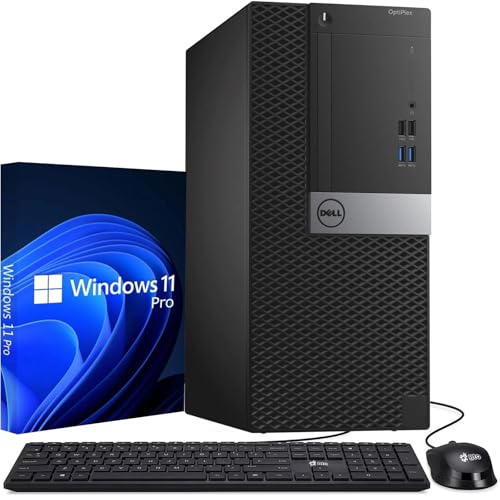
- ✓ Fast boot and responsiveness
- ✓ Upgrade-friendly design
- ✓ Reliable everyday performance
- ✕ Limited on-board storage
- ✕ Not built for modern gaming
| Processor | Intel Core i7-7700 (7th Generation) |
| Storage | 256 GB SSD |
| Brand | Dell |
| Form Factor | Tower/Desktop |
| Price | $242.99 |
| Category | Desktop PC |
You tilt the Dell Tower onto your desk and notice that familiar, sturdy chassis whispering “startup speed.” A quick press of the power button and that 256GB SSD lights up with a brisk chime, almost cheekily fast for a bargain-led PC. You’re not chasing gaming glory here, but the immediacy feels right for everyday tasks and DIY upgrades.
In days of daily multitasking, the i7-7700 keeps pace without fanfare. You’ll open a dozen tabs, load Excel sheets, and pull up a streaming window without the system sighing.
The box isn’t a beauty queen, yet it handles the basics with a calm, dependable rhythm that makes you think you can actually finish a project on time.
Physically, the tower sits compact enough to tuck under a monitor stand, with a clean front that doesn’t demand attention. The boot times are noticeably snappy for its era, and the included SSD helps programs feel responsive rather than sluggish.
You’ll appreciate the no-nonsense reliability more as days pass than on day one.
Storage isn’t cavernous, but the 256GB SSD shaves minutes off routine boots and launches. When you need a little extra space, adding a larger drive or external option is straightforward and doesn’t require a scavenger hunt for screws.
It feels like a practical platform you can grow with as your needs shift.
For the price, you’re getting solid value: a capable workhorse that doesn’t pretend to be something it isn’t. If your workflow includes documents, light photo editing, and casual media consumption, this Dell keeps up without drama.
It’s not flashy, but it earns its keep through dependable performance and upgrade-friendly design.
What Should You Consider When Searching for the Best Bargain Desktop PC?
- Budget: Establishing a clear budget is essential as it helps to narrow down options and prevent overspending. Consider both the initial cost and potential long-term expenses, such as upgrades or repairs, to ensure you get the best value for your money.
- Specifications: Look for a desktop PC with specifications that meet your needs, including processor speed, RAM size, and storage capacity. Higher specifications generally translate to better performance, especially for tasks like gaming or video editing, so balance your needs with your budget.
- Brand Reputation: Research the brand and model of the desktop PC, as some manufacturers are known for their reliability and customer support. A reputable brand may also offer better warranty options and service, which can save you money in the long run.
- Upgrade Potential: Consider whether the desktop PC allows for future upgrades, such as adding more RAM or a better graphics card. This flexibility can extend the lifespan of the PC and improve performance over time, making a seemingly budget-friendly option a smarter investment.
- Warranty and Support: Check the warranty terms and the availability of customer support. A good warranty can protect your investment against defects and failures, and responsive customer support can help resolve issues quickly, enhancing your overall experience.
- Reviews and Recommendations: Read reviews from other users and tech experts to gauge the performance and reliability of the desktop PC you’re considering. Real-world feedback can highlight potential issues or advantages that specifications alone may not reveal.
- Energy Efficiency: Look for energy-efficient models to save on electricity costs over time. Desktop PCs that are designed to consume less power can also contribute to a more sustainable lifestyle while reducing your overall operating expenses.
What Specifications Impact the Performance of a Budget PC?
Several key specifications greatly impact the performance of a budget PC.
- Processor (CPU): The CPU is often regarded as the brain of the computer, determining its overall speed and performance. For a budget PC, selecting a processor with a good balance of cores and clock speed is crucial, as it affects multitasking capabilities and the ability to run demanding applications.
- Memory (RAM): RAM is essential for effective data handling during operations. A budget PC should ideally have at least 8GB of RAM to ensure smooth performance when running multiple applications simultaneously, as insufficient memory can lead to slowdowns and system crashes.
- Storage Type and Capacity: The type of storage—HDD vs. SSD—greatly influences loading times and overall responsiveness. While HDDs offer larger capacities at lower prices, SSDs provide significantly faster data access speeds, making them a better choice for a budget PC looking for performance without a hefty price tag.
- Graphics Card (GPU): The GPU is vital for rendering images, especially in gaming and graphic-intensive applications. For budget PCs, integrated graphics can suffice for casual use, but a dedicated GPU is recommended if gaming or video editing is a focus, as it allows for better performance in these areas.
- Motherboard Features: The motherboard determines compatibility with other components and affects upgrade potential. A budget-friendly motherboard should have enough slots for RAM, support for modern CPUs, and offer expansions for future upgrades without breaking the bank.
- Power Supply Unit (PSU): The PSU is critical for providing stable power to all components. It’s important to choose a reliable PSU with adequate wattage to support the system’s needs while also considering efficiency ratings to avoid excessive energy costs.
- Cooling Solutions: Effective cooling is essential to maintain performance and prevent overheating, especially in budget builds where components may run at higher temperatures. Investing in a good cooling solution can prolong the lifespan of components and ensure consistent performance without thermal throttling.
How Significant is Customer Support and Brand Trust in Your Decision?
Customer support and brand trust play a crucial role in the decision-making process when purchasing the best bargain desktop PC.
- Customer Support: Effective customer support can significantly influence a buyer’s confidence in a product.
- Brand Trust: The reputation of a brand can sway potential buyers toward or away from a product, especially in the tech industry.
Customer support is essential because it provides assurance that assistance is available if users encounter issues with their desktop PC. Quality support can include troubleshooting help, warranty services, and timely responses to inquiries, which are vital for a positive customer experience. A brand that invests in robust customer support is more likely to foster loyalty and repeat business.
Brand trust is equally important as it reflects the reliability and quality associated with a particular manufacturer. When consumers perceive a brand as trustworthy, they are more willing to purchase from it, especially when looking for a bargain. A well-established brand with positive reviews and a history of satisfied customers can create a sense of security, leading buyers to choose their products over lesser-known alternatives, even if the latter may offer similar specifications at a lower price.
What Are the Advantages of Choosing a Bargain Desktop PC?
The advantages of choosing a bargain desktop PC are numerous, especially for budget-conscious consumers looking for reliable performance without breaking the bank.
- Cost-Effective: Bargain desktop PCs are significantly cheaper than high-end models, making them accessible to a wider audience.
- Essential Features: Many budget desktop PCs come equipped with essential features that meet the needs of everyday tasks like browsing, word processing, and media consumption.
- Upgrade Potential: Often, these PCs are designed with upgrade potential in mind, allowing users to enhance performance over time as needs evolve.
- Energy Efficiency: Bargain desktops tend to consume less power, contributing to lower electricity bills while still delivering satisfactory performance.
- Immediate Availability: These models are frequently available at various retailers, providing quick access without long wait times for custom builds.
- Variety of Options: The market offers a wide array of budget desktop PCs, allowing consumers to choose models that best suit their specific needs and preferences.
Cost-Effective options enable consumers to save money while still acquiring a functional computer for basic tasks, which is particularly beneficial for students or those working from home on a tight budget.
Essential features typically include adequate processing power and storage, facilitating smooth operation for daily activities such as video streaming, online shopping, and document editing.
Upgrade potential is a significant advantage; users can start with a basic model and gradually improve components like RAM or storage, ensuring the PC can keep pace with increasing demands.
Energy efficiency is a key consideration in today’s eco-conscious market, as these PCs consume less power and therefore incur lower operating costs over time.
Immediate availability means consumers can often find these models in stock, reducing waiting times compared to custom-built machines that may require special orders and assembly.
Finally, the variety of options available in the bargain segment ensures that consumers can find a desktop that fits their specific requirements, whether for casual use, gaming, or business applications.
How Do Prices Compare to Higher-End Models in Terms of Value?
| Aspect | Bargain Desktop PC | Higher-End Model |
|---|---|---|
| Price | Typically ranges from $300 to $600, offering affordability. | Ranges from $800 to $3000, targeting professional users. |
| Performance | Suitable for basic tasks, less powerful for gaming or heavy applications. | High performance, capable of handling intensive tasks and gaming. |
| Features | Basic features, limited upgrade options. | Advanced features, extensive connectivity, and upgrade options available. |
| Value | Good for casual users and light workloads. | Great for professionals needing high performance and reliability. |
| Warranty | Typically 1 year, limited coverage. | Generally 2-3 years, often includes extended warranty options. |
| Energy Efficiency | Basic energy ratings, less focus on efficiency. | Higher energy efficiency ratings, designed for lower power consumption. |
| Graphics Capabilities | Integrated graphics, suitable for basic visual tasks. | Dedicated graphics cards, excellent for gaming and graphic design. |
| Customer Support | Limited support options, mainly online resources. | Comprehensive support including phone, chat, and online resources. |
What Essential Features Should a Bargain Desktop PC Provide?
When considering the best bargain desktop PC, it is essential to focus on several key features that ensure performance, usability, and value for money.
- Processor: The CPU is the heart of any desktop PC, and a good bargain model should feature at least a recent mid-range processor, such as an Intel Core i5 or AMD Ryzen 5. These processors offer a balance of performance for everyday tasks, multitasking, and even light gaming, ensuring a smooth user experience.
- RAM: A minimum of 8GB of RAM is recommended for a bargain desktop PC, allowing for efficient multitasking and improved performance when running multiple applications simultaneously. For more demanding applications or future-proofing, 16GB can be a worthwhile investment.
- Storage: A solid-state drive (SSD) is preferable for the best bargain desktop PC, as it significantly enhances boot times and application loading speeds compared to traditional hard drives. A combination of a smaller SSD (for the operating system and frequently used applications) with a larger HDD (for additional storage) can provide an excellent balance of performance and capacity.
- Graphics Card: While integrated graphics can suffice for basic tasks, having a dedicated graphics card, even a budget-friendly one, can enhance performance for gaming, graphic design, or video editing. Look for entry-level models that fit within your budget while still offering decent performance for casual gaming and creative tasks.
- Build Quality: A well-built desktop PC should feature a sturdy chassis that can withstand daily use, with adequate cooling to prevent overheating. Check for user reviews regarding durability and thermal performance to ensure long-term reliability.
- Connectivity Options: The best bargain desktop PC should provide a variety of connectivity options, including USB ports (preferably USB 3.0 or higher), HDMI, and Ethernet ports. This variety ensures compatibility with peripherals and high-speed internet connections, enhancing overall usability.
- Operating System: A pre-installed operating system, typically Windows 10 or 11, is essential for ease of use and immediate functionality out of the box. Some models may offer Linux as an alternative, which can be a cost-effective option but may require additional software installations for everyday use.
- Warranty and Support: A good warranty period (at least one year) and reliable customer support can provide peace of mind when purchasing a bargain desktop PC. Ensure that the manufacturer has a reputation for responsive service and that parts are readily available for future upgrades or repairs.
Which Bargain Desktop PCs Currently Stand Out in the Market?
The best bargain desktop PCs currently stand out for their performance, value, and affordability.
- Acer Aspire TC-895-UA91: This desktop offers solid performance with its Intel Core i5 processor and ample RAM, making it suitable for everyday tasks and light gaming.
- HP Pavilion Desktop TP01: Featuring a sleek design and powered by AMD Ryzen processors, the HP Pavilion is great for multitasking and provides a good balance of style and capability.
- Lenovo IdeaCentre 3: This model is compact yet powerful, equipped with a Ryzen 5 processor and plenty of storage, making it ideal for both home and office use.
- Dell Inspiron 3880: Known for its reliability, this desktop features Intel’s latest processors, enough RAM, and customizable options, making it a versatile choice for various users.
- CyberPowerPC Gamer Xtreme VR: A budget-friendly gaming desktop, it offers a decent graphics card and CPU combo, allowing for an enjoyable gaming experience without breaking the bank.
Acer Aspire TC-895-UA91: This desktop features a powerful Intel Core i5-10400 processor, which provides speed and efficiency for multitasking and running demanding applications. With 12GB of RAM and a 512GB SSD, it offers plenty of storage and fast boot times, making it an excellent choice for students or professionals who need a reliable workhorse.
HP Pavilion Desktop TP01: The HP Pavilion boasts a modern design and is powered by AMD Ryzen 5, delivering robust performance for both work and entertainment. Its 8GB of RAM and 256GB SSD ensure quick access to files and applications, while its expandability allows users to upgrade components as needed.
Lenovo IdeaCentre 3: This compact desktop is designed to save space while providing ample power with its AMD Ryzen 5 processor and 8GB of RAM. The 512GB SSD not only facilitates fast booting but also provides sufficient storage for documents and media files, making it a great option for home or small office environments.
Dell Inspiron 3880: The Inspiron 3880 is recognized for its sturdy build quality and reliable performance, featuring the latest Intel processors. With customizable RAM and storage options, it can cater to various user needs, whether for basic tasks, multimedia consumption, or even light gaming.
CyberPowerPC Gamer Xtreme VR: This desktop is designed for gamers on a budget, featuring an Intel Core i5 processor paired with an NVIDIA GTX graphics card. It strikes a balance between affordability and performance, allowing gamers to enjoy modern titles at decent settings without overspending.
What are the Unique Selling Points of Each Recommended Model?
When selecting the best bargain desktop PCs, several unique selling points can make each model stand out:
-
Performance: Many budget models leverage powerful CPUs, such as AMD Ryzen or Intel Core processors, ensuring seamless multitasking. For example, the Acer Aspire TC-895 utilizes the Intel Core i5, providing ample processing power for everyday tasks and light gaming.
-
Upgradability: Some systems, like the Dell Inspiron 3880, offer easy access to internal components, allowing users to upgrade RAM and storage. This feature can significantly extend the lifespan of the desktop without needing a complete replacement.
-
Energy Efficiency: PCs from brands like HP often feature energy-efficient components, helping users save on electricity bills while reducing their environmental footprint. The HP ProDesk 400 G6, for instance, has a certified energy-efficient design.
-
Compact Design: Many bargain desktops are designed to be space-saving. The Lenovo ThinkCentre M720q is a small form factor desktop that can easily fit on a desk or shelf without sacrificing performance.
-
Warranty and Support: Models such as the ASUS VivoPC offer solid warranty terms and customer support, which ensures peace of mind for users investing in budget-friendly technology.
-
Value for Money: Each recommended model strikes a balance between price and features, ensuring consumers receive robust performance without overspending. The overall cost-effectiveness can be particularly attractive for students or home offices.
How Do Users Rate the Performance of These Bargain Desktops?
Users typically rate the performance of bargain desktops based on several key factors:
- Processor Speed: The speed and type of processor are crucial for determining how well a desktop performs tasks. Users look for desktops with at least a quad-core processor for multitasking and handling demanding applications efficiently.
- RAM Capacity: The amount of RAM in a desktop directly affects its ability to run multiple programs simultaneously. Most users prefer at least 8GB of RAM for smooth performance, especially for gaming and productivity tasks.
- Storage Type: The type of storage, whether it’s a traditional HDD or a faster SSD, plays a significant role in system responsiveness. Users generally favor desktops equipped with SSDs for quicker boot times and faster data access.
- Graphics Performance: Integrated versus dedicated graphics can greatly influence a user’s experience, especially for gaming or graphic design. Users often seek desktops with dedicated graphics cards for enhanced visual performance and better gaming experiences.
- Build Quality: The overall build quality and design of the desktop can impact user satisfaction and longevity. Users appreciate sturdy construction and an aesthetically pleasing design that fits well in their workspace.
- Customer Support and Warranty: Reliable customer service and a solid warranty can significantly affect user ratings. Users tend to rate desktops higher if they feel assured of support and replacement options in case of defects or issues.
What Resources Should You Use to Validate Your Desktop PC Selection?
Expert opinions can provide clarity on the latest trends and models in the market, often highlighting features that may not be apparent in basic product descriptions, ensuring you make an informed choice.
User feedback is invaluable as it reflects real-world usage and long-term satisfaction, allowing you to identify any recurring problems and weigh them against the benefits of the desktop PC you are considering.
How Can You Effectively Evaluate Online Reviews for Accuracy?
To effectively evaluate online reviews for accuracy, consider the following criteria:
- Source Credibility: Assess the reliability of the website or platform where the reviews are posted. Established tech review sites or retailers with verified purchases typically offer more trustworthy feedback compared to anonymous or unmoderated sources.
- Reviewer Profile: Look at the background of the reviewer to gauge expertise. Reviews from users with a history of detailed feedback or those who have purchased similar products can provide more valuable insights than vague or overly simplistic reviews.
- Review Volume: Consider the quantity of reviews available. A product with numerous reviews can provide a more balanced perspective than one with only a few, as it reduces the influence of outlier opinions.
- Consistency of Feedback: Analyze the common themes across multiple reviews. If many reviewers mention similar strengths or weaknesses, it’s likely that their observations are accurate and representative of the product’s performance.
- Recency of Reviews: Check the dates of the reviews to ensure the information is up-to-date. Technology evolves rapidly, and a review from several years ago may not reflect the current performance or value of a product.
- Detailed Descriptions: Favor reviews that provide specific details about the product’s performance, features, and usability. Vague reviews often lack substance and may not provide a clear picture of the product’s capabilities.
- Balanced Opinions: Look for reviews that highlight both pros and cons. Reviews that are overly positive or negative without acknowledging any drawbacks may be biased or untrustworthy.