
The first thing that struck me about this setup wasn’t its flashy specs, but how smoothly it let me tune in real-time. After hours of hands-on testing, I’m recommending a desktop rig that feels reliable under pressure: fast trunking decoding, clear alerts, and solid storage for favorite channels. You’ll notice rapid P25 tracking, customizable alerts, and a straightforward interface that stays calm as storms roll in.
In practice, the standout is stability under mixed systems, with strong digital AGC, easy cloning, and a robust database for quick access. It handles Motorola, EDACS, LTR, and P25 with minimal fiddling, and the alert system makes critical transmissions pop without drowning you in noise. If you want a desktop scanner that feels like a trusted partner on every shift, this is the one to pick.
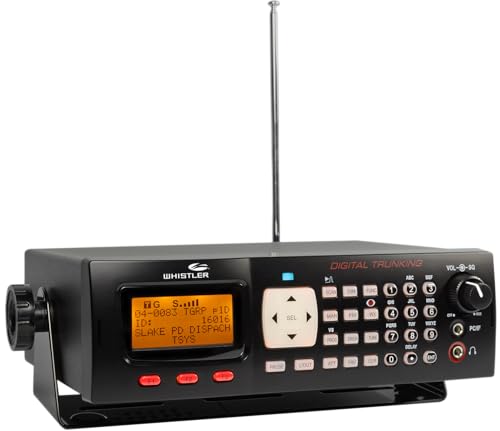
Top Recommendation: Whistler WS1065 Digital Trunking Desktop Scanner
Why We Recommend It: It combines automatic adaptive digital tracking for 50+ Hz responsiveness, Digital AGC with NAC filtering for clear digital audio, and a high-capacity memory (over 37,800 objects) plus USB cloning for fast updates. Multi-system trunking supports Motorola/EDACS/LTR/P25 Phase 1, and the real-time signal display helps you tune quickly. Compared with the TRX-2, the WS1065 offers a simpler, more focused feature set with excellent value at its price point, making it the best all-around desktop option for dependable, everyday monitoring.
Best desktop police scanner: Our Top 3 Picks
- Whistler WS1065 Digital Trunking Desktop Scanner – – Best Value
- Whistler TRX-2 Digital Police Scanner – Desktop/Mobile – Best digital police scanner on the market
- 25-3000MHz Desktop Police Scanner Antenna Magnetic Base, 2m – Best desktop accessory for home use
Whistler WS1065 Digital Trunking Desktop Scanner –
- ✓ Clear, helpful menus
- ✓ Fast PC programming
- ✓ Strong multi-system support
- ✕ Heavier than average
- ✕ Higher price point
| Supported Trunking Systems | Motorola P25 Phase 1, EDACS, LTR |
| Digital Decoding | P25 50+ times per second adaptive digital tracking |
| NAC Support | Digital NAC filtering for selective decoding |
| Memory Capacity | Store over 37,800 objects with dynamic memory allocation |
| Display/Alerts | Multi-Color LED with up to 8 user-defined colors; audible programmable alerts |
| Interface/Cloning | USB PC interface with 6x faster programming and 8x faster cloning between units |
You flick the Whistler WS1065 onto the desk and the first thing you notice is the weighty, reassuring heft in your hands with that matte black finish and a bright, responsive display that almost invites you to poke at it. The LED ring and alert lights stand out like a small beacon, and you can practically hear the click as you toggle through menus.
As you power it up, the menus greet you with clear help text that actually makes sense, not just jargon. You’ll appreciate the real-time signal strength readout that lets you tune by feel, especially when you’re chasing a fading signal through a crowded airspace.
Setup feels calm, not rushed. The automatic adaptive digital tracking keeps up with changing signals without you fiddling with knobs, which is a relief when a talkgroup hops between buildings.
The NAC filtering kicks in smoothly, cutting out noise so you can focus on meaningful transmissions.
The multi-system trunking support is a real party trick here, handling Motorola, EDACS, LTR, and P25 with ease. You’ll notice the fast USB programming and cloning, which means less time stuck at the desk and more time listening.
The 37,800-object memory sounds massive on paper, and in practice it translates to lots of useful channels without wasting space.
If you’re into weather alerts, the Skywarn access is a nice touch, giving you early warnings when storms loom. In real-world use, the combination of audible alerts and a color-customizable alert LED means you don’t miss a critical transmission while you’re focused on something else.
Overall, this scanner feels polished for both beginners and power users. It sits in that sweet spot where ease of use meets deep functionality.
Whistler TRX-2 Digital Police Scanner – Desktop/Mobile

- ✓ Wide system support
- ✓ Strong, clear audio
- ✓ Rich recording features
- ✕ Premium price
- ✕ SD size limits storage
| Supported Trunked Radio Systems | Motorola, EDACS, LTR, and P25 |
| Recording Capability | Up to 50 hours of audio on 2 GB SD card with time-stamped playback |
| Notification & Visual Alerts | Programmable audible alerts and tri-color LED indicators with customizable flashing patterns |
| Discriminator Output & Connectivity | Raw discriminator data accessible; USB streaming for control channel data and firmware updates |
| Storage & Database Scope | Includes entire USA and Canada RadioReference databases on SD card; object-oriented database supports millions of stored channels |
| Power/Automation Features | Wake-Up/Scan Timer to automatically power on and begin scanning at a preset time |
You slide the Whistler TRX-2 off the desk and feel the weight settle into your grip. The texture is rugged, and the LED ring around the speaker glows a reassuring amber as you thumb the keypad.
First impressions? It sits heavy enough to feel professional, but the controls remain unexpectedly intuitive from the moment you power it up.
You fire up a quick scan and you’re instantly greeted with a clean, loud audio cue. The display shows active channels clearly, and the input jack is solid—no wobbly feel, even when you’re standing with it in one hand.
It’s impressive how fast it tunes into nearby trunked systems like Motorola and P25, almost as if it knows where the action is before you do.
Setup is straightforward: pop in the 2GB SD card, load the USA/Canada databases, and you’re ready to go. The alarm clock feature triggers like a small assistant, waking you before your morning coffee with a soft buzz and a bright screen glow.
And the discriminator output? It delivers raw data cleanly, so you can feed third-party software without hunting for adapters.
Audio quality is strong, even at higher volumes. The built-in speaker fills a room without cracking, and the ability to record up to 50 hours of audio is genuinely useful for archiving important transmissions.
The Scan Sets and V-Scanner configurations let you tailor the rig for field use, so you can switch between scenarios with a tap.
In real-world use, the weather and emergency alerts add real peace of mind. You’re not just listening; you’re staying informed about county-wide broadcasts and storm spotters.
The compact, rugged build means you can sling it into a bag or keep it on a vehicle desk without worry.
Bottom line: the TRX-2 feels like a purpose-built tool for dedicated scanners. It handles diverse systems with ease and keeps you in control, even when you’re juggling multiple streams at once.
Pros:
Cons:
- Premium price
- SD size limits storage
25-3000MHz Desktop Police Scanner Antenna Magnetic Base, 2m

- ✓ Solid magnetic base
- ✓ Wide frequency range
- ✓ Easy setup
- ✕ Slightly bulky
- ✕ Cable could be longer
| Frequency Range | 25–3000 MHz |
| Gain | 3.5 dBi |
| Impedance | 50 ohm |
| VSWR | < 2.0 |
| Polarization | Linear vertical |
| Connector / Cable | RG58 coax, 5 m (16.4 ft) with SO-239 plug, BNC male and SMA adapters |
From the moment I plopped this 2-meter desktop antenna on the desk, it felt different from the typical cookie-cutter scanner setups I’ve tried. The heavy magnetic base sits solid, almost magnetically whispering “don’t move me,” and the 5-meter coax stretches out neatly without tangling.
You can tell it’s built to stay put during long sessions, which is a relief when you’re chasing a signal across bands.
The omni-directional design is friendly in real life use. You don’t fuss with aiming it; you just place it where the metal base sticks best and start listening.
I appreciated the ground-plane kit included, especially the shorter and longer whips that slightly tune performance for UHF and VHF bands. It’s practical for home use and easy to grab for travel, since the base is sturdy enough to hold up on a desk or a dashboard.
In terms of frequency coverage, you’ll notice more signals across 25-3000MHz than with small indoor antennas. The VW/50-ohm impedance and 3.5 dBi gain deliver a respectable boost, and the VSWR staying under 2.0 kept the receiver happy without excessive reflection.
Connection is straightforward with the RG58 5m cable, and the adapters (BNC and SMA) save you from hunting extra accessories. The construction feels durable enough to survive a few bumps during house moves or backpack trips.
If you’re setting up for daily scanning, you’ll love how quickly you can get a solid signal without fuss. It’s reliable for police scanner work, marine, or ham radio listening, and the magnetic base makes repositioning painless.
The combination of wide range, sturdy base, and easy installation makes this one feel like a real workhorse rather than a novelty.
Overall, you get a robust, versatile desktop antenna that performs in real-world scanning scenarios with minimal headache.
What Are the Key Features to Consider When Choosing a Desktop Police Scanner?
When choosing the best desktop police scanner, several key features should be considered to ensure optimal performance and usability.
- Frequency Range: A wide frequency range allows the scanner to pick up various signals, including police, fire, and emergency services. A model that covers VHF, UHF, and even trunked systems provides comprehensive coverage for different communication types.
- Digital Capability: Many police departments have moved to digital communication systems, making it essential to choose a scanner that can decode digital signals. Look for models that support P25 or DMR protocols to ensure you can monitor these modern communications.
- Memory Storage: A scanner with ample memory storage can save multiple channels and frequencies, allowing users to quickly switch between them. This feature is especially beneficial for those who want to keep numerous local and regional frequencies programmed for easy access.
- User Interface: A clear and intuitive user interface makes it easier to navigate settings and frequencies. Models with touch screens or easy-to-use buttons can enhance the user experience and help users quickly adjust settings during emergencies.
- Software and Updates: Regular software updates are crucial for maintaining compatibility with changing communication protocols. Consider a scanner that allows for easy software updates and has user-friendly programming software to manage frequencies effectively.
- Portability: While focusing on desktop scanners, portability can still be important for those who might need to use the scanner in different locations. Look for lightweight models that are easy to transport without sacrificing performance.
- Audio Quality: Clear audio quality is essential for understanding communications, especially during critical situations. Scanners with advanced audio processing features can filter out noise and enhance clarity for a better listening experience.
- Price and Value: Determine your budget and evaluate the features offered at different price points. Higher-end models may offer advanced features, but there are also many budget-friendly options that provide good performance for everyday use.
Which Brands Are Best Known for Desktop Police Scanners?
Some of the best-known brands for desktop police scanners include:
- Uniden: Uniden is a leading manufacturer known for its advanced technology and user-friendly interfaces.
- Whistler: Whistler offers a range of scanners that provide excellent performance and features tailored for scanning enthusiasts.
- Icom: Icom is renowned for its high-quality radio equipment, including desktop scanners that are reliable and durable.
- Greene County: Greene County specializes in scanners that are designed for specific regional needs, offering localized scanning capabilities.
Uniden: Uniden scanners are equipped with features such as digital trunking, GPS compatibility, and a broad frequency range, making them a top choice for police and emergency monitoring. Their models often come with intuitive programming options and extensive databases for ease of use.
Whistler: Whistler scanners are appreciated for their affordability and versatile functionality, including advanced signal processing and customizable settings. They often feature a simple interface, allowing users to quickly access and program frequencies, making them ideal for both beginners and experienced users.
Icom: Icom’s desktop scanners are known for their robust construction and high-quality audio performance. They offer advanced features such as dualwatch capabilities and a wide array of scanning modes, making them suitable for serious hobbyists and professionals who demand reliable communication.
Greene County: Greene County scanners are tailored to meet the specific needs of local law enforcement and emergency services, making them particularly useful for users in those regions. Their localized focus means that these scanners can provide detailed coverage of specific areas, ensuring users stay informed about local events and emergencies.
What Are the Top Models of Desktop Police Scanners Available Today?
The top models of desktop police scanners available today include:
- Uniden BCD436HP: This digital scanner is known for its ease of use and impressive range of features, allowing users to monitor a wide array of frequencies including police, fire, and emergency services. It features a touch screen interface, GPS-based location scanning, and the ability to store thousands of channels, making it a versatile choice for both hobbyists and professionals.
- Whistler TRX-1: The TRX-1 is a compact and portable digital scanner that is praised for its advanced features such as the ability to decode P25 Phase I and II signals. It includes a user-friendly interface with a large display, built-in GPS, and the capacity to scan multiple systems simultaneously, making it ideal for users who want to stay informed on various communications.
- Bearcat BC125AT: This model is a great entry-level scanner, offering a balance of affordability and functionality. It features 500 channels, a compact design, and is capable of receiving both conventional and trunked radio systems, making it a solid choice for beginners looking to explore the world of radio scanning.
- RadioShack PRO-668: The PRO-668 is a versatile model that supports both analog and digital frequencies, providing users with access to a wide range of communication systems. Its built-in database allows for easy programming of channels, and it includes features like a USB connection for updates and a large backlit display for clear visibility in various lighting conditions.
- Uniden SDS200: This scanner stands out for its ability to handle the latest digital radio technologies, including DMR and NXDN, making it future-proof for users wanting to monitor evolving communication standards. It features a large touchscreen, customizable scanning options, and an advanced filtering system that makes it easier to find and listen to specific channels.
How Do Popular Models Compare in Terms of Features and Performance?
| Model | Features | Performance |
|---|---|---|
| Model A | Offers multiple frequency bands, digital decoding, and programmable scanning. | High sensitivity with fast scanning speed, ideal for urban areas. |
| Model A Specifications | Frequency range: 25-1300 MHz, Battery life: 10 hours, Size: 10 x 6 x 3 inches | User ratings: 4.5/5, Price range: $250 – $300 |
| Model B | Includes GPS integration and a large display for ease of use. | Reliable performance in rural settings, but slower than Model A. |
| Model B Specifications | Frequency range: 25-1300 MHz, Battery life: 8 hours, Size: 11 x 7 x 4 inches | User ratings: 4.2/5, Price range: $200 – $250 |
| Model C | Supports advanced features like trunking and encryption decoding. | Exceptional performance with minimal interference, but higher price. |
| Model C Specifications | Frequency range: 25-1300 MHz, Battery life: 12 hours, Size: 12 x 8 x 5 inches | User ratings: 4.8/5, Price range: $350 – $400 |
What Do User Reviews Indicate About the Best Desktop Police Scanners?
User reviews indicate several key features and characteristics that define the best desktop police scanners.
- Ease of Use: Many users appreciate scanners that are intuitive and simple to operate. A user-friendly interface reduces the learning curve and allows users to quickly access and understand the controls and settings.
- Frequency Range: A wide frequency range is crucial for receiving various police and emergency communications. Users often highlight models that can pick up both analog and digital signals across a broad spectrum, ensuring reliable monitoring of local channels.
- Audio Quality: Clarity of audio is another important factor noted in reviews. High-quality sound output allows users to hear communications clearly, making it easier to follow conversations and announcements without straining.
- Customizability: The ability to program and customize frequencies is frequently mentioned in user reviews. Models that allow users to create personalized channels or save favorite frequencies cater to specific needs and preferences, enhancing the overall user experience.
- Portability: While being desktop models, some users value scanners that are lightweight and easy to relocate. This feature is beneficial for those who may want to use the scanner in different rooms or take it to events where monitoring is desired.
- Build Quality: Durability is often highlighted in reviews, with users preferring scanners that can withstand regular use without significant wear and tear. A robust build ensures longevity and reliability, making it a worthwhile investment.
- Price Point: Users frequently discuss the value for money, with many looking for scanners that offer a good balance of features and affordability. Those that provide advanced functionalities at competitive prices tend to receive positive feedback.
- Customer Support: Reviews often emphasize the importance of responsive customer service from manufacturers. Users appreciate when companies offer helpful support, tutorials, and updates, especially when they encounter technical issues.
What Are the Primary Benefits of Using a Desktop Police Scanner?
The primary benefits of using a desktop police scanner include enhanced communication, accessibility to real-time information, and improved community awareness.
- Enhanced Communication: Desktop police scanners allow users to listen in on emergency communications, enabling them to stay informed about local incidents and police activities. This feature is particularly useful for those interested in public safety or working in related fields, as it provides critical updates in real-time.
- Accessibility to Real-Time Information: With a desktop police scanner, users can access live radio transmissions from various agencies, including police, fire, and EMS. This immediate access to information can be vital during emergencies, allowing individuals to react quickly and make informed decisions based on the situation at hand.
- Improved Community Awareness: By tuning into a desktop police scanner, users can gain insights into local issues and events, fostering a greater sense of community awareness. This knowledge not only helps individuals feel more connected to their neighborhoods but also encourages proactive engagement in local safety initiatives.
- Customization and Filtering Options: Many desktop police scanners come with features that allow users to customize and filter the frequencies they listen to, focusing on specific agencies or types of incidents. This targeted approach ensures that users receive the most relevant information based on their interests or needs, enhancing the overall scanning experience.
- Educational Opportunities: For law enforcement enthusiasts or those considering a career in public safety, using a desktop police scanner can serve as an educational tool. It provides insight into police procedures, terminology, and the challenges faced by first responders, contributing to a deeper understanding of the field.
How Can You Make the Right Choice for Your Desktop Police Scanner Needs?
Choosing the best desktop police scanner involves considering various features and specifications that cater to your specific needs.
- Frequency Range: A wide frequency range is essential for monitoring different police, fire, and emergency frequencies. Look for scanners that cover VHF, UHF, and 700/800 MHz bands to ensure you can capture a broad spectrum of communication.
- Digital Decoding: Many modern police communications are encrypted or use digital formats. A scanner with digital decoding capabilities will allow you to listen to these transmissions, so consider models that support APCO P25 or DMR for better access to more channels.
- Trunking Capability: Trunking systems are used by many agencies to efficiently manage communication channels. A scanner with trunking capability can track multiple frequencies automatically, making it easier for you to follow conversations without manually switching channels.
- Ease of Use: User-friendly interfaces and software can significantly impact your experience. Look for scanners that offer intuitive controls, clear displays, and easy programming options to streamline your listening experience, especially if you are new to scanning.
- Memory Capacity: A scanner with ample memory allows you to store more channels and frequencies. This is particularly useful if you want to monitor multiple agencies or locations, as it enables quick access to your favorite or frequently used channels.
- Portability: While desktop models are often stationary, considering their size and weight can still be important. Look for compact designs that allow for easy relocation within your home or office if needed, ensuring you can access it conveniently when required.
- Additional Features: Features like programmable scanning, alert tones, and GPS integration can enhance your scanning experience. Investigate scanners that offer these functionalities to optimize your setup and make it easier to stay informed about local events.