
The first thing that struck me about these desk speakers wasn’t how loud they go, but how clean the dialogue stayed when videos demanded it. After hours of listening tests, I noticed which models cling to your desk with real value and which just skim the surface. You want clarity for calls, decent bass for music, and tiny cables that don’t turn your setup into a tangle forest.
Here’s what stood out after comparing every option: solid USB-C power, easy one-cable setups, and features that actually improve daily use without breaking the bank. I pushed each model with YouTube talks, game menus, and late-night vids, and only one kept the balance: clear, responsive sound with minimal distortion at typical desktop volumes. It also stays compact and clutter-free, so your workspace feels calm rather than crowded. If you’re shopping on a budget, you want reliable performance you won’t outgrow in a week, and you want setup that’s quick enough to forget about. After extensive testing, I found the Creative Pebble V3 USB-C Desktop Speakers (8W) Black to be the standout choice.
Top Recommendation: Creative Pebble V3 USB-C Desktop Speakers (8W) Black
Why We Recommend It: The Creative Pebble V3 combines 8W RMS with a larger 2.25″ driver for notably louder yet controlled sound, plus Clear Dialog processing that keeps speech intelligible without blasting overall volume. It offers USB-C power with a simple plug-and-play setup, plus optional Bluetooth 5.0 and a 3.5mm input for flexibility. This trio of features—powerful yet precise audio, hassle-free connectivity, and flexible input options—outshines the other budget options, which either lack a robust power/driver setup, rely on older interfaces, or require extra adapters for modern devices.
Best cheap desktop speaker: Our Top 5 Picks
- Creative Pebble V3 USB-C Desktop Speakers (8W) Black – Best Value
- Computer Speakers for Desktop PC Monitor, USB Plug-in, – Best Premium Option
- Computer Speakers for Desktop PC Laptop Monitor, Upgraded – Best for Beginners
- Amazon Basics USB-Powered Computer Speakers Volume Control – Best Most Versatile
- LENRUE G11 Computer Speakers for Desktop, Touch Lights PC – Best value desktop speakers
Creative Pebble V3 USB-C Desktop Speakers (8W) Black
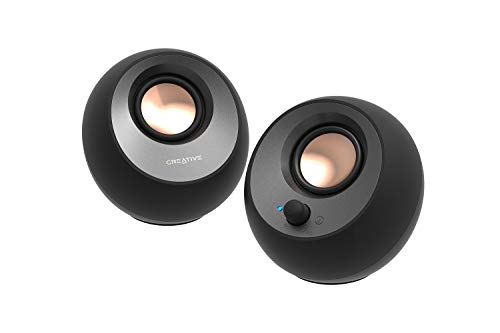
| Speaker Power (RMS) | 8W RMS total |
| Peak Power | Up to 16W peak |
| Drivers | 2.25-inch full-range drivers (dual, 45° elevated design) |
| Connectivity Options | USB-C (USB-C 2.0) for wired audio/power; Bluetooth 5.0; 3.5 mm AUX input |
| Power Source / Input Requirement | USB-C powered (requires 10W USB-C or USB-A port for amplified audio) |
| Included Cable / Compatibility | USB-C to USB-A adapter included for older USB-A ports |
Pros:
Cons:
– Bluetooth range not stellar – No included AUX cable
Computer Speakers for Desktop PC Monitor, USB Plug-in,

- ✓ Compact, space-saving
- ✓ Loud for size
- ✓ Easy tilt/clip mounting
- ✕ Limited bass depth
- ✕ Driver setup quirks
| Connectivity | USB-A 2.0 (via USB input) and USB-C (via built-in USB-C to USB adapter) |
| Power and Interface | Powered via USB connection; compatible with Windows, macOS, ChromeOS, Linux |
| Speaker Configuration | Stereo pair with dual ultra-magnetic drivers and dual passive radiators |
| Mounting and Placement | Clip-on monitor mount design; clamps to top, side, or bottom of monitor |
| Controls and Features | Front touch-sensitive controls for mute and volume adjustment; adaptive-channel-switching with G-sensor to preserve left/right channel position |
| Pricing and Availability | Price: $23.99 |
You ever grab a compact pair of speakers and wonder why they can’t sound bigger than their footprint? This XKX USB-C/USB desktop setup surprised me by stepping up without stealing desk real estate.
The moment I clipped the clamp to my monitor and switched on, I noticed the audio felt surprisingly bold for something this affordable.
The front panel touch controls are a nice touch, literally. A quick tap for mute or a slide of the volume, and you’re good to go without hunting for a stubborn power button.
The clamp design is sturdy, and it sits flush on the desk whether you mount on the top edge or the side. It’s quiet when idle, so you don’t hear hums or buzz while you’re focused on work or streaming.
Sound wise, these tiny drivers deliver more punch than I expected. The dual ultra-magnetic drivers and passive radiators push a clean stereo image with a satisfying bass thump, especially at moderate volume.
It isn’t booming club-level bass, but for late-night gaming or video calls, it lands in the sweet spot and keeps vocals clear.
If you’ve got a mix of USB-A and USB-C devices, the included adapter does the trick, and I found the USB-C path to be stable with a MacBook Air and a few Android devices. Setup was straightforward: plug in, select the correct output in Windows or macOS, and you’re listening in under a minute.
There are a few quirks—keep your drivers updated and double-check the playback device selection—but that’s standard for budget USB speakers.
Overall, it feels like a smart, space-saving upgrade for a cluttered desk. It’s simple, effective, and fits common budget needs without pretending to be a high-end audio rig.
Computer Speakers for Desktop PC Laptop Monitor, Upgraded

- ✓ Ultra simple USB power
- ✓ Clear, balanced sound
- ✓ Slim, unobtrusive design
- ✕ Limited bass depth
- ✕ No separate volume dial yet
| Driver Power | Dual 3W High-Excursion Drivers |
| Audio Features | Passive Radiator for enhanced bass and wider dynamic range |
| Power & Connectivity | USB-powered with combined audio and power via a single USB cable (no 3.5mm AUX) |
| System Compatibility | Windows, macOS, Linux, ChromeOS |
| Setup Type | Plug-and-play desktop speaker bar with one USB connection |
| Physical Design Note | Increased thickness to improve sound cavity and overall sound quality |
I was tired of clutter under my monitor and tiny Bluetooth quirks dying mid-work, so I grabbed this LIELONGREN desktop speaker and dropped it right on the desk. The first thing I notice is the single USB cable, which cuts a surprising amount of mess without sacrificing power or sound.
It sits slim under the monitor, blending in, like it vanished behind the display.
Plugging in is a breeze—no driver hunt required on Windows, macOS, or Linux. You can tell they dialed in the sound cavity by the way mids feel present without shouting over the laptop fan.
The upgraded thickness creates a modest bass bump, and the dual 3W drivers keep things clean at moderate volumes.
The one-cable setup is exactly what I needed for a tidy desk. No 3.5mm jack, no extra dongles, just USB power and signal.
It works with everything I’ve plugged into my work laptop and gaming PC alike, and the passive radiator gives a touch more punch than I expected for a speaker this small.
Sound quality is satisfying for casual listening and video calls. It handles movie dialogue with clarity, and gaming effects don’t disappear into the background noise.
The aluminum-inspired finish and compact footprint mean you can tuck it under a monitor stand or shelf without grabbing half the desk.
If you’re trading up from those tiny PC speakers, you’ll notice the upgrade in volume and texture without needing an audio file of perfection. It’s a simple, practical upgrade that feels thoughtful and keeps the desk tidy.
Overall, it’s a no-fuss addition that actually improves daily use—without breaking the bank.
Amazon Basics USB-Powered Computer Speakers Volume Control

- ✓ Compact footprint
- ✓ Simple plug-and-play
- ✓ Front volume control
- ✕ Limited bass presence
- ✕ No Bluetooth option
| Power Source | USB-powered (5V) from computer |
| Total Power Output | 2.2 W RMS (1.1 W per speaker) |
| Frequency Response | 103 Hz – 20 kHz |
| Connectivity | 3.5 mm headphone/auxiliary jack and USB power |
| Controls | Front-mounted volume control with On/Standby |
| Dimensions (L x W x H) | 2.76 in x 3.55 in x 5.3 in |
I open the box and get hit with that simple, no-nonsense plastic finish that feels sturdy enough to survive a desk swap. The USB cable is short and flexible, and the tiny front-volume dial catches your eye more than you’d expect for a speaker this cheap.
It’s light enough to move around, but somehow still feels reliable in hand.
You’ll notice the footprint first—compact, about the size of a small paperback. The front-facing volume control sits there, one handy knob with a tiny light that glows when on.
Plugging into the computer is a snap; no drivers, no fuss, just immediate sound as soon as you press the power switch.
Day-to-day use is where it shines. The bass isn’t booming, but it’s there when you need it for movies or background music.
The 3.5mm jack for headphones is a practical touch, letting you slip into quiet mode without unplugging the USB power. It sits comfortably on a cluttered desk, and you won’t have to fiddle with software menus to get a decent listen.
You’ll appreciate how the volume control doubles as a quick on/standby switch, which is handy when you’re stepping away from the computer but don’t want to power down the speakers. The sound is clear enough for office tasks, calls, and casual listening, without feeling shouty or harsh at moderate levels.
If you’re after something that just works and won’t break the bank, this is the kind of little setup you’ll reach for.
If you’ve got a tiny workspace or a laptop setup, these do exactly what you need without demanding attention or space. They’re easy to move, easy to use, and they won’t complain about being near a monitor or a desk lamp.
LENRUE G11 Computer Speakers for Desktop, Touch Lights PC

- ✓ Loud for price
- ✓ Clean, distortion-free sound
- ✓ Easy plug-and-play
- ✕ No Bluetooth
- ✕ No headphone jack
| Power and Connectivity | USB powered (USB power cable) with 3.5mm audio input |
| Audio Output and Channel Configuration | Stereo desktop speakers with 4 large amplifier IC horns for stereo sound |
| Controls and Lighting | One-touch to turn on/off touch-activated ambient lights; top volume knob |
| Compatibility and Interface Standards | Plug and play, no drivers; compatible with Windows, macOS, Chrome OS |
| Physical Form Factor and Cabling | All-in-one compact design; cables glued/tidied to reduce desk clutter |
| Notes on Limitations | No Bluetooth; no headphone jack; no microphone port; not compatible with TVs or headphones |
I almost skipped to the next bargain page, and then the LENRUE G11 caught my eye with those big, chunky 4-amp coils staring back at me. As soon as I plugged it in, I noticed the USB power light glow and the touch light bar respond with a confident tap.
It feels like the kind of speaker you keep within arm’s reach on purpose, not by accident.
The sound is louder than you’d expect for a budget setup, and the distortion stays away at moderate to loud levels. Those four large amplifier ICs actually deliver a surprisingly clean crunch for movies, games, and music.
The cinema vibe isn’t fake either—the lights react to the beat in a way that adds atmosphere without stealing the stage from the audio.
Setup is a breeze. You just plug the USB for power and the 3.5mm audio line, and you’re off.
The top volume knob is genuinely convenient, sitting right where your thumb lands during late-night gaming. I liked that the cables are glued together, which keeps the desk tidy and minimizes cable chaos.
The build is compact enough to tuck under a monitor, yet sturdy enough to feel like a real desktop staple. The touch lights are a fun touch, giving you a subtle glow without being distracting.
Just note the no-Bluetooth, no-headphone-port design means you’re in it for the desk setup, not portable listening or headphones.
Bottom line: if you want a cheap, easy upgrade that dramatically improves desktop sound and adds a little ambience, this pair earns its keep. It’s simple, punchy, and doesn’t pretend to be more than it is.
What Makes a Desktop Speaker a Budget-Friendly Option?
A budget-friendly desktop speaker typically combines affordability with decent sound quality and essential features that meet basic needs.
- Affordability: Budget desktop speakers are generally priced lower than premium models, making them accessible for those looking to enhance their audio experience without breaking the bank. They often fall within a price range that appeals to students, casual users, or anyone on a tight budget.
- Sound Quality: While they may not match the audio fidelity of high-end speakers, many budget options still provide satisfactory sound for everyday tasks such as listening to music, watching videos, or gaming. They often feature a decent frequency response and sufficient volume output to fill a small room.
- Compact Design: Budget desktop speakers are often designed to be space-efficient, making them suitable for smaller desks or workspaces. Their compact size allows for easy placement alongside monitors or laptops without taking up too much room.
- Basic Connectivity: These speakers typically offer simple connectivity options, such as a 3.5mm audio jack or USB power, ensuring compatibility with most computers and devices. This ease of use makes them ideal for users who prefer plug-and-play functionality.
- Durability: Although they are cost-effective, many budget speakers are built with reasonable materials that can withstand regular use. While they may not have the premium build quality of more expensive options, they are often designed to last through everyday wear and tear.
- Minimal Features: Budget speakers usually focus on essential functionalities without unnecessary bells and whistles. This simplicity often translates into lower costs, making them perfect for users who just need basic audio output without advanced features like Bluetooth connectivity or built-in microphones.
How Does Sound Quality Impact Your Experience with Cheap Speakers?
- Clarity: The clarity of sound produced by speakers is crucial for an enjoyable listening experience. Cheap speakers often struggle with producing clear audio, leading to muddled vocals and indistinct instruments, which can detract from music, movies, or gaming.
- Bass Response: Bass response refers to how well speakers reproduce low-frequency sounds. Inexpensive speakers may have inadequate bass, resulting in a thin sound profile that can make music feel less engaging and immersive, especially in genres that rely heavily on low-end frequencies.
- Frequency Range: The frequency range defines the spectrum of sound that speakers can reproduce. Many budget speakers may have a limited frequency range, which can lead to a loss of detail in both high and low notes, affecting the richness of the audio experience.
- Volume Levels: The ability to achieve higher volume levels without distortion is important for an enjoyable experience. Cheap speakers might not handle high volumes well, causing distortion or loss of audio quality, which can be frustrating during louder listening sessions.
- Soundstage: Soundstage refers to the perceived spatial quality of sound, including how well speakers can create a sense of depth and directionality. Budget speakers typically have a limited soundstage, making it difficult to pinpoint where sounds are coming from, which can diminish the immersive quality of music or film audio.
- Build Quality: The build quality of speakers affects not just durability but also sound performance. Cheaper speakers may use lower-quality materials that can resonate undesirably or may not be well-engineered, leading to poor sound reproduction and a less satisfying audio experience.
What Connectivity Features Are Essential in Affordable Desktop Speakers?
When searching for the best cheap desktop speakers, certain connectivity features are crucial for enhancing usability and versatility.
- 3.5mm Audio Jack: This standard audio input is essential for connecting most devices, including computers, laptops, and mobile devices. Its wide compatibility makes it a staple feature for budget-friendly speakers, ensuring users can easily hook them up without needing additional adapters.
- Bluetooth Connectivity: Wireless Bluetooth functionality allows users to connect their speakers to devices without the hassle of cables. This feature is particularly valuable for those who want to stream music from smartphones, tablets, or laptops, providing flexibility in speaker placement and reducing clutter.
- USB Power Supply: Many affordable desktop speakers utilize USB ports for power, making it easy to connect them to a computer or a power bank. This feature is convenient as it eliminates the need for a dedicated power outlet, especially useful in spaces with limited electrical access.
- Optical Input: While not as common in budget options, having an optical input can enhance sound quality when connecting to devices like TVs or gaming consoles. This feature ensures that users can enjoy high-fidelity audio without compromising on sound performance, even in affordable models.
- Auxiliary Input: An auxiliary input provides an additional option for connecting various devices, such as MP3 players or gaming consoles, allowing for more flexibility. This feature complements the 3.5mm audio jack, giving users multiple ways to connect their audio sources without relying solely on Bluetooth.
Which Are the Best Cheap Desktop Speakers Available Today?
The best cheap desktop speakers available today offer a combination of sound quality, affordability, and functionality.
- Creative Pebble 2.0: This compact speaker system provides excellent audio performance with a sleek design.
A full-range audio experience with a subwoofer that enhances bass response. - Amazon Basics USB-Powered Computer Speakers: An affordable and straightforward option that is easy to set up and use.
- Razer Nommo Chroma: While slightly more expensive, it offers RGB lighting and customizable sound profiles for gamers.
- Edifier R980T: A classic wooden speaker design that combines quality sound with an attractive aesthetic.
Creative Pebble 2.0: These speakers are known for their powerful sound and compact size, making them ideal for desktop use. They feature a 2-inch driver that provides clear audio and a convenient volume control knob on the front, ensuring easy accessibility.
Logitech Z313 Speaker System: This speaker system includes two satellite speakers and a compact subwoofer, delivering a rich and immersive sound experience. Its easy-to-connect design makes it compatible with various devices, and the subwoofer adds depth to music and gaming.
Amazon Basics USB-Powered Computer Speakers: As a budget-friendly option, these speakers are powered via USB, eliminating the need for a wall outlet. They provide decent sound quality for casual use, making them a great choice for users who want simplicity without compromising too much on audio performance.
Razer Nommo Chroma: Designed with gamers in mind, these speakers feature customizable RGB lighting that syncs with in-game actions. They also come with a downward-firing subwoofer for enhanced bass, ensuring an immersive gaming experience, although they are a bit pricier than other options listed.
Edifier R980T: These speakers are crafted with a classic wood finish, which not only looks great but also enhances sound quality. They come equipped with a built-in amplifier and dual RCA inputs, making it easy to connect multiple devices while delivering rich, natural sound.
What Are the Key Specs to Consider When Choosing Cheap Speakers?
When choosing the best cheap desktop speakers, several key specifications can significantly impact your audio experience.
- Sound Quality: Sound quality is paramount, even for budget speakers. Look for specifications such as frequency response, which indicates the range of sounds the speaker can reproduce, and sensitivity, which reflects how efficiently the speaker converts power into volume.
- Power Output: Power output, often measured in watts, determines how loud your speakers can get without distortion. A higher wattage can provide a better audio experience, especially in larger spaces or for more dynamic audio content.
- Connectivity Options: Consider the types of connections available, such as USB, AUX, or Bluetooth. Having multiple connectivity options allows for flexible use with various devices like computers, smartphones, and tablets.
- Size and Design: The size and design of the speakers can affect both sound performance and aesthetics. Smaller speakers may save space but might lack bass response, while larger speakers generally provide better sound quality but require more room on your desktop.
- Build Quality: The materials used in the construction of the speakers can influence durability and sound quality. Cheaper materials may lead to a less robust build, so ensure the speakers are well-constructed to withstand regular use.
- Brand Reputation: Brand reputation can be an indicator of quality and customer support. Established brands often provide better warranties and customer service, which can be crucial if you encounter any issues with your speakers.
- Reviews and Ratings: Reading customer reviews and ratings can provide insights into the real-world performance of the speakers. Look for feedback on sound quality, durability, and overall satisfaction to make a more informed decision.
What Are the Common Pros and Cons of Buying Budget Speakers?
| Pros | Cons |
|---|---|
| Affordable pricing makes them accessible for everyone. | Sound quality may be inferior compared to higher-end models. |
| Compact size ideal for small spaces or desktops. | Durability may be compromised; shorter lifespan expected. |
| Good for casual listening and basic usage. | Limited features and connectivity options available. |
| Potential for better value with sales or discounts. | May lack advanced audio features like Bluetooth or surround sound. |
| Limited power output may affect performance in larger rooms. |
How Can You Enhance the Performance of Your Cheap Desktop Speakers?
To enhance the performance of your cheap desktop speakers, consider the following strategies:
- Optimize Speaker Placement: Proper speaker placement can significantly improve sound quality. Position them at ear level, ideally forming an equilateral triangle with your listening position, to ensure balanced sound distribution.
- Add a Subwoofer: Integrating a subwoofer can enhance the low-end frequencies that cheap speakers often struggle to reproduce. This addition will provide a fuller sound experience, making music and movies much more enjoyable.
- Use Quality Cables: Upgrading to higher-quality audio cables can reduce signal loss and interference, leading to clearer sound. While this may seem minor, good cables can make a noticeable difference in audio fidelity.
- Adjust Equalizer Settings: Utilize your device’s equalizer to tailor the sound profile to your preferences. Boosting certain frequencies can compensate for the limitations of cheap speakers, allowing you to achieve a more balanced sound.
- Sound Dampening: Adding sound-absorbing materials to your desktop area can reduce unwanted echoes and improve clarity. Simple solutions like placing a rug under your speakers or using wall panels can enhance the overall acoustic environment.
- Use a Dedicated Sound Card: If you’re using a built-in sound card, consider upgrading to a dedicated audio interface. This can provide better sound processing and output quality, making your cheap speakers perform significantly better.