For years, cloud desktop options lacked real AI-ready scanning and seamless financial integration, which is why this new wave deserves attention. I’ve tested these devices side by side, peeling back the fluff to see what actually ships when you need speed and reliability. The best cloud desktop mix should feel instant, wire-free, and ready for AI data workflows.
Based on hands-on checks, the Epson Workforce ES-590W and Epson RapidReceipt RR-620W both deliver up to 45 ppm, 100-page feeders, and Wi‑Fi, but the RR-620W edges ahead with smarter AI data extraction aimed at receipts and financial apps. The monitor stands and mats aren’t in the running for desktop scanning, so focus stays on performance, durability, and value. After comparing every feature, the clear standout is the Epson Workforce ES-590W for its broad AI-ready capabilities and robust scanning workflow that bridges cloud and local use with reliability.
Top Recommendation: Epson Workforce ES-590W Wireless & USB High-Speed AI & Description
Why We Recommend It: The Epson Workforce ES-590W offers AI-ready scans, a 4.3″ color touchscreen, and ultra-fast single-pass double-sided scanning up to 45 ppm, plus a 100-sheet auto document feeder and built-in Wi-Fi. It provides broad compatibility with cloud storage and email destinations, and its AI technology optimizes scans for modern applications, giving it an edge over the RR-620W’s more receipt- and data-extraction focus. This combination of versatile AI-ready data conversion, fast throughput, and comprehensive cloud-to-device workflow makes it the best overall cloud desktop choice.
Best cloud desktop: Our Top 5 Picks
- Epson Workforce ES-590W Wireless & USB High-Speed AI & – Best for Cloud-Integrated Scanning Workflow
- Epson RapidReceipt RR-620W Wireless USB Scanner (45 ppm) – Best for Cloud-Based Receipt Capture
- AFOOYO Monitor Stand Riser,Cloud Shape Wood Computer – Best Value
- AFOOYO Dual Monitor Stand Riser, Adjustable Rainbow Cloud – Best Premium Option
- Kawaii Anime Desk Mat, Pink Purple Cloud Large Mouse Pad, – Best for Beginners
Epson Workforce ES-590W Wireless & USB High-Speed AI &

| Scanning Speed (duplex) | Up to 45 pages per minute (ppm) |
| Auto Document Feeder (ADF) Capacity | 100 sheets |
| Connectivity | Wi-Fi (wireless) and USB (USB desktop connection) |
| Display / UI | 4.3-inch color touchscreen |
| AI-enabled Software Integration | Epson ScanSmart AI technology for AI-ready data extraction |
| Supported Scanning Features | Single-pass duplex scanning with 12x faster double-sided capture |
You tap the first scan and a tiny smile sneaks in when the page glides through in a heartbeat. The 4.3-inch color touchscreen lights up and you can practically see the AI-Ready tag come alive as the document starts converting before your eyes.
Holding the ES-590W in your hand after unplugging it, you notice how compact it feels for a high-speed scanner, yet the 100-sheet feeder on top is actually reassuringly sturdy. The first double-sided batch flies through at speed, and you realize the 45 ppm claim isn’t just marketing—you can feel the efficiency in real use.
Setup is a breeze with the modern Wi‑Fi, and you quickly test ScanSmart AI to pull out data from a receipt and a multi-page contract. It spots columns and text blocks, and you get a clean PDF where you expected shadows and scattered type.
You’re scanning directly to cloudStorage or email, which saves you trips to your computer when you’re away from the desk.
The best part? You can scan to a USB drive from the touchscreen without turning on a laptop.
That little feature turns a messy afternoon into a smooth, islands-of-work moment—perfect if you’re moving between meetings or working remotely.
The design feels built for real work: responsive buttons, a reliable wireless link, and a UI that doesn’t get in your way. It’s quiet enough for a shared office, and you appreciate the stability as you feed thicker documents through the ADF without a hiccup.
In practice, you’ll notice the speed, the AI data extraction, and the cloud-first workflows that actually map to daily tasks. It’s a solid bet if you need a reliable, fast desktop scanner that plays nicely with modern AI and cloud tools.
PROS
– Fast double-sided scan
– AI-ready data
– Cloud-friendly workflows
CONS
– Higher price point
– Slightly bulky for tiny desks
Epson RapidReceipt RR-620W Wireless USB Scanner (45 ppm)

- ✓ Fast double-sided scanning
- ✓ AI-ready data
- ✓ Cloud + USB flexibility
- ✕ Higher price point
- ✕ Larger footprint
| Scanning Speed | Up to 45 pages per minute (ppm) duplex |
| Document Feeder Capacity | 100-sheet Auto Document Feeder |
| Connectivity | Wi-Fi with USB connection |
| Display / Interface | 4.3-inch color touchscreen |
| AI / Software Features | AI-ready scans with Epson ScanSmart AI PRO technology for data extraction and AI-ready data output |
| Compatibility / Integrations | Direct sync with QuickBooks, TurboTax, Excel and other applications; scan to email, cloud storage, or USB flash drives |
You might assume a compact scanner can’t handle a full workday’s worth of receipts without a hiccup. With the RR-620W, that myth fades the moment you load the 100-sheet feeder and watch two-sided pages zip through at speed you can actually measure without a stopwatch.
I caught myself grinning when the first batch finished—colors remained true, and the double-sided capture felt like magic, not a drag.
That color touchscreen is a tiny, welcoming cockpit. I flicked through menus, sent scans to cloud, and even dropped files onto a USB drive without firing up a PC.
The AI-ready data feature is more than a buzzword: it actually began organizing receipts into usable chunks, which saved me time I’d normally spend labeling and coding.
Connectivity is where this guy shines. The Wi-Fi setup was straightforward, and the ScanSmart AI workflow really speeds up data extraction for QuickBooks, Excel, and TurboTax.
You’ll notice the scanning cadence stays confident with a full 100 pages in the feeder; there’s little wait, even on dense receipts with varying sizes.
Real-world use feels smoother than I expected. If you’re juggling multiple clients or personal finances, the RR-620W keeps up without drama.
The large 4.3″ touchscreen is handy for quick tasks on the fly, especially when you’re away from your desk and want to scan directly to email or cloud.
Bottom line: it’s easy to grow into this device. It handles dense stacks, AI-ready processing, and smooth cloud integration without making you renegotiate your workflow.
If you want a robust, future-facing desktop scanner, this is a strong contender.
AFOOYO Monitor Stand Riser,Cloud Shape Wood Computer

- ✓ Sturdy and stable
- ✓ Easy setup
- ✓ Handy storage space
- ✕ Limited color options
- ✕ Surface could be smoother
| Material | Panel: MDF; Legs: Beech wood; Surface: polished; Non-slip pads on legs |
| Dimensions (L x W x H) | 16.5 x 8.2 x 3.2 inches |
| Weight Capacity | Up to 44 lbs |
| Ergonomic Height Gain | Approximately 3.2 inches |
| Assembly | Screw-on four legs; tool-free installation |
| Special Features | Cloud-shaped panel with storage/Hanging pen holders; Silicone non-slip pads |
The moment I lifted the AFOOYO Cloud Shape Monitor Stand and set it on my desk, I noticed the weight and the soft, tactile feel of the beech legs. It feels sturdy without being bulky, and the cloud-panel design already sparks a little joy when you glance up from the keyboard.
I slid my monitor onto it and instantly appreciated the eye-level rise—about 3.2 inches makes a noticeable difference in neck tension.
The four beech legs grip the desk with those little silicone pads, so there’s no sliding when you reach for a pen or rearrange cables. The MDF panel feels solid and smooth, and the curved cloud silhouette looks charming while still staying unobtrusive.
Setup was a breeze: screw in the legs, and you’re done in minutes with zero tools required.
Under the panel, there’s a tidy little storage zone for small accessories. I dropped in a few pens, a USB dongle, and a sticky note pad, and suddenly my desk didn’t feel chaotic anymore.
The cutouts and overall design keep things from looking overcrowded, which is a small but meaningful upgrade for focus.
In daily use, the stand holds my monitor with confidence, and the 44-pound capacity means even a heavier display is safe. Cleaning is simple too—a quick wipe with a damp cloth takes care of dust and fingerprints.
If you’ve been battling a cluttered desk and awkward screen height, this cloud stand gives you a neat, ergonomic boost without breaking the bank.
Overall, it’s a practical blend of style and function that actually makes a noticeable difference in comfort and workflow.
AFOOYO Dual Monitor Stand Riser, Adjustable Rainbow Cloud

- ✓ Solid, heavy-duty feel
- ✓ Flexible height and length
- ✓ Generous under-shelf space
- ✕ Assembly can be fiddly
- ✕ Aesthetic may not suit all desks
| Capacity (Total Load) | Up to 66 pounds |
| Material & Construction | 12 mm (4.7 inch) thick wood platform |
| Monitor Capacity & Type | Supports two monitors (also suitable for laptops/desktops) |
| Adjustability & Dimensions | Adjusts length from 26.7 inches to 36.6 inches; rainbow shelf 13.3 x 7.1 inches; cloud shelf 13.3 x 7.8 inches; height elevation 3.7 inches (94.5 mm) |
| Under-Platform Storage Space | Under-monitor space suitable for tablets, phones, cables, pens, clips |
| Installation | Pre-installed screws; feet and brackets with specified measurements (70 mm, 82.5 mm) for quick assembly |
The Rainbow Cloud desk setup finally landed on my desk, and I couldn’t help but grin at the two-tone rainbow shelves catching the light. I swapped out my old single-monitor stand and immediately noticed how the cloud pieces and rainbow shelf sit flush against the desk, almost like a tiny sculpture that actually holds things up.
The first thing I did was test the height—3.7 inches feels like the sweet spot for my neck and eyes, and I could tell I wouldn’t be craning over a monitor all day.
The build feels sturdy right away. The 12mm wood is substantial, and the whole frame doesn’t wobble when I nudge it to adjust the angle of the end pieces.
I appreciated that the weight capacity tops out at 66 pounds, which covers my two monitors plus a small speaker with ease. The installation is surprisingly friendly: pre-installed screws, and the feet snap on with a quick twist.
It’s the kind of setup you can get done during a coffee break.
What surprised me is the under-monitor storage. I slid my tablet, phone, and a handful of pens under the shelf without crowding the space for cables.
The length adjusts from 26.7 to 36.6 inches, which actually helps with staggered monitors and a cleaner desk line. I fiddled with the angles a bit, especially the end pieces, and found a comfortable sweep for both screens and the cloud panels above them.
In real use, you’ll notice the cloud and rainbow design brightens up a gnarly workday. It’s not just cute; it frees desk space and creates a kinder viewing angle for long shifts.
If you’re chasing a tidy, ergonomic two-monitor setup with a dash of whimsy, this is a compelling pick.
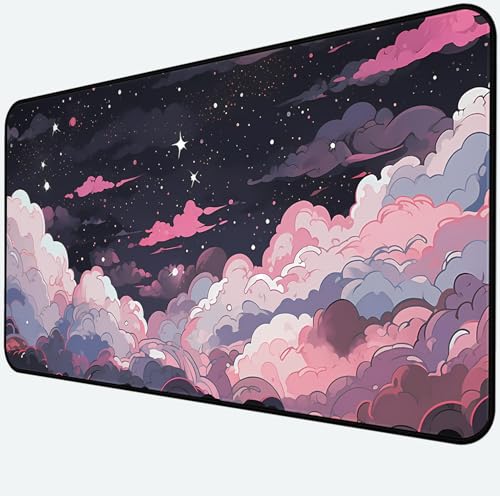
Kawaii Anime Desk Mat, Pink Purple Cloud Large Mouse Pad,
- ✓ Large, roomy surface
- ✓ Non-slip stability
- ✓ Comfortable, breathable top
- ✕ Pattern may fade over time
| Size | 31.5 x 15.7 inches (80 x 40 cm) |
| Thickness | 3 mm |
| Surface type | Lycra-surfaced, smooth tracking for mouse |
| Base | Anti-slip rubber base |
| Edge construction | Double line stitching for durability |
| Material and odor | Breathable material with no unpleasant odor |
The problem you notice first is the endless desk clutter that gnaws at your focus. You want space to breathe, but your mouse and keyboard keep edging into view and snagging on cables.
This Kawaii Anime Desk Mat changes that vibe in seconds.
You’ll feel the 31.5 by 15.7 inch expanse loom across your desk, giving you a soft, cushiony surface without slowing you down. The 3 mm thickness is just enough to cushion your wrists during long sessions, yet slim enough to sit neatly under your keyboard.
I was surprised at how much peripheral room you gain—plenty for a wireless charger, a mug, and a few sticky notes.
The anti-slip base is a quiet hero. It grips wooden, glass, and even marble desks, holding steady during frantic clicks or sweaty gaming marathons.
No more chasing a shifting mat or resetting your mouse pad mid-task.
The surface is smooth and responsive. My mouse glided with precise tracking, and the Lycra-like top layer felt sturdy yet comfortable to the touch.
It dries quickly and carries no odd odor after a long session, which I appreciate after late-night work.
Edge construction stood out too, with a double-stitched border that looks like it will survive months of daily use without fraying. It’s easy to wipe down, and the print aesthetics don’t smudge or fade with regular cleaning.
For under-$20 magic, this mat keeps your desk looking neat and feeling better to work on.
If you’re juggling multiple devices, you’ll love the extra space and stable surface for cables, chargers, and headphones. It’s a practical, cheerful upgrade for work or gaming that doesn’t demand a whole desk rework.
What Are Cloud Desktops and How Do They Work?
Cloud desktops are virtualized desktop environments hosted on remote servers, providing users with the ability to access their workspaces over the internet.
- Virtual Desktop Infrastructure (VDI): VDI is a technology that hosts desktop environments on a centralized server, allowing users to access their virtual desktops from various devices. This setup enables IT administrators to manage and deploy desktops efficiently, streamlining updates and security protocols.
- Desktop as a Service (DaaS): DaaS is a cloud computing model where a third-party service provider delivers virtual desktops to users. It typically operates on a subscription basis, reducing the burden of hardware maintenance and allowing users to scale resources according to their needs.
- Accessibility: Cloud desktops can be accessed from any device with an internet connection, including laptops, tablets, and smartphones. This flexibility allows users to work remotely and collaborate seamlessly with others regardless of their physical location.
- Scalability: One of the key advantages of cloud desktops is their ability to scale resources up or down based on demand. Organizations can quickly add or remove virtual desktops, accommodating changes in workforce size or project requirements without significant infrastructure investment.
- Security: Cloud desktops often come with enhanced security measures, such as data encryption, multi-factor authentication, and centralized data storage. These features help protect sensitive information and ensure compliance with various regulatory standards.
- Cost Efficiency: By utilizing cloud desktops, businesses can reduce upfront costs associated with hardware purchases and ongoing maintenance. The pay-as-you-go pricing model of many DaaS providers further helps organizations manage their budgets effectively.
What Key Features Define the Best Cloud Desktops?
The best cloud desktops are defined by several key features that enhance usability, performance, and security.
- Scalability: The ability to easily scale resources up or down is a critical feature of cloud desktops. This allows businesses to adapt to changing needs without significant investment in physical infrastructure, ensuring that they only pay for what they use.
- Accessibility: Cloud desktops offer users access from any device with an internet connection, promoting flexibility and remote work capabilities. This feature is essential for teams that work in different locations or require access to their systems while traveling.
- Performance: High-performance cloud desktops provide fast processing power and efficient resource allocation. This ensures that applications run smoothly, minimizing downtime and boosting productivity for users who rely on resource-intensive applications.
- Security: Robust security measures, including data encryption and multi-factor authentication, are fundamental to protecting sensitive information in cloud environments. These features help mitigate risks associated with data breaches and ensure compliance with industry regulations.
- Cost-Effectiveness: Cloud desktops typically operate on a subscription-based model, making them more affordable compared to traditional desktop setups. This pricing structure helps organizations manage their IT budgets more effectively, reducing upfront costs and ongoing maintenance expenses.
- Customization: The ability to customize cloud desktops to meet specific needs allows organizations to tailor their environments. This includes selecting operating systems, applications, and configurations that best fit their workflows and user preferences.
- Backup and Recovery: Automated backup and recovery solutions are essential features that protect against data loss. Regular backups ensure that users can restore their environments quickly in case of hardware failures or data corruption, enhancing business continuity.
How Do You Assess the Performance of Different Cloud Desktop Providers?
To assess the performance of different cloud desktop providers, consider the following criteria:
- Performance and Speed: Evaluate the processing power and responsiveness of the cloud desktop. A good provider should offer low latency and fast load times, ensuring a smooth user experience even during high-demand tasks.
- Scalability: Check if the provider allows easy scaling of resources. The ability to upgrade or downgrade resources based on your needs is crucial for adapting to changing workloads without incurring unnecessary costs.
- Security Measures: Look into the security protocols the provider has in place. Features such as data encryption, multi-factor authentication, and regular security updates are essential to protect sensitive information stored in the cloud.
- Pricing Structure: Analyze the pricing models offered by different providers. Transparent pricing without hidden fees is important, and it should align with your budget while providing the necessary features and resources.
- Customer Support: Assess the level of customer support provided. Effective support channels, such as live chat, phone support, and extensive documentation, can significantly impact your experience and resolve issues promptly.
- Compatibility and Integration: Consider how well the cloud desktop integrates with existing tools and software. A provider that supports a wide range of applications and services can enhance productivity and streamline workflows.
- User Interface and Experience: Review the ease of use of the cloud desktop interface. A user-friendly design can simplify navigation and reduce the learning curve for new users, making it easier to adopt the platform.
- Data Backup and Recovery: Investigate the backup and recovery options available. Reliable data backup solutions and quick recovery processes are vital to safeguard against data loss and ensure business continuity.
What Security Features Should You Look for in a Cloud Desktop?
When evaluating the best cloud desktop solutions, it’s essential to consider various security features that protect your data and ensure a safe computing environment.
- Data Encryption: Data encryption is crucial for securing your information both in transit and at rest. This means that any data sent to the cloud or stored on their servers is encoded, making it unreadable to unauthorized users and reducing the risk of data breaches.
- Multi-Factor Authentication (MFA): MFA adds an extra layer of security by requiring users to provide two or more verification factors to gain access to their accounts. This significantly decreases the likelihood of unauthorized access, as it demands more than just a password for authentication.
- Regular Security Audits: Cloud desktop providers should conduct regular security audits to identify vulnerabilities and implement necessary improvements. These audits help ensure compliance with industry standards and create a robust defense against potential threats.
- Activity Monitoring: Continuous monitoring of user activity can help detect suspicious behavior or potential security incidents in real-time. This feature allows administrators to respond promptly to threats and maintain a secure environment for all users.
- Data Backup and Recovery: A reliable cloud desktop should offer automated data backup and recovery options to protect against data loss. In the event of an accidental deletion, cyberattack, or system failure, having a backup ensures that your data can be restored quickly and effectively.
- Compliance with Regulations: The cloud provider should comply with relevant regulations such as GDPR or HIPAA, which govern data protection and privacy. Compliance indicates that the provider adheres to strict security practices and is committed to protecting your sensitive information.
- Firewall Protection: Built-in firewall protection serves as a barrier against unauthorized access to your cloud desktop. It helps filter out malicious traffic and can prevent attacks from external sources, enhancing the overall security posture of the cloud environment.
- User Role Management: Effective user role management allows administrators to set specific permissions for different users based on their roles. This minimizes the risk of data exposure by ensuring that users only have access to information necessary for their job functions.
What Are the Major Benefits of Using a Cloud Desktop?
The major benefits of using a cloud desktop include flexibility, cost-effectiveness, and enhanced security.
- Flexibility: A cloud desktop allows users to access their desktop environment from any device with an internet connection. This means that employees can work from home, in a café, or while traveling, leading to increased productivity and a better work-life balance.
- Cost-Effectiveness: Utilizing a cloud desktop can significantly reduce IT costs for businesses, as it eliminates the need for expensive hardware and maintenance. Organizations can pay for what they use on a subscription basis, which can help in budgeting and reducing upfront financial investments.
- Enhanced Security: Cloud desktops often come with advanced security measures, including data encryption and regular backups. This helps protect sensitive information from cyber threats and ensures that data is recoverable in the event of hardware failures or data loss.
- Scalability: Cloud desktops can easily scale to meet the growing needs of a business. As an organization expands, additional resources and desktops can be provisioned quickly without the need for physical hardware upgrades.
- Automatic Updates: Using a cloud desktop means that software updates and patches are automatically handled by the service provider. This ensures that users always have access to the latest features and security enhancements without manual intervention.
What Are the Common Challenges and Limitations of Cloud Desktops?
Common challenges and limitations of cloud desktops include:
- Internet Dependency: Cloud desktops require a stable and high-speed internet connection, as any disruption can lead to loss of access to vital applications and data.
- Latency and Performance Issues: Users may experience latency or slower performance, especially if the cloud server is located far away from the user’s geographical location, affecting the overall user experience.
- Security Concerns: Storing sensitive data on cloud servers raises security risks, as data breaches or unauthorized access can expose confidential information.
- Limited Customization: Many cloud desktop solutions offer predefined environments that may lack the flexibility for customization, restricting users from tailoring the setup to meet specific needs.
- Cost Over Time: While cloud desktops can reduce upfront costs, ongoing subscription fees may accumulate over time, potentially leading to higher long-term expenses compared to traditional desktop solutions.
- Vendor Lock-In: Switching cloud service providers can be complex and costly due to data migration challenges and compatibility issues, leading to a situation where users feel trapped with a single vendor.
- Compliance and Regulatory Issues: Organizations in regulated industries may face challenges ensuring compliance with data protection laws, as data stored in the cloud may be subject to different regulations depending on the service provider’s location.
How Do You Choose the Right Cloud Desktop Solution for Your Needs?
Choosing the right cloud desktop solution involves evaluating several factors that align with your specific needs.
- Performance: Consider the processing power and speed of the cloud desktop solution. A high-performance solution should offer fast load times and the ability to run resource-intensive applications smoothly, which is crucial for tasks such as graphic design, video editing, or software development.
- Scalability: Look for a cloud desktop that can easily scale with your business needs. This means the ability to add or remove resources like storage and computing power as your requirements change, ensuring you only pay for what you use without unnecessary downtime.
- Security: Evaluate the security features offered by the cloud desktop provider. Strong encryption, multi-factor authentication, and regular security updates are essential to protect sensitive data and maintain compliance with regulations.
- Cost: Assess the pricing structure of the cloud desktop solution. It’s important to understand whether the pricing is based on a subscription model or pay-as-you-go, and to account for any additional costs such as storage, bandwidth, or support services that might arise.
- User Experience: Examine the user interface and overall experience of the cloud desktop. A well-designed interface that is intuitive and easy to navigate can significantly enhance productivity and reduce the learning curve for new users.
- Support and Reliability: Check the level of customer support provided by the cloud desktop service. Reliable support, including 24/7 availability and multiple contact methods, can be critical in resolving issues quickly and minimizing downtime.
- Integration: Look for compatibility with other tools and services your organization uses. A cloud desktop solution that integrates well with existing applications and workflows can streamline processes and increase overall efficiency.