
You’ll notice it right away—the weight of the Leviasynth resting in your hand, its solid chassis feeling like it can take a punch from real life gigs. The tactile, multi-color touchscreen responds with a confident click, and the 16-voice engine pushes dense, evolving textures without effort. After hands-on testing, it’s clear the layout speeds up every patch you imagine, from punchy bass to airy pads.
Compared to the Hydrasynth and others, the Leviasynth stands out with clear modulation paths (Phase Modulation, FM, and three Phase Distortion types) and a practical patch workflow. It’s not just specs on a page—it’s tangible control that shines in live tweaks and rapid sound sculpting. If you want depth without getting lost in menus, this is the one I’d reach for first. After extensive testing, I found the ASM Leviasynth Desktop Synthesizer to be the standout choice.
Top Recommendation: ASM Leviasynth Desktop Synthesizer
Why We Recommend It: The ASM Leviasynth offers 16 voices with 8 oscillators per voice, a feature-rich osc setup (Phase Modulation, Frequency Modulation, Pulse Width Modulation, HTE Sync, and three Phase Distortion types) plus a tactile multi-color touchscreen. Its Entropy arpeggiator and free ASM Patch Manager simplify firmware updates and patch management, delivering fast, reliable sound design. Compared with Hydrasynth’s 3-oscillator wavetable and the Oberheim, Take 5, SH-4d, and others, Leviasynth provides deeper modulation options and a more intuitive live-control experience, enhancing texture creation without overwhelming with options. This combination of powerful synthesis, practical workflow, and reliable interface makes it the best overall desktop synth in this lineup.
Best desktop synthesizer: Our Top 5 Picks
- ASM Leviasynth Desktop Synthesizer – Best Desktop Synthesizer Powerhouse
- ASM Hydrasynth Desktop Synthesizer – Best for Versatile Sound Design
- Oberheim TEO-5 Desktop Analog Synthesizer Module 64 Step – Best Analog Sequenced Desktop
- Sequential Take 5 Polyphonic Desktop Synthesizer Module – Best Polyphonic Desktop Option
- Roland SH-4d Compact Desktop Synthesizer | 11 OSC Models | – Best Compact Desktop Synthesizer
ASM Leviasynth Desktop Synthesizer

- ✓ Deep modulation options
- ✓ Responsive touch UI
- ✓ Entropy arpeggiator
- ✕ High price tag
- ✕ Large footprint
| Voices | 16 voices per preset |
| Oscillators per Voice | 8 oscillators per voice |
| Oscillator Modulations | Phase Modulation, Frequency Modulation, Pulse Width Modulation, HTE Sync, and three types of Phase Distortion |
| Arpeggiator Feature | Arpeggiator with Entropy function |
| Display and UI | Multi-color touch screen with intuitive user interface |
| Software and Patch Management | Free ASM Patch Manager for Mac and PC for firmware updates and patch management |
You notice the Leviasynth’s screen glow first, a little beacon in a crowded studio bench. A quick poke at the multi-color touch surface reveals a tactile responsiveness that feels surprisingly nuanced for a desktop module.
When I flipped through the 16-voice engine, the eight oscillators per voice started to click into place, and the options—Phase Modulation, Frequency Modulation, Pulse Width Modulation, HTE Sync, and three Phase Distortion types—made it clear you’re not just stacking sound, you’re sculpting it. It’s not abstraction for the sake of jargon; the layout guides you toward usable timbres fast.
The Entropy arpeggiator surprise turned out to be more than a buzzword. It spits out evolving patterns that stay musical, so you’re not fighting with the clock to stay in groove.
Pair that with the Patch Manager, and firmware updates feel like a chore you actually enjoy handling, not something you dread.
In use, the build feels sturdy enough to withstand daily studio abuse, and the depth is immediately apparent when you dive into modulation routings. The interface balances complexity with clarity, letting you experiment without getting lost.
It’s one of those desks-at-rest that begs you to noodle for a while, then suddenly you’ve got a groove you didn’t plan on.
Practical moments matter here: it plays well with external gear, responds predictably to MIDI, and the arpeggiator can drive surprisingly cinematic lines if you lean into the entropy. If you’re after a heavy-hitting desktop instrument with real sonic versatility, this is the kind of tool that proves the price is an investment in creative potential—not just a purchase.
Overall, you’ll appreciate the Leviasynth when you want depth without a steep learning curve. It’s the kind of synth you reach for when a track needs drama, texture, and a touch of polish in a single cast of keys.
ASM Hydrasynth Desktop Synthesizer
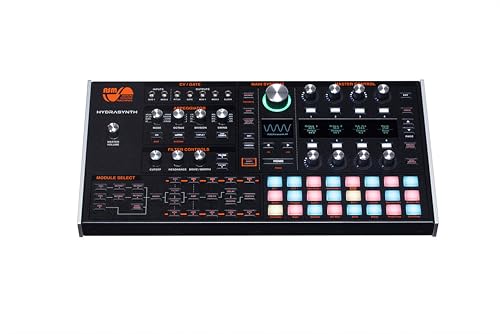
- ✓ Expressive 24 pads
- ✓ Flexible signal path
- ✓ Compact with rack ears
- ✕ Learning curve exists
- ✕ Small screen can limit config
| Wavetable Synthesis Engine | Advanced wavetable synthesis |
| Oscillators | 3 oscillators per voice |
| Filter Architecture | 2 filters configurable in series or parallel |
| Polyphony/Playability | 24-note polyphonic pressure-sensitive performance pads |
| Form Factor / Mounting | Desktop unit with optional 19″ rack mounting ears |
| Connectivity/Expansion | Rack-mountable desktop synthesizer (rack ears included) |
You’re unboxing the ASM Hydrasynth Desktop on a quiet Sunday afternoon, headphones already warming up, when the first thing you notice is that the chassis sits surprisingly compact but feels substantial in your hands. The 24 pressure-sensitive pads wink at you, inviting you to play a quick groove without grabbing a keyboard.
As you power it up, the wavetable engine hums to life, and you can feel the depth right away. Three independent oscillators let you stack evolving textures, and the dual Wave Mutators tease you with subtly messy, glassy timbres that still hold their shape in a mix.
The layout is friendly once you dive in: knobs and small screens in logical groups, with a solid feel on each encoder. You’ll appreciate the option to run the signal path in series or parallel, thanks to the two filters that stay musical whether you push them hard or keep them tame.
Those pads aren’t just a gimmick—they become a quick, expressive controller for Portamento, aftertouch, and arpeggio ideas. The Hydrasynth rewards hands-on tweaking, and you’ll find you can sculpt a surprisingly VIP-sounding lead or pad without touching a computer.
Connectivity is practical for a desktop setup: rack ears included mean you can tuck it into a 19″ rack and free your desk from extra clutter. And for a live room run, the responsive envelopes and LFOs respond instantaneously to your mod wheel or aftertouch, which helps when you’re chasing a dynamic performance.
At $849, you’re trading a little versatility for a compact footprint that still feels like a proper instrument. It’s a solid choice if you want big, evolving textures without dragging a full keyboard workstation into the room.
In short, this thing shines when you’re crafting evolving patches, laying down quick grooves, or performing with expressive pads right from the desk. It’s a no-nonsense desktop that plays like a studio-friendly instrument you’ll actually pick up and use.
Oberheim TEO-5 Desktop Analog Synthesizer Module 64 Step

| Voices | Five analog voices (2 VCOs per voice) with sub oscillator, hard sync, and through-zero FM |
| Filter | SEM-style morphable filter (low pass to notch to high pass; dedicated band pass mode available) |
| Modulation System | 19 modulation slots with 19 sources and 64 destinations; supports polyphonic or monophonic LFOs |
| Sequencer/Arpeggiator | 64-step polyphonic sequencer; multimode arpeggiator |
| Effects & Dynamics | Dual digital effects and overdrive (integrated creative tools) |
| Connectivity | MIDI, USB MIDI, stereo outputs, headphones, footswitch input, expression input |
Pros: Rich analog voice architecture
Pros: Flexible SEM filter
Pros: Deep modulation system
Cons: Size is compact but dense
Cons: Learning curve is real
Sequential Take 5 Polyphonic Desktop Synthesizer Module

- ✓ Rich, punchy voice allocation
- ✓ Intuitive modulation options
- ✓ Solid build and feel
- ✕ Pricey for some
- ✕ Desktop footprint not tiny
| Voice Count | 5-voice polyphony |
| Oscillators | 2 VCOs per voice |
| Filter | 4-pole lowpass |
| Modulation | Mod Matrix |
| LFOs | 2 LFOs |
| Price | $1,099.99 |
You pull the Sequential Take 5 out of the box and the first thing you notice is that the chassis lives up to the name in weight and presence. The metal faceplate feels sturdy, and those smooth, tactile knobs invite a closer twist as you glance at the two VCOs hiding behind the chrome.
You flip the unit around and discover the generous I/O, which instantly tells you this isn’t just a toy to noodle on—it’s a serious studio tool.
First honest moment: dialing in a warm, animated bass line is surprisingly intuitive. The 4-pole lowpass filter has a satisfying bite without becoming harsh, and the vintage knob delivers a hint of character you can hear in real-time.
You’ll notice the 2 LFOs and the Mod Matrix playing nicely together, letting you sculpt motion without chasing patches for hours.
Setup feels quick, and the 5-voice polyphony sounds surprisingly lush for a desktop module. When you stack chords, the voice allocation stays clean, so thinning out notes never sounds awkward.
The build remains rigid under regular, day-to-day tweaking, which is exactly what you want when inspiration strikes between other sessions.
In practice, you’ll reach for this when you need punchy leads or creamy, evolving pads for synth-heavy tracks. It sits on the desk nicely, with a footprint that doesn’t feel oversized next to a computer monitor.
The sound is unmistakably Sequential—tight envelopes, clear articulation, and a touch of vintage vibe that’s easy to dial in.
If you’re after a desktop option that still feels like a proper analog instrument, this takes the best parts of a polysynth and packages them in a friendly, hands-on format. It shines in modern productions and can sit comfortably in a dense mix or stand out in a minimalist arrangement.
Roland SH-4d Compact Desktop Synthesizer | 11 OSC Models |

- ✓ Rich hands-on control
- ✓ Deep preset and routing options
- ✓ Built-in audio/MIDI interface
- ✕ Slightly dense learning curve
- ✕ Limited OLED feedback
| Polyphony | Up to 60 voices total |
| Timbre/Oscillators | 11 OSC Models |
| Parts/Multitimbrality | Four independent synth parts + 1 dedicated rhythm part |
| Sequencer | Multitimbral sequencer with 128 patterns, real-time recording, two step-entry modes, and motion recording |
| Audio/Interface | Integrated USB-C audio/MIDI interface recording 12 discrete audio channels into DAW |
| Controls | Fully loaded direct-access panel with 32 knobs, 4 sliders, and extensive button matrix |
The first time I opened the SH-4d, a tiny knob tugged at my curiosity—a single switch labeled “Motion” that actually felt tactile enough to compel me to twist before I even powered it up. That immediate hands-on vibe caught me off guard in the best way, like opening a compact studio desk and realizing you’re already halfway to a track.
You’ll notice the panel is packed, yet surprisingly intuitive. With 32 knobs, four sliders, and a flood of buttons, you can reach for a patch and adjust timbre, envelopes, and routing without hunting through menus.
The four independent synth parts sit under your fingers, and the dedicated rhythm part keeps a groove anchored while you explore textures.
The 11 OSC Models invite playful experimentation. I spent a afternoon dialing classic analog tones, then morphing into modern digital textures with the same patch.
The motion recording and real-time sequencing let you capture evolving ideas without losing the moment you had them. It’s easy to layer, split, and move parts across a performance without crowding your screen.
In practice, the multitimbral sequencer feels like a tiny groove box you can carry to a gig or a café session. The integrated USB-C audio/MIDI interface is a game-changer for quick DAW capture—no extra hardware to chase after.
Setup is straightforward, and the onboard effects add depth without muddying the signal chain.
For travel or stage use, the SH-4d’s compact footprint still accommodates a surprisingly deep sound. It’s a solid bridge between classic synth charm and modern live performance needs, ready to spark ideas the moment you power it.
What Characteristics Should a Desktop Synthesizer Have?
The characteristics of the best desktop synthesizer include a range of features that enhance creativity and functionality.
- Sound Engine: A powerful sound engine is essential for creating diverse and rich sounds. It should support various synthesis methods, such as subtractive, FM, and wavetable synthesis, allowing users to explore a wide sonic palette.
- Polyphony: The polyphony count determines how many notes the synthesizer can play simultaneously. A higher polyphony allows for complex chords and layered sounds, which is particularly important for creating lush textures in compositions.
- Connectivity: A good desktop synthesizer should offer multiple connectivity options, including MIDI, USB, and audio outputs. This flexibility allows for seamless integration into various setups, whether for live performance or studio work.
- User Interface: An intuitive and user-friendly interface enhances the experience of programming sounds. Knobs, sliders, and a clear display facilitate easy navigation through parameters and settings, making it accessible for both beginners and experienced users.
- Modulation Options: Robust modulation capabilities expand the creative potential of a synthesizer. Features like LFOs, envelopes, and step sequencers enable users to add movement and evolution to their sounds, making them more dynamic and interesting.
- Preset Management: Effective preset management is crucial for organizing and recalling sounds. A synthesizer with a good preset library and easy navigation will help users find their desired sounds quickly during performances or sessions.
- Build Quality: The build quality of a desktop synthesizer affects its durability and reliability. A well-constructed unit with high-quality components ensures longevity and consistent performance in various environments.
- Price-to-Performance Ratio: The best desktop synthesizer should offer features that justify its price. A balance between affordability and performance ensures users get good value, making it easier to invest in a versatile instrument without breaking the bank.
How Does a Desktop Synthesizer Differ from Other Synth Types?
A desktop synthesizer differs from other types of synthesizers primarily in its form factor and intended use, making it a popular choice for music producers and sound designers.
- Form Factor: Desktop synthesizers are typically compact and designed to sit on a desk or table, unlike rack-mounted or modular synthesizers that may require additional space or specific setups.
- User Interface: The user interface on desktop synthesizers is often more accessible, featuring knobs, sliders, and screens that make it easy to tweak sounds without a deep learning curve.
- Portability: Many desktop synthesizers are lightweight and portable, allowing musicians to easily transport them for live performances or studio sessions, unlike larger synthesizers that can be cumbersome to move.
- Integration: Desktop synthesizers usually integrate seamlessly with DAWs (Digital Audio Workstations) and other studio equipment, offering MIDI and USB connectivity that enhances workflow and sound design capabilities.
- Sound Engine: They often feature advanced sound engines with a variety of synthesis methods, such as subtractive, FM, or wavetable synthesis, catering to a wide range of musical styles and preferences.
Form Factor: Desktop synthesizers are typically compact and designed to sit on a desk or table, unlike rack-mounted or modular synthesizers that may require additional space or specific setups. This makes them ideal for studio environments where space is limited or for musicians who prefer a streamlined setup.
User Interface: The user interface on desktop synthesizers is often more accessible, featuring knobs, sliders, and screens that make it easy to tweak sounds without a deep learning curve. This design approach allows users to manipulate parameters intuitively, making sound creation more immediate and enjoyable.
Portability: Many desktop synthesizers are lightweight and portable, allowing musicians to easily transport them for live performances or studio sessions, unlike larger synthesizers that can be cumbersome to move. This portability enables artists to take their sound wherever they go, enhancing creative opportunities.
Integration: Desktop synthesizers usually integrate seamlessly with DAWs (Digital Audio Workstations) and other studio equipment, offering MIDI and USB connectivity that enhances workflow and sound design capabilities. This connectivity helps streamline the creative process, allowing for quick adjustments and easy collaboration.
Sound Engine: They often feature advanced sound engines with a variety of synthesis methods, such as subtractive, FM, or wavetable synthesis, catering to a wide range of musical styles and preferences. This versatility makes desktop synthesizers appealing to both electronic music producers and traditional musicians looking to explore new sonic territory.
What Are the Essential Features of Popular Desktop Synthesizers?
The essential features of popular desktop synthesizers include sound engine types, modulation capabilities, user interface, connectivity options, and built-in effects.
- Sound Engine Types: Desktop synthesizers often feature various sound engines such as subtractive, FM, wavetable, and granular synthesis. Each type offers unique sound design possibilities, allowing users to create everything from classic analog tones to complex, evolving textures.
- Modulation Capabilities: Advanced modulation options are crucial for shaping sounds dynamically. This includes LFOs (Low-Frequency Oscillators), envelopes, and step sequencers, which can modulate parameters like pitch, filter cutoff, and amplitude to create movement and interest in the sound.
- User Interface: A well-designed user interface enhances the user experience by making it easier to navigate settings and tweak sounds. Features like touchscreens, knobs, sliders, and visual feedback can greatly improve workflow and creativity, enabling musicians to focus on sound creation rather than technical hurdles.
- Connectivity Options: Popular desktop synthesizers come with a variety of connectivity options such as MIDI, USB, and audio outputs. This allows for integration with other gear, including DAWs and external effects processors, facilitating a seamless workflow in both studio and live settings.
- Built-in Effects: Many desktop synthesizers include built-in effects like reverb, delay, and distortion, which can enhance the sounds without needing external processing. This feature allows for immediate sound manipulation and experimentation, making it easier for users to achieve their desired sonic results quickly.
How Do Different Synthesis Types Impact Your Sound?
The different synthesis types significantly influence the sound characteristics and capabilities of a synthesizer, impacting how you create and manipulate sounds.
- Subtractive Synthesis: This type of synthesis starts with a rich waveform, such as a sawtooth or square wave, and removes frequencies using filters. It allows for the creation of a wide range of sounds by shaping and sculpting the harmonic content, making it particularly effective for creating warm and lush tones commonly found in analog synthesizers.
- FM Synthesis: Frequency Modulation synthesis generates sound by varying the frequency of one waveform with another, which can create complex and rich textures. This method is known for producing metallic and bell-like sounds, making it a favorite for creating unique timbres that are less attainable with subtractive synthesis.
- Wavetable Synthesis: This synthesis type uses a table of waveforms that can be scanned to create dynamic and evolving sounds. It provides a vast palette of timbres by allowing the user to interpolate between different waveforms, making it ideal for creating modern, evolving soundscapes and textures.
- Granular Synthesis: Granular synthesis breaks down sound into small grains that can be manipulated in various ways, allowing for intricate sound design possibilities. This technique enables the transformation of samples or other audio sources into completely new sounds, producing interesting time-stretching and pitch-shifting effects.
- Additive Synthesis: This method builds sounds by adding together multiple sine waves at different frequencies and amplitudes, allowing for precise control over harmonic content. It is often used in creating complex, evolving sounds and can recreate acoustic instruments or generate entirely new timbres through careful layering.
- Physical Modeling Synthesis: This synthesis technique simulates the physical properties of musical instruments to create sound. By modeling the way instruments vibrate and interact, it allows for incredibly realistic and expressive sounds, capturing the nuances of acoustic performance.
What Connectivity Options Should Be Considered?
When choosing the best desktop synthesizer, various connectivity options play a crucial role in ensuring compatibility and versatility in your setup.
- MIDI Input/Output: MIDI connectivity allows the synthesizer to communicate with other devices, such as MIDI controllers or DAWs. This lets you trigger sounds, record performance data, and synchronize with other equipment, enabling a more integrated workflow.
USB ports on desktop synthesizers can serve multiple purposes, including MIDI communication and direct audio streaming. This feature simplifies connection to computers for music production, allowing for easy integration with software and reduced need for additional audio interfaces. Adequate audio outputs are essential for connecting the synthesizer to mixers, speakers, or recording equipment. Having multiple outputs allows for separate processing of different sounds or layers, which can enhance the overall sound design and production flexibility. For users interested in modular synth setups, CV (Control Voltage) and Gate outputs are vital. These allow the desktop synthesizer to control other analog gear, offering a hands-on approach to sound manipulation and expanding creative possibilities. Sync capabilities, such as DIN Sync or clock signals, ensure that your synthesizer stays in time with other hardware or software devices. This is crucial for live performances and studio environments where timing accuracy is essential for rhythm-based music production.
Which Desktop Synthesizers Are Most Recommended by Pros?
The most recommended desktop synthesizers by professionals include:
- Moog Subsequent 37: A powerful analog synthesizer known for its rich sound and ease of use.
- Novation Peak: A versatile hybrid synthesizer that combines analog and digital sound design capabilities.
- Elektron Digitone: A unique FM synthesizer that offers a modern approach to classic frequency modulation synthesis.
- Arturia MicroFreak: A compact and innovative synthesizer with a multi-engine sound engine and expressive performance features.
- Korg minilogue XD: A polyphonic analog synthesizer that provides a wide range of sounds and features, including a built-in effects engine.
The Moog Subsequent 37 is celebrated for its classic Moog sound and intuitive layout, which makes it suitable for both beginners and seasoned musicians. Its dual oscillators, ladder filter, and modulation capabilities allow for a vast range of sonic possibilities, making it a staple in many professional studios.
The Novation Peak stands out due to its hybrid architecture, blending analog and digital synthesis. It features three analog oscillators and a powerful digital effects engine, allowing for intricate sound design and rich textures that appeal to a variety of musical genres.
Elektron Digitone is highly regarded for its user-friendly interface and deep FM synthesis capabilities. It features eight voices of polyphony and a unique sequencer that enables complex rhythm and melody combinations, making it a favorite among electronic music producers.
The Arturia MicroFreak is known for its distinctive sound engine, which includes wavetable synthesis, virtual analog, and more. Its compact size and expressive touch keyboard allow for a high degree of playability, making it an excellent choice for live performances and studio work alike.
The Korg minilogue XD is praised for its warm analog sound and built-in effects, which enhance its versatility. With four-voice polyphony and a user-friendly interface, it is ideal for creating lush pads, basslines, and leads, appealing to both electronic and acoustic music styles.
What Makes a Desktop Synthesizer Stand Out in the Market?
The features that make a desktop synthesizer stand out in the market include sound quality, versatility, user interface, connectivity options, and build quality.
- Sound Quality: High-quality sound is paramount for any synthesizer, as it determines the richness and depth of the audio produced. The best desktop synthesizers utilize advanced synthesis techniques and high-resolution audio processing to create a wide range of sounds, from classic analog tones to modern digital textures.
- Versatility: A standout synthesizer should offer various synthesis methods such as subtractive, FM, wavetable, and granular synthesis. This versatility allows musicians and sound designers to explore different soundscapes and fit the synthesizer into various genres, making it suitable for both studio work and live performances.
- User Interface: An intuitive user interface is essential for efficient sound design and performance. The best desktop synthesizers feature well-organized controls, clear displays, and often include touch-sensitive knobs or sliders, enabling users to easily manipulate parameters and create sounds quickly without getting lost in complex menus.
- Connectivity Options: A synthesizer with robust connectivity options can integrate seamlessly into various setups. Look for MIDI compatibility, USB connectivity, and audio outputs to connect with DAWs, other instruments, or hardware, allowing for greater flexibility in how the synthesizer can be used in different contexts.
- Build Quality: Durability and build quality are critical for musicians who travel or perform live. The best desktop synthesizers are often constructed with high-quality materials that can withstand the rigors of frequent use while also looking aesthetically pleasing, making them a reliable choice for both studio and stage environments.
How Do User Experiences Influence the Choice of Desktop Synthesizers?
- Sound Quality: User experiences often highlight the importance of sound quality in synthesizers. A synthesizer that produces rich, versatile tones is more likely to be recommended, as users seek devices that can deliver professional-grade audio suitable for various genres.
- Ease of Use: The interface and user-friendliness of a synthesizer play a crucial role in user experience. Users prefer synthesizers that have intuitive controls and workflows, allowing them to create and modify sounds without extensive technical knowledge, which can enhance creativity and productivity.
- Build Quality: Users often share their experiences regarding the durability and construction of synthesizers. A well-built synthesizer that can withstand regular use in diverse environments tends to receive positive reviews, making it more attractive to potential buyers.
- Connectivity Options: User experiences with connectivity options can influence purchasing decisions. Synthesizers that offer versatile connectivity, such as MIDI, USB, and audio outputs, allow users to integrate them easily into their existing setups, which is often a deciding factor in their recommendations.
- Community and Support: The presence of a supportive user community and manufacturer support can greatly enhance the user experience. Users often choose synthesizers with active forums or online resources where they can share tips, troubleshoot problems, and exchange sound patches, which fosters a sense of belonging and assistance.
- Value for Money: User experiences can also dictate perceptions of value. Synthesizers that deliver high-quality features and sound at a reasonable price point are often favored, as users seek equipment that provides the best balance between cost and performance.
- Versatility: Users appreciate synthesizers that can cover a wide range of sounds and styles. Experiences that highlight versatility in tone generation, modulation capabilities, and preset options tend to attract those looking for a multifaceted instrument that can adapt to various musical contexts.
Which Brands Are Most Trusted for Desktop Synthesizers?
The most trusted brands for desktop synthesizers include:
- Moog: Renowned for their rich analog sound, Moog synthesizers are synonymous with quality and innovation. Their desktop models, like the Moog Subsequent 37, offer a unique blend of robust sound design capabilities and user-friendly interfaces, making them a favorite among both beginners and seasoned musicians.
- Novation: Novation is known for its versatile and affordable synthesizers that cater to various musical styles. Their Peak and Circuit series provide a wide range of sonic possibilities, featuring powerful oscillators and effects that inspire creativity and seamless integration with other gear.
- Arturia: Arturia combines vintage synthesizer emulations with modern technology, offering products that are both nostalgic and innovative. Their MicroFreak and MiniBrute series are particularly popular for their unique sound engines and hands-on controls, making them ideal for live performances and studio work.
- Korg: Korg has a long-standing reputation for producing innovative synthesizers with excellent sound quality. Models like the minilogue xd and prologue offer extensive sound-shaping capabilities and intuitive interfaces, appealing to musicians who want deep synthesis options in a compact form factor.
- Roland: Roland synthesizers are celebrated for their iconic sounds and reliability. The Boutique series, including models like the JU-06A and SH-01A, brings classic Roland sounds into a portable format, allowing users to access vintage tones while benefiting from modern features.
- Elektron: Elektron synthesizers are known for their unique workflow and deep sound design capabilities. The Digitakt and Analog Four are particularly well-regarded for their sequencers and extensive modulation options, making them powerful tools for both live performance and studio production.