
For years, desktop environments on Linux felt predictable but not exciting, and then I tested a pile of options to find real value. You get responsiveness, clean layouts, and solid performance when the right combo of hardware support and lightweight design lines up. I’ve spun up several live sessions, switched between environments, and noted how each feels under load. Here’s what actually works in practice.
Among the contenders, Linux Mint 22.2 Zara Xfce 64-Bit stood out for stable, traditional usability on modest rigs, while Tails and Kodachi offer privacy-forward workspaces from USBs. If you want speed with minimal fuss, the best choice delivers snappy responsiveness, reliable hardware recognition, and easy setup—without gimmicks.
Top Recommendation: Linux Mint 22.2 Zara Xfce 64-Bit
Why We Recommend It: Linux Mint 22.2 Zara Xfce 64-Bit provides a lightweight Xfce desktop with a fast, traditional interface ideal for everyday computing. It offers a live USB option and a graphical installer, ensuring quick evaluation and smooth installation on 64-bit Intel/AMD hardware. Compared with the privacy-focused Tails and Kodachi options, Mint prioritizes practical day-to-day use, broad hardware support, and straightforward maintenance, giving you dependable performance and value for general desktop tasks. This makes it the best-balanced choice among the tested options.
Best desktop environment linux: Our Top 5 Picks
- Linux Mint 22.2 Zara Xfce 64-Bit – Best desktop environment recommendations
- UDPTCP Fanless Mini PC, Industrial PC, Mini Computer Dual – Best top linux desktop environments
- Linux Kodachi 9 Bootable USB Flash Drive (XFCE Desktop) – Best linux desktop env comparison
- Tails Linux Bootable USB — Private Live PC, No Persistence – Best 最佳 Linux 桌面 环境
- Tails Linux OS GNOME 64-Bit Bootable USB Flash Drive – Best best desktop environments for Linux
Linux Mint 22.2 Zara Xfce 64-Bit

- ✓ Lightweight and fast
- ✓ Familiar Xfce feel
- ✓ Easy live session
- ✕ Limited modern eye candy
- ✕ Hardware support varies
| Operating System | Linux Mint 22.2 Zara Xfce 64-bit |
| Installation Media | USB flash drive with Linux Mint 22.2 Xfce 64-bit installation media |
| Desktop Environment | Xfce |
| Processor Architecture Support | 64-bit x86-64 (Intel/AMD) |
| Live Session Availability | Yes — boot from USB to explore before installation |
| Package Source Model | Open-source software base with graphical installer and standard applications |
An unexpected coffee spill revealed something bright under the Ubuntu curtains: the USB drive for Linux Mint 22.2 Zara Xfce flashed to life faster than I expected, almost like a friendly wink from the machine itself. The moment I plugged it in, the live session loaded smoothly, and the Xfce desktop greeted me with its familiar, no-nonsense layout.
You’ll notice the hardware-friendly vibe right away. The 64-bit Xfce environment feels light on resources, yet responsive enough for daily tasks like browsing, document editing, and light media playback.
It’s the kind of setup you can run on older laptops without strangling the fan noise or dragging down performance.
During setup, the graphical installer was straightforward, guiding me through partitions with clear prompts and visual cues. I appreciated the live session option first, so you can poke around before committing.
The interface keeps essential apps at hand and feels refreshingly traditional, which is comforting if you’re migrating from another distro.
On real-world days, Mint’s included open-source software handles common chores—office tasks, email, image viewing, and quick coding tests—without begging for extra tweaks. The USB media is convenient for evaluation, and you’ll find the installed environment solid for everyday computing out of the box.
SETUP notes feel practical: it supports 64-bit Intel and AMD hardware, with the installer doing the heavy lifting while remaining approachable for newcomers. If you value low-maintenance, dependable performance in a familiar UI, this version of Mint delivers without fuss.
All told, you’ll get a confident, traditional desktop experience that respects your time and your hardware. It’s exactly the kind of stable environment you can rely on for work, study, or casual use, right from a bootable USB.
UDPTCP Fanless Mini PC, Industrial PC, Mini Computer Dual

- ✓ Quiet, fanless design
- ✓ Flexible OS support
- ✓ Good expansion options
- ✕ Limited CPU headroom
- ✕ HDMI 4K support can be finicky
| CPU | Intel Celeron N2840, 2 Cores / 2 Threads, up to 2.58 GHz, 7.5 W TDP |
| Memory | 1 x DDR3L SO-DIMM, 1333 MHz |
| Storage | 1 x SATA 3Gb/s interface + 1 mSATA via mSATA/MINIPCIe slot |
| Networking | 2 x Gigabit Ethernet (Realtek RTL8106E/RTL8111H) with filtering |
| Graphics & Display | Integrated UHD Graphics, supports 4K@60Hz via HDMI and VGA (dual display) |
| Expansion & Interfaces | HDMI, VGA, 2 x RS-232, USB 3.0, 5 x USB 2.0, Audio, GPIO, PXE, supports WiFi/4G module |
You’re swapping a crowded workstation for something that looks almost like a compact router, and you’re stacking this UDPTCP Mini PC next to the modem. The moment you power it on, the bluish glow from the tiny dashboard LEDs catches your eye, and you realize you’ve got a real firewall/ LAN box in your living room setup.
The 2-core Celeron N2840 is surprisingly spry for a fanless unit, letting you run OPNsense, Linux, or OpenWrt without a fan-chorus of noise. It sits on a 6-layer PCB, and you can feel the build quality as you pluck the little heatsink and tiny board from its case.
You’ll notice the dual display outputs—HDMI and VGA—handle 4K at 60Hz with a bit of patience, which is handy when testing dashboards or media-pass-through.
During setup, you press Del to enter BIOS and spot Auto Power On and Wake On LAN options, which are perfect for headless operation. The board’s 1x DDR3L slot leaves room to upgrade RAM as your firewall rules grow.
The 1x SATA and MSATA slots give you plenty of storage headroom for logs and VM images, without turning the machine into a space heater.
Networking feels solid thanks to two Realtek 1G ports and robust kernel support across Linux and ESXi. The box stays quiet, even under moderate network load, which makes it ideal for a home lab or small office.
You’ll probably pair it with a USB WiFi module or a small 4G dongle for failover, which the design accommodates neatly.
Overall, it’s a tidy, capable little desktop environment Linux machine that blends security-focused features with straightforward expansion. If you want a compact, low-power router/firewall box with real OS flexibility, this one nails the practical balance without shouting about the specs.
Linux Kodachi 9 Bootable USB Flash Drive (XFCE Desktop)
- ✓ Plug-and-play privacy
- ✓ Default VPN + Tor
- ✓ Portability and speed
- ✕ Limited customization
- ✕ Not a full OS replacement
| Boot Medium | USB flash drive |
| Operating System Focus | Privacy-focused Linux with VPN + Tor routing |
| Live/Install Mode | Bootable, run from USB without modifying host system |
| Networking Security | Automatic VPN + Tor for all Internet traffic |
| Security Tools Included | Built-in network monitoring dashboards, encryption tools, privacy utilities |
| Browser/Privacy Configuration | Preconfigured privacy-focused web browsers and tools |
You pop Linux Kodachi 9 onto a USB drive and immediately notice how the XFCE desktop keeps things lean without feeling Spartan. The first thing that stands out is how clean the boot feels—no bloat, just a focused privacy workstation right from plug-in.
It’s the kind of setup you can boot on almost any PC and get to work without hunting for drivers.
Once you’re in, you’ll see the VPN and Tor routing kicking in by default. You don’t fuss with settings, you just browse, and you’re reminded why privacy-minded folks love this workflow.
It’s not flashy, but the protection layer is solid enough to feel reassuring during quick browsing sessions and light research.
The USB boot experience is pleasantly painless. You’ll find the system runs smoothly without altering the host machine, which makes it ideal for travel or borrowing a friend’s computer.
The built-in tools show up in a way that doesn’t require a steep learning curve—think simple dashboards, basic encryption options, and a few privacy utilities that actually get used.
Daily tasks feel natural, whether you’re checking email, taking notes, or spinning up a quick encrypted archive. The preconfigured browsers are tuned for privacy without turning your workflow into a scavenger hunt for privacy settings.
If you’ve ever worried about leaving traces on shared machines, Kodachi makes that concern manageable with a quick, confident boot-and-browse mindset.
In real-world use, the speed is decent for a live-OS setup. It’s not a gaming rig, but for secure browsing, researching, and incidentally managing sensitive work, it handles the baton well.
The portability is real—the drive stays compact, and the interface remains familiar even on a stranger keyboard.
If you value privacy without complexity, this one earns its keep. It’s not a full-on distro replacement, but it excels as a plug-and-play security-focused session.
Tails Linux Bootable USB — Private Live PC, No Persistence

- ✓ Strong privacy focus
- ✓ Flexible outside-Tails additions
- ✓ Simple updates via ISO swaps
- ✕ Requires USB reliability
- ✕ Limited on-disk storage default
| Boot Media Type | Dual USB-A & USB-C bootable drive |
| Boot Protocols Supported | UEFI and Legacy BIOS |
| Operating Model | Live USB with no persistence (no data retained after shutdown) |
| Privacy/Anonymity Features | Routes all traffic through Tor for online privacy |
| Update/Customization Capability | Can add/replace/upgrade other bootable ISO apps or utilities on the USB; Tails itself updated by adding latest Tails ISO |
| Hardware/Build Quality | High-quality flash memory chips designed for speed and longevity |
You pop the Tails USB into your laptop and notice the weighty, sturdy drive click softly when you seat it in. The matte finish and dual USB-A / USB-C connector feel purposeful, not flimsy.
It instantly gives off the vibe of a tool you can trust for a quick privacy session, right out of the box.
As it boots, you feel that familiar calm of a live environment. No install prompts, just a clean Tor-wrapped launchpad.
The interface lights up with familiar privacy tools, and you can tell the outside world isn’t getting a look in—everything runs from the USB, leaving the host untouched.
What stands out is the flexibility. You can swap in another compatible ISO or add utilities without touching Tails itself.
It’s a smart split: keep privacy intact while extending functionality for backups, installers, or extra security tools.
The setup is painless whether you’re on UEFI or Legacy BIOS. You’ll appreciate the ability to update Tails by adding the latest ISO, so you stay current without reconfiguring the whole drive.
On a busy day, that simplicity matters more than you’d expect.
Real-world use feels sane and straightforward. Tor routing is visible, and the system’s “no traces” promise is comforting when you’re hopping between public machines or hotel PCs.
The external build quality and responsive support from TECH STORE ON add a reassuring layer of backup if you hit trouble.
In day-to-day use, the USB becomes a portable privacy workstation: fast enough for browsing, light media, and text work, with the confidence of not leaving footprints behind.
Overall, this is a practical, capable live Linux option for anyone worried about privacy on the go. It blends security with real-world flexibility without turning your workflow into a headache.
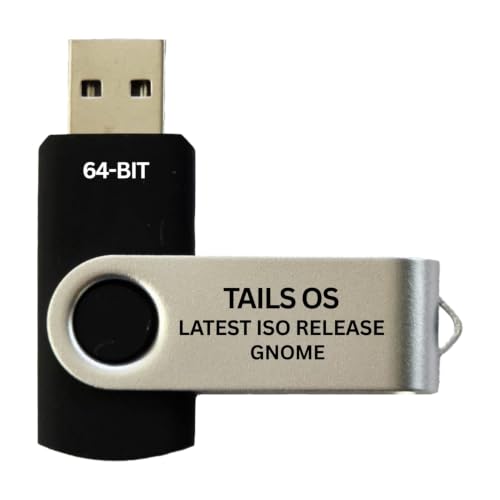
Tails Linux OS GNOME 64-Bit Bootable USB Flash Drive
- ✓ Portable live system
- ✓ GNOME workflow ready
- ✓ Privacy-conscious
- ✕ USB boot quirks may appear
- ✕ RAM requirement a bit strict
| Boot media | USB flash drive containing bootable Tails Linux OS image |
| Architecture support | 64-bit x86-64 |
| Desktop environment | GNOME |
| RAM recommendation | 3 GB RAM recommended for smooth operation |
| Boot method | Live USB startup without modifying existing OS |
| Base distribution | Debian-based open-source OS |
You’re mid-morning at a coffee shop, unplugged from the office network, and you pop this USB into your laptop to see if Tails GNOME can go where you need privacy and portability. The moment the boot menu appears, you’re greeted by a clean GNOME interface that feels familiar yet purpose-built for a live system.
It’s not fancy boot-time bling, but it loads smoothly enough to start a real workflow without hitting snags.
The USB itself has a sturdy, practical feel, and the 64-bit image boots with a confidence that makes you feel you’re carrying a complete environment in your pocket. GNOME’s workflow is intuitive: you get workspaces, file access, and system settings ready to go without wrestling with a different desktop metaphor each time.
Once up and running, you’re able to test a few tasks you’d actually do on the go—browsing, document editing, quick shell commands. The live system runs directly from the USB, which means you don’t risk overwriting your host OS, and that makes privacy-conscious use more approachable than a standard install.
The Debian base shines in reliability, and the included printed startup instructions add a reassuring, hands-on touch for first-timers. If you’re routinely carrying sensitive data or need a portable, auditable environment, this setup gives you a solid, reproducible starting point without relying on web downloads every time.
In real-world use, hardware compatibility matters as you’d expect: some laptops may need BIOS tweaks to boot from USB, and you’ll want at least 3 GB of RAM for a smoother GNOME experience. But the overall impression is a portable, user-friendly Linux session that respects your privacy goals while staying approachable for casual testers.
All in all, it’s a practical, no-frills portable Linux option that fits in a pocket and in your workflow, with enough polish to feel like a real operating environment rather than a throwaway live session.
What Makes a Desktop Environment the Best for Linux?
Several factors contribute to determining the best desktop environment for Linux, catering to different user needs and preferences.
- User Experience: A desktop environment should provide an intuitive and user-friendly interface, making it easy for users to navigate and utilize system functionalities. Customization options also enhance user experience by allowing individuals to tailor their environment to their specific tastes.
- Performance: The best desktop environments are optimized for speed and efficiency, consuming minimal system resources while still delivering functionality. Lightweight environments like XFCE and LXQt are ideal for older hardware, while more resource-demanding environments like GNOME and KDE Plasma offer advanced features for users with modern systems.
- Compatibility: A strong desktop environment should seamlessly integrate with various applications and tools, ensuring that users can access a wide array of software without compatibility issues. This includes proper support for essential applications and the ability to run different distributions without hiccups.
- Customization: Flexibility in customization allows users to modify the appearance and behavior of their desktop environment to suit their workflow. From changing themes and icons to rearranging panels and shortcuts, a customizable environment can significantly enhance productivity and comfort.
- Community Support: A vibrant community and active development behind a desktop environment can be crucial for troubleshooting, updates, and feature improvements. Environments with substantial community backing often have extensive documentation, forums, and resources, making it easier for users to find help and share experiences.
- Security: The best desktop environments prioritize security features to protect user data and maintain system integrity. This includes regular updates to fix vulnerabilities and the integration of security protocols that safeguard the user’s activities and data.
- Accessibility: A good desktop environment should cater to users with different needs, providing accessibility features such as screen readers, high-contrast themes, and keyboard navigation. This inclusivity ensures that all users can effectively interact with their systems.
How Do Usability and Customization Influence Your Choice?
Customization: Many Linux desktop environments, such as KDE Plasma, allow users to modify nearly every aspect, from themes and icons to window management and shortcuts. This flexibility means that a user can create an environment that fits their workflow and personal style, leading to greater efficiency and satisfaction.
Performance: Some desktop environments are lightweight and designed for older hardware, like LXDE or XFCE, which can enhance usability for users with limited resources. Conversely, more resource-intensive environments like GNOME may offer advanced features but could hinder performance on less powerful machines.
Community Support: Environments like Ubuntu’s Unity or Linux Mint’s Cinnamon benefit from robust communities that offer forums, documentation, and tutorials. This support network is invaluable for users seeking help or wanting to learn more about optimizing their desktop experience.
Design Aesthetics: Visual appeal can significantly affect a user’s emotional connection to their work environment. Desktop environments that prioritize clean and modern designs, such as GNOME or Budgie, not only look good but can also contribute to a more pleasant and motivating workspace.
Which Are the Most Popular Desktop Environments for Linux?
The most popular desktop environments for Linux include:
- GNOME: GNOME is known for its modern user interface and simplicity, making it a favorite among both new and experienced users.
- KDE Plasma: KDE Plasma offers extensive customization options and a visually appealing interface, catering to users who enjoy personalizing their desktop.
- Xfce: Xfce is lightweight and efficient, making it ideal for older hardware while still providing a full-featured desktop experience.
- Cinnamon: Cinnamon combines a traditional desktop layout with modern features, providing an intuitive experience for users transitioning from other operating systems.
- MATE: MATE is a continuation of the classic GNOME 2 desktop, appealing to users who prefer a straightforward, no-frills environment.
- LXQt: LXQt is a lightweight desktop environment that emphasizes speed and low resource usage, making it suitable for low-end systems.
- Budgie: Budgie is designed to be simple and elegant, focusing on usability and offering a clean aesthetic for a modern computing experience.
GNOME: This desktop environment is built around a user-friendly design that encourages productivity. It features a unique Activities Overview, which allows users to navigate their apps and workspaces seamlessly, making it particularly popular in many Linux distributions like Ubuntu.
KDE Plasma: Known for its powerful customization capabilities, KDE Plasma allows users to modify almost every aspect of their desktop environment. It includes a wide array of features such as widgets, a task manager, and a comprehensive settings manager, catering to those who appreciate a personalized experience.
Xfce: Xfce strikes a balance between performance and functionality, providing a stable desktop environment without consuming excessive system resources. This makes it an excellent choice for users with older hardware or those who prefer a snappier interface.
Cinnamon: Developed by the Linux Mint community, Cinnamon offers a familiar user interface that mimics traditional desktop layouts. It features a customizable panel, a menu system, and supports modern desktop effects, making it a user-friendly option for those transitioning from other operating systems.
MATE: As a continuation of the classic GNOME 2 interface, MATE retains the simplicity and ease of use that many users appreciate. It provides a straightforward experience without the complexities of newer environments, making it a solid choice for those who value stability and familiarity.
LXQt: This desktop environment is a merger of LXDE and Razor-Qt, focusing on being lightweight while still providing essential features. LXQt is particularly suited for users who need a fast and efficient environment while using minimal system resources.
Budgie: Budgie aims to provide an intuitive and visually appealing experience, integrating well with modern applications. Its clean and simple design allows users to focus on their tasks without unnecessary distractions, making it an attractive choice for many.
What Distinguishes GNOME from Other Environments?
GNOME is distinguished from other desktop environments by its unique design philosophy, user interface, and features that prioritize simplicity and usability.
- User Interface Design: GNOME employs a clean and modern user interface that emphasizes minimalism and ease of use. The activities overview provides a central space for managing windows and applications, which enhances productivity by streamlining navigation.
- Accessibility Features: GNOME is renowned for its robust accessibility options, making it an excellent choice for users with disabilities. Features such as screen readers, high-contrast themes, and keyboard navigation are integrated to provide an inclusive experience for all users.
- Customization Options: While GNOME offers a straightforward experience out of the box, it also supports extensive customization through extensions and themes. Users can tailor their environment to suit their preferences, adding functionalities or changing the look and feel without compromising the core design philosophy.
- Integration with Online Accounts: GNOME seamlessly integrates online accounts into the desktop experience, allowing users to manage their cloud services and social media directly from the system settings. This feature streamlines workflows by providing easy access to essential online services without needing to open separate applications.
- Performance and Resource Management: GNOME is designed to be efficient, utilizing resources effectively while providing a visually appealing interface. Its performance optimizations ensure that it runs smoothly on a variety of hardware configurations, making it suitable for both high-end and lower-spec systems.
- Active Community and Development: GNOME has a vibrant and active community of developers and users that contribute to its ongoing development and improvement. Frequent updates and enhancements ensure that the environment stays relevant, secure, and filled with new features based on user feedback.
Why Is KDE Plasma Considered Highly Customizable?
KDE Plasma is considered highly customizable because it allows users to modify virtually every aspect of their desktop experience, from the appearance and behavior of windows to the arrangement of widgets and panels.
According to a study published by the Linux Foundation, KDE Plasma offers a level of configurability that is unmatched in many other desktop environments, which is a significant factor that contributes to its popularity among users seeking a personalized computing experience (Linux Foundation, 2022).
The underlying mechanism behind KDE Plasma’s customizability lies in its modular architecture and the use of QML (Qt Modeling Language), which enables developers to create dynamic user interfaces. This flexibility allows users to tailor their desktop environment to align with their preferences, whether they prioritize aesthetics, productivity, or accessibility. This modularity also means that users can easily add or remove features and functionalities without affecting the core system, making it adaptable to a wide range of use cases.
Furthermore, the extensive array of themes, widgets, and plugins available for KDE Plasma enhances its customizability. Users can choose from thousands of options to modify their desktop environment according to personal taste or workflow needs. This rich ecosystem encourages community involvement and innovation, as developers continuously contribute new tools and enhancements, further solidifying KDE Plasma’s reputation as one of the best desktop environments for Linux enthusiasts seeking customization.
What Advantages Does XFCE Offer for Mid-range Systems?
XFCE offers several advantages for mid-range systems, making it one of the best desktop environments for Linux.
- Lightweight Design: XFCE is designed to be resource-efficient, using minimal system resources which allows it to run smoothly on mid-range hardware. This lightweight nature helps in improving overall system performance, particularly when multitasking or running resource-intensive applications.
- Customizability: XFCE provides a high degree of customizability, allowing users to tailor the desktop environment to their personal preferences. Users can easily change themes, icons, and panel layouts, enabling a personalized experience without compromising performance.
- Stability and Reliability: XFCE is known for its stable performance, making it a reliable choice for users who require a dependable desktop environment. Its consistent updates and focus on quality ensure that it remains robust, reducing the likelihood of crashes or bugs that can hinder productivity.
- Active Community Support: A strong community backs XFCE, providing extensive documentation, forums, and user support. This active community means that users can find help easily, share tips, and access a wealth of resources to enhance their experience with the desktop environment.
- Compatibility with Older Hardware: XFCE is particularly well-suited for older or less powerful hardware, ensuring that users can still enjoy a modern desktop experience without needing to upgrade their systems. This compatibility allows users to extend the life of their machines while enjoying contemporary software applications.
How Does LXQt Serve Lightweight Users?
LXQt is designed to cater to users who prioritize efficiency and resource conservation in their Linux desktop experience.
- Lightweight Design: LXQt is built to be lightweight, which means it uses minimal system resources, making it ideal for older hardware or systems with limited processing power.
- Customizability: Users can tailor the LXQt desktop environment to their liking, allowing for a personalized experience that can enhance productivity and comfort.
- Fast Performance: LXQt offers quick boot times and a responsive user interface, ensuring that tasks can be completed swiftly without unnecessary lag.
- Modular Architecture: The modular nature of LXQt allows users to install only the components they need, further reducing resource usage and optimizing performance.
- Support for Multiple Platforms: LXQt is compatible with various Linux distributions, making it accessible to a wide user base looking for a lightweight desktop solution.
Lightweight Design: LXQt is built to be lightweight, which means it uses minimal system resources, making it ideal for older hardware or systems with limited processing power. This focus on efficiency allows users to run their applications smoothly without consuming excessive RAM or CPU cycles.
Customizability: Users can tailor the LXQt desktop environment to their liking, allowing for a personalized experience that can enhance productivity and comfort. Whether it’s adjusting the layout, changing themes, or adding widgets, the customizability ensures that each user can create an environment that suits their work style.
Fast Performance: LXQt offers quick boot times and a responsive user interface, ensuring that tasks can be completed swiftly without unnecessary lag. This performance is critical for users who need to multitask efficiently or run resource-intensive applications without delays.
Modular Architecture: The modular nature of LXQt allows users to install only the components they need, further reducing resource usage and optimizing performance. This approach not only conserves system resources but also simplifies the desktop environment, making it easier for users to navigate and manage their applications.
Support for Multiple Platforms: LXQt is compatible with various Linux distributions, making it accessible to a wide user base looking for a lightweight desktop solution. Its versatility ensures that users can enjoy the benefits of LXQt regardless of their preferred Linux distribution, enhancing its appeal in the Linux community.
What Factors Should You Consider When Choosing the Best Desktop Environment?
When choosing the best desktop environment for Linux, several key factors should be considered to ensure it meets your needs and preferences.
- Usability: The ease of use of a desktop environment can significantly affect your productivity. Consider whether the interface is intuitive and accessible for your experience level, as some environments cater to beginners while others are tailored for more advanced users.
- Performance: Different desktop environments consume varying amounts of system resources. Lightweight environments like XFCE or LXQt are ideal for older hardware or when you need to maximize performance, while more feature-rich environments like GNOME or KDE may require more RAM and CPU power.
- Customization: Some users prefer a highly customizable environment that allows them to tweak the appearance and functionality extensively. If personalization is important to you, look for environments that offer a wide range of themes, extensions, and configuration options.
- Software Compatibility: Ensure the desktop environment you choose supports the applications you intend to use. Some environments have better integration with specific software, which can enhance usability and performance.
- Community Support: A strong community can be a valuable resource for troubleshooting and advice. Popular desktop environments like GNOME and KDE have large user bases and extensive documentation, making it easier to find help when needed.
- Visual Appeal: The aesthetic of a desktop environment can play a significant role in your daily experience. Choose an environment that aligns with your visual preferences, as this can enhance your overall satisfaction and comfort while using your computer.
- Updates and Development: Regular updates and active development are important for security and new features. Look for environments that are consistently maintained and have a roadmap for future enhancements, ensuring that you benefit from ongoing improvements.
What Are the Community Preferences for Desktop Environments?
The best desktop environments for Linux vary based on user preferences for aesthetics, functionality, and resource usage.
- GNOME: GNOME is known for its modern and clean design, offering a user-friendly experience with a focus on simplicity. It features an intuitive interface with a top bar for accessing system functions and a customizable activities overview that allows users to manage their applications and workspaces efficiently.
- KDE Plasma: KDE Plasma is celebrated for its high level of customization and rich graphical interface, making it suitable for users who enjoy personalizing their environment. It provides a comprehensive suite of applications and tools, and its advanced features cater to both casual and power users, ensuring a balance of aesthetics and functionality.
- Xfce: Xfce is designed for users who prioritize speed and low resource consumption, making it ideal for older hardware. Despite its lightweight nature, it offers a traditional desktop layout and a range of plugins and settings to enhance user experience without sacrificing performance.
- MATE: MATE is a continuation of the classic GNOME 2 desktop environment, appealing to users who appreciate a straightforward and familiar interface. It combines a traditional desktop feel with modern features, making it a great choice for those transitioning from older systems or who prefer a conventional desktop setup.
- Cinnamon: Cinnamon is favored for its elegant and modern user interface, which resembles that of traditional desktop environments while incorporating contemporary design elements. It includes features like a customizable panel, desktop effects, and a menu that allows for easy navigation, making it accessible for users of all experience levels.
- LXQt: LXQt is a lightweight desktop environment aimed at providing a fast and efficient user experience without requiring substantial system resources. It combines the best of LXDE and Razor-qt, offering a simple yet modern look while being highly responsive, making it suitable for users with older hardware or those who prefer minimalism.
- Deepin: Deepin is known for its aesthetically pleasing interface and user-friendly design, drawing users with its polished visuals and rich features. It is built on the Deepin Linux distribution and includes a variety of applications designed to enhance usability, making it a great choice for those seeking a beautiful and cohesive desktop experience.