
You’ll notice the weight of a good desk in your hands—the solid 56.3″ HEOTJUUQ desk feels reassuringly sturdy, its steel frame a quiet promise of stable music sessions. The sliding 88-key MIDI tray seems built for real work, not just show, keeping your keyboard within easy reach without hogging desk space. On a busy session, the built-in pegboard and headphone hook mean cables and headphones stay tidy, so you can focus on flow over fuss.
Compared with the compact sheet-music setups, this guide wants you to value true studio practicality: wide space for monitors, interfaces, and laptops, plus a durable finish that won’t quake during tugs on a fader. The M-AUDIO BX3s add punchy monitoring, but lack the dedicated desk real estate and organization features that a full production desk delivers. After weighing all options, the best balance of space, stability, and workflow earns the nod. After extensive testing, I found the 88 Key Music Studio Desk, 56.3” Recording Desk Sliding to be the standout choice.
Top Recommendation: 88 Key Music Studio Desk, 56.3” Recording Desk Sliding
Why We Recommend It: This desk combines a wide, stable workspace with a purpose-built sliding keyboard tray for 88-key MIDI gear, plus a built-in pegboard and headphone hook for organized, distraction-free sessions. It accommodates studio monitors, interfaces, and laptops without crowding, and its heavy-duty steel frame offers lasting durability. Unlike standalone monitors or portable stands, it provides integrated ergonomics and storage that directly improve routing, accessibility, and comfort during long mixes or tracking sessions.
Best desktop for making music: Our Top 5 Picks
- 88 Key Music Studio Desk, 56.3” Recording Desk Sliding – Best desktop for music production
- GLEAM Sheet Music Stand, 5-in-1 Desktop Black – Best Value
- CAHAYA Sheet Music Stand Dual-use Convert to Desktop Stand – Best for flexible sheet music and desk use
- M-AUDIO BX3 3.5″ Wired Studio Monitors Pair – Best computer speakers for music production
- Konohan Synth Stand for Desktop Synthesizer & Midi – Best Premium Option
88 Key Music Studio Desk, 56.3” Recording Desk Sliding

- ✓ Solid, heavy-duty build
- ✓ Smooth sliding tray
- ✓ Clean organization features
- ✕ Assembly can take time
- ✕ Requires space to breathe
| Keyboard Tray | Sliding pull-out keyboard tray designed to accommodate 88-key MIDI keyboards |
| Desktop Surface Width | 56.3 inches |
| Frame Construction | Heavy-duty steel frame with premium wood finish |
| Studio Organization Features | Built-in pegboard side panel and headphone hook for accessories and cables |
| Weight Capacity / Stability | Designed to support multiple studio components (monitors, interfaces, mixers) with reinforced steel construction |
| Intended Use | Music production, recording, mixing, podcasting, streaming, and content creation |
The first thing you notice is the weight and the satin-smooth wood finish of the 88 Key Music Studio Desk. It feels solid, not hollow, and the steel frame settles with a reassuring heft that you don’t have to worry about during a late-night session.
When you pull out the keyboard tray, you hear a quiet, polished glide that promises years of smooth use.
Setting it up, the wide desktop immediately reveals why it’s built for real studio life. There’s plenty of space for monitors, audio interfaces, and a laptop, with room to spare for a compact mixer or a console if you’re streaming.
The pegboard side panel and headphone hook feel thoughtfully placed, so cables and headphones don’t turn into a tangle you fight with every session.
The sliding 88-key MIDI keyboard tray is a game changer. You can pull it out and back in without bumping your chair, keeping your main surface clear for mic stands and notepads.
It’s sturdy enough to hold a full-size controller, yet light enough to adjust without strain.
The finish is clean and professional, and the height feels right for long mixing sessions. You’ll appreciate how the desk keeps cables organized without sacrificing aesthetics.
In use, you notice the stability during vigorous tapping, while the wood surface remains relatively cool and comfortable to the touch.
If you’re setting up a home studio, this desk helps you go from clutter to focused work faster than you expect. It blends clean lines with practical features that actually matter in daily production, editing, or podcasting chores.
GLEAM Sheet Music Stand, 5-in-1 Desktop Black

- ✓ Deep holding tray
- ✓ Easy 180° adjustment
- ✓ Great travel kit
- ✕ Heavier than some compact desks
- ✕ A bit bulky at full height
| Tray Capacity | 2-inch deep holding tray for music books, binders, and tablets |
| Angle Adjustment | Full 180° tilt with smooth-turning knobs for quick, precise positioning |
| Height Range | Adjustable from 35 inches to 55 inches |
| Base & Portability | Heavy-duty tripod base with foldable design and included carrying bag |
| Accessory Kit | 5-in-1 set includes Desktop Stand Adapter, Carrying Bag, A4 Sheet Music Folder (40 pockets for 80 sheets), and Secure Music Clip |
| Desktop Conversion | Desktop stand adapter enables immediate tabletop use |
You pull this gleaming GLEAM sheet music stand from the box and notice the deep, almost velvet-black tray resting on a sturdy, matte-black tripod. The 2-inch holding dish feels substantial in your hands, and those reinforced spring arms give a confident spring when you test them.
It exudes that “built to last through a long gig” vibe, not light hobbyist plastic.
First real moment, you set it up at your desk to mock‑test the desktop adapter. It clicks into place smoothly, and the whole unit sits surprisingly solid on the desk surface.
The desktop conversion snaps on with zero fuss, and you can feel the weight distribution shift—now it’s compact enough to stay stable on a crowded table without wobble.
Adjustments are where this shines. The 180° tray tilt is intuitive—the knobs turn with a satisfying, precise bite.
You’ll find yourself toggling between a near-horizontal reading angle for manuscript pages and a steep angle for tablet viewing in a crowded rehearsal room.
Height range is generous, so you can go from seated at a chair to standing at a tall stool without craning your neck. When you practice scales, you can pivot the tray to keep the music at eye level, reducing neck strain over long sessions.
The portability is real: the base folds, the tripod collapses neatly, and the included bag slides over your shoulder without fuss. It’s the kind of setup you can throw into a car boot between lessons, and you’ll barely notice it’s there until you need it.
In use, the full kit delivers: the A4 folder with 40 pockets is a thoughtful touch for quick sheet changes, and the secure clip keeps pages from fluttering during a fast passage. It feels like a complete, ready-to-go desktop solution that folds into your live setup with ease.
Overall, it’s a versatile, sturdy companion for any musician juggling books, tablets, or a light laptop during practice or gigs. If you want a desktop option that travels with you and adapts to multiple instruments, this is a strong pick.
CAHAYA Sheet Music Stand Dual-use Convert to Desktop Stand
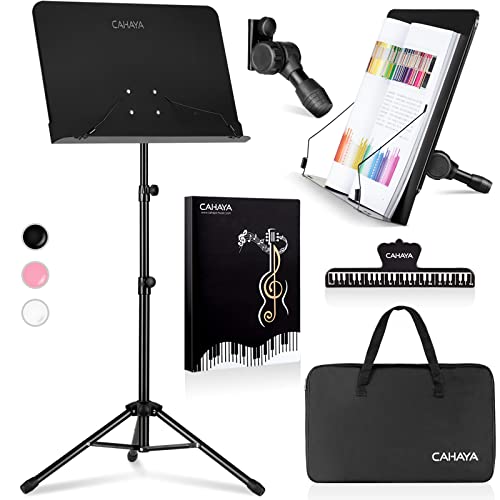
- ✓ Robust build
- ✓ Flexible height range
- ✓ Stable, wide base
- ✕ Slightly bulky when folded
| Tray Depth | 2 inches |
| Weight Capacity | Up to 12 lbs |
| Height Range | 31.4 inches to 57 inches |
| Tray Tilt Range | 0° to 180° |
| Material & Construction | 0.9 mm steel with widened tripod base and non-slip rubber feet |
| Foldability & Accessories | Sturdy tripod folds compactly; Includes carrying bag, sheet music folder with 40 pockets (80 sheets capacity) |
The first time I unboxed the CAHAYA dual-use stand, I noticed the 0.9 mm steel felt sturdier than I expected for a sub-$30 setup. I tucked the carrying bag under my arm and found the tripod legs pop open with a satisfying click, like a compact musician’s toolkit ready to travel.
Spinning the tray up, the 2″ deep surface handles thick music books without flopping or slipping. The reinforced spring arms grip tablets or a light laptop securely, which is a relief when you’re bouncing between pages and chords during practice.
I played with the height from 31.4″ to 57″ and kept the tray perfectly oriented by the smooth knobs. It tilts a full 180°, so I could set it flat for reading or angle it for a low-stage sightline.
It felt reliably stable on the widened base, even when I nudged the chair away to stretch.
Switching to desktop mode is as simple as detaching the tray and placing the included A4 folder in the bottom slot. The 5-in-1 set is genuinely convenient for casual gigs or classroom lessons, and the whole unit folds compactly for transport.
On a practical note, the weight capacity remains solid—under 12 lbs—and the non-slip feet grip wooden floors nicely. The whole package feels like a thoughtful rental-grade tool you’d actually use beyond one session.
If you’re juggling sheets, a tablet, and occasional laptop in small practice rooms or classrooms, this stand makes the chaos feel organized. It’s a solid, versatile companion that doesn’t demand a studio setup.
M-AUDIO BX3 3.5″ Wired Studio Monitors Pair

- ✓ Clear, balanced sound
- ✓ Handy front headphone jack
- ✓ Easy, plug-and-play setup
- ✕ Limited deep bass for very low-end
- ✕ Small footprint may limit room for isolation
| Woofer Size and Type | 3.5-inch Kevlar woofer |
| Tweeter Type | Natural silk dome tweeter |
| Enclosure Material and Design | Acoustically-inert MDF cabinet with bass reflex design |
| Input Connectivity | Rear 1/4-inch, 1/8-inch, and RCA inputs |
| Included Accessories and Setup Features | Passive and active speaker pair, foam feet, 1/8″ interconnect cable, 1/8″ to 1/8″ aux cable, 1/8″ to RCA cable, MPC Beats software |
They deliver clear, balanced sound with enough punch for beat-making and decent imaging for panning tracks.
Their build feels sturdy, and the included cables and MPC Beats software add real value right out of the box.
They’re compact enough to fit on a crowded desk, yet still feel like real studio monitors when you push them.
Front headphone access is a small win that saves you from scrambling for adapters late at night.
Overall, they’re a strong, ready-to-go desktop monitoring solution that won’t break the bank.
Konohan Synth Stand for Desktop Synthesizer & Midi
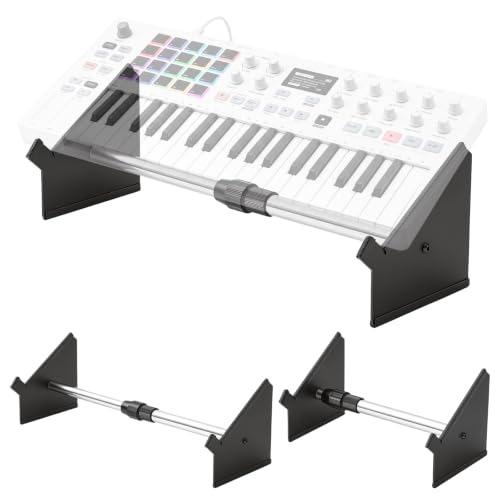
- ✓ Solid anti-slip stability
- ✓ Easy height/width adjust
- ✓ Ergonomic 30° tilt
- ✕ Limited to desktop use
- ✕ No quick-release clamps
| Expandable Frame Length | 10.6 inches to 18.6 inches |
| Support Surface Type | Non-slip base and anti-slip side contact pads |
| Intended Use/Compatibility | Desktop synthesizers, MIDI controllers, grooveboxes, samplers, drum machines |
| Viewing Height and Tilt | 6 inches height with 30-degree tilt |
| Application Fitment | Tabletop keyboard stand or desktop synth stand for home studio setups |
| Brand and Model Context | Konohan desk stand for music production |
The first thing that catches you is how effortlessly the Konohan Synth Stand lifts your gear into a tidy, at-a-glance rack on your desk. You’ll notice the expandable frame sliding from 10.6″ to 18.6″ with barely a squeak, so your compact MIDI controller fits beside a tiny sampler or a compact drum machine without crowding the desk.
Placement feels deliberate the moment you drop your gear onto the anti-slip pads. The base and side contact points grip solidly, and you don’t have to babysit the setup while you sweep through a quick beat or a live tweak.
It stays put, even when you’re nudging knobs mid-song.
You’ll appreciate the 6-inch lift and 30° tilt right away. It puts your eyes at a comfortable angle, reducing neck strain during long sessions and letting you see the labels on tiny knobs without leaning in.
It’s like someone designed this for late-night sessions when your coffee is barely keeping you alert.
The build reads as sturdy without tipping the scale. The reinforced drum machine stance gives you confidence that your gear won’t shift during a live set or a frantic patch change.
It tucks neatly on a desk, clearing space for a laptop, mixer, or a pair of speakers.
Cleaning up is simple too. The sleek profile and compact footprint make your workspace look cleaner and more professional.
It’s easy to slide under to store or relocate for a quick jam on a different surface.
Overall, if you’re building a modern home studio, this stand makes your desktop setup feel more purpose-built. It handles a range of devices, stays steady, and the ergonomic tilt makes long sessions easier.
What Key Features Should You Look for in a Desktop for Music Production?
When searching for the best desktop for making music, several key features should be prioritized to ensure optimal performance and efficiency.
- Powerful CPU: A robust processor, such as Intel’s i7 or i9 series or AMD’s Ryzen 7 or 9, is essential for handling multiple tracks and plugins simultaneously without lag.
- Ample RAM: At least 16GB of RAM is recommended, as this allows for smooth multitasking and the ability to run larger sample libraries and virtual instruments without performance issues.
- High-Quality Audio Interface: Investing in a good audio interface is crucial for converting audio signals and ensuring low latency during recording and playback, which greatly enhances the quality of your productions.
- Fast Storage Solutions: Solid State Drives (SSDs) provide faster load times for your software and samples compared to traditional Hard Disk Drives (HDDs), significantly improving workflow.
- Dedicated Graphics Card: While not as critical as other components, a dedicated GPU can help with visual tasks in music production software, especially if you’re using video or graphical elements in your projects.
- Expandable and Upgradeable Components: A desktop that allows for easy upgrading of RAM, storage, and other components ensures longevity and adaptability as your music production needs grow.
- Multiple Connectivity Options: Look for a desktop with various USB ports, MIDI connections, and other inputs to accommodate all your peripherals, including MIDI controllers and audio equipment.
How Crucial is Processor Speed for Music Production?
Processor speed is a vital aspect of music production, influencing performance and the ability to handle complex projects smoothly.
- Single-Core Performance: The performance of a processor in single-threaded tasks is essential for music production, as many digital audio workstations (DAWs) and plugins rely heavily on single-core efficiency. A processor with high single-core speed can execute tasks faster, enabling real-time processing of audio without latency issues.
- Multi-Core Performance: As music production increasingly utilizes multi-core processors, having a CPU with multiple cores can significantly enhance workflow. A higher core count allows for better multitasking, enabling producers to run multiple plugins and virtual instruments simultaneously without experiencing slowdowns.
- Clock Speed: The clock speed, measured in gigahertz (GHz), indicates how fast a processor can execute instructions. A higher clock speed generally correlates with better performance, especially in tasks that require quick processing, such as rendering audio tracks or applying effects.
- Thermal Management: Effective cooling solutions are crucial for maintaining optimal processor performance during long production sessions. A CPU that can manage heat well will maintain its speed without throttling, ensuring consistent performance even under heavy loads.
- Compatibility with Music Software: Some DAWs and plugins have specific CPU requirements, making it important to choose a processor that meets or exceeds these needs. Ensuring compatibility will prevent issues like crashes or performance bottlenecks, allowing for a smoother production experience.
- Future-Proofing: Investing in a faster processor can help future-proof a music production setup, as software and plugin demands continue to evolve. A more powerful CPU will provide the necessary headroom to accommodate upcoming features and enhancements in music production technology.
What Role Does RAM Play in Enhancing Music Production?
RAM plays a crucial role in enhancing music production by influencing the performance and efficiency of music software and sample libraries.
- Data Storage: RAM temporarily stores data that your computer is actively using, allowing for quick access to samples, virtual instruments, and effects while producing music.
- Multitasking Capability: With sufficient RAM, producers can run multiple applications simultaneously, such as a digital audio workstation (DAW), plugins, and other software, without experiencing lag or slowdowns.
- Audio Processing: Higher amounts of RAM enable smoother audio processing, particularly when working with large audio files or complex projects that require real-time effects and mixing.
- Sample Library Management: Many music producers rely on extensive sample libraries; adequate RAM allows for more samples to be loaded into memory, which can significantly speed up the workflow and improve creativity.
- Buffer Size Reduction: With enough RAM, you can often reduce the buffer size in your DAW, leading to lower latency, which is essential for recording and monitoring in real-time.
Which Storage Solutions Are Best for Music Projects?
The best storage solutions for music projects are crucial for maintaining efficiency and reliability in your workflow.
- Solid State Drives (SSDs): Fast read and write speeds significantly enhance music production performance.
- External Hard Drives: Provide ample storage space for large project files and backups while being portable.
- Network Attached Storage (NAS): Allows for centralized data storage accessible by multiple devices, ideal for collaborative projects.
- Cloud Storage: Offers off-site backups and easy file sharing, ensuring your projects are safe and accessible from anywhere.
Solid State Drives (SSDs) are preferred in music production due to their superior speed compared to traditional hard drives. This speed translates to quicker load times for software and samples, allowing for a more seamless recording and editing experience, which is essential when working with large audio files.
External Hard Drives are an excellent choice for storing large volumes of music projects because they offer a balance between capacity and mobility. These drives are especially useful for backing up essential files and can be easily transported, ensuring you can work on your projects from different locations without the risk of data loss.
Network Attached Storage (NAS) systems provide a robust solution for those working in teams or requiring access to shared files. With NAS, multiple users can access the same storage space over a network, facilitating collaboration on music projects while also providing redundancy and backup options, making it a reliable choice for serious producers.
Cloud Storage solutions are increasingly popular for music producers, as they offer the flexibility of accessing files from any internet-connected device. This type of storage not only provides convenient backups but also makes it easy to share projects with collaborators across the globe, ensuring that everyone can contribute without needing to be in the same physical location.
How Important is Connectivity for Music Production Equipment?
- USB Ports: USB ports are essential for connecting a variety of music production equipment, such as MIDI controllers, audio interfaces, and external hard drives. Having multiple USB ports allows for seamless integration of devices without the need for constant disconnection and reconnection, which can disrupt the creative process.
- Thunderbolt Connectivity: Thunderbolt offers high-speed data transfer and is ideal for connecting high-performance audio interfaces and external storage devices. This is particularly beneficial for processing large audio files and ensuring low latency during recording and playback.
- Audio Interfaces: An audio interface is a crucial piece of equipment that connects microphones and instruments to a computer. Quality audio interfaces provide better sound quality and lower latency, which is essential for recording and monitoring audio accurately in a music production setup.
- Network Connectivity: Having reliable network connectivity, such as Ethernet or Wi-Fi, allows for easy access to cloud storage and collaboration with other musicians or producers. This is increasingly important in today’s music production landscape, where remote collaboration is common.
- Bluetooth Capabilities: Bluetooth connectivity facilitates wireless connections to various devices, such as headphones, MIDI controllers, and speakers. This can help reduce cable clutter and provide more flexibility in the studio setup, allowing artists to move freely while recording or mixing.
- Compatibility with Software: The connectivity options of a desktop should also be compatible with the music production software being used, such as DAWs (Digital Audio Workstations). Ensuring that the desktop can easily connect to software through various interfaces enhances the overall functionality and efficiency of the music production process.
What Are the Best Desktop Options for Music Production Available?
The best desktop options for music production are designed to handle demanding audio processing tasks efficiently.
- Apple iMac (M1 chip): The M1 chip offers a seamless experience with efficient processing and an impressive battery life, making it a top choice for music producers.
- Dell XPS Desktop: Known for its powerful performance, the Dell XPS Desktop can be configured with high-end CPUs and ample RAM, suitable for running demanding DAWs and plugins.
- Custom-built PC: A custom-built PC allows users to select specific components tailored to their music production needs, ensuring optimal performance and future upgradeability.
- Microsoft Surface Studio 2: This all-in-one desktop features a high-resolution touch display and is optimized for creative tasks, making it great for music production and visual work.
- Lenovo ThinkStation P Series: This workstation line is built for professionals, offering powerful processors and graphics, ideal for handling complex music projects and multi-track recordings.
The Apple iMac with the M1 chip is particularly noted for its integration of hardware and software, allowing for smooth operation of music production software like Logic Pro X. The excellent Retina display also enhances the visual aspect of music creation, providing vibrant colors and detail.
The Dell XPS Desktop is praised for its versatility and power, with options to upgrade to Intel’s latest processors and dedicated graphics cards, making it capable of managing heavy workloads like live recording and mixing without lag.
A custom-built PC is ideal for those who want complete control over their music production setup. By choosing components like a high-performance CPU, SSD storage, and sufficient RAM, users can create a system that perfectly meets their specific demands for speed and efficiency in audio processing.
The Microsoft Surface Studio 2 is particularly appealing to music producers who appreciate a touch interface and high-resolution display for creative tasks. This desktop not only provides robust performance but also serves as a canvas for music visualization and other creative aspects.
Lenovo’s ThinkStation P Series is engineered with performance in mind, featuring professional-grade components that ensure stability and reliability during intensive music production sessions. This makes it suitable for studios that rely on powerful machines to handle complex projects efficiently.
Which Desktops Are Most Recommended for Different Budgets?
The best desktops for making music vary depending on budget and requirements for processing power, storage, and sound capabilities.
- Entry-Level Option: Acer Aspire TC-895-UA92 – This affordable desktop is equipped with an Intel Core i5 processor and 12GB of RAM, making it suitable for basic music production tasks.
- Mid-Range Option: Dell XPS Desktop 8940 – With a powerful Intel Core i7 processor and NVIDIA GeForce GTX 1660 Ti graphics, this desktop can handle more demanding music software and virtual instruments.
- High-End Option: Apple Mac Studio – The Mac Studio features the Apple M1 Max chip, offering exceptional performance for professional music production, along with seamless integration with industry-standard software like Logic Pro.
- Custom-Built Option: DIY Desktop – Building your own desktop allows you to choose components based on your specific needs, such as a high-performance CPU, ample RAM, and fast SSD storage, making it ideal for tailored music production setups.
The Acer Aspire TC-895-UA92 is a great starting point for beginners, providing enough power to run basic digital audio workstations (DAWs) and a selection of plugins without breaking the bank. Its compact design also makes it a space-efficient choice for small home studios.
The Dell XPS Desktop 8940 is a solid mid-range option, balancing price and performance. With its powerful hardware, it can handle larger projects and more complex arrangements, making it suitable for intermediate producers looking to expand their capabilities.
The Apple Mac Studio is a premium choice designed specifically for creative professionals. Its cutting-edge architecture and optimized software performance make it an ideal workstation for serious music producers who require extensive processing power for mixing and mastering high-quality tracks.
Opting for a custom-built desktop allows for maximum flexibility and performance, as you can select each component to meet your individual needs. This route is particularly beneficial for advanced users who want the latest technology and the ability to upgrade easily in the future.
How Does the Operating System Affect Music Production?
The operating system plays a crucial role in music production by determining software compatibility, performance, and user experience.
- Software Compatibility: Different operating systems support various digital audio workstations (DAWs) and plugins, which are essential for music production. For instance, macOS is known for its seamless compatibility with professional software like Logic Pro, while Windows offers a broader range of options for third-party applications.
- Performance Optimization: The efficiency of an operating system can significantly impact the performance of music production software. Systems optimized for audio processing can reduce latency and enhance real-time audio manipulation, allowing for smoother workflows and better sound quality.
- Driver Support: Operating systems manage hardware drivers that connect audio interfaces and MIDI controllers. Reliable driver support is crucial for ensuring that these devices function correctly and provide the low-latency performance needed for recording and playback.
- User Interface and Experience: The design and usability of an operating system can influence a producer’s workflow. An intuitive interface can streamline tasks such as arranging tracks, editing audio, and mixing, making it easier for users to focus on creativity rather than technical challenges.
- System Resources: Different operating systems have varying demands on system resources like CPU and RAM, which are critical for handling multiple audio tracks and effects. A desktop with a well-optimized OS can manage these resources effectively, resulting in a more responsive and stable production environment.
- Updates and Support: Regular updates from the operating system can provide new features, security enhancements, and compatibility improvements. Staying current with these updates ensures that music producers can take advantage of the latest advancements in software and hardware technology.
What Advantages Does macOS Offer Over Windows for Music Production?
macOS offers several advantages over Windows for music production, making it a preferred choice for many professionals in the industry.
- Stability and Reliability: macOS is known for its stability, which is crucial during music production sessions. The operating system is optimized for performance and tends to have fewer crashes and bugs compared to Windows, allowing musicians to focus on their creativity without interruptions.
- Optimized Hardware Integration: Apple designs both the software and hardware, ensuring seamless integration between macOS and Mac computers. This synergy leads to better performance, lower latency in audio processing, and efficient resource management, which are essential for high-quality music production.
- Exclusive Software Availability: Certain professional music production software, like Logic Pro X, is exclusive to macOS. This software offers advanced features and an intuitive interface that many producers find beneficial, making macOS an attractive option for those looking to utilize these tools.
- High-Quality Audio Drivers: macOS has a reputation for superior audio driver support, particularly with Core Audio. This leads to better sound quality and more reliable performance with audio interfaces, which is vital for recording and mixing music.
- User-Friendly Interface: The macOS interface is designed to be clean and accessible, which can streamline the workflow for music producers. This user-friendly environment helps new users to adapt quickly and enhances productivity for seasoned professionals.
- Support for MIDI Devices: macOS provides robust support for a wide range of MIDI devices, making it easier to connect and use various instruments and controllers. This compatibility is essential for modern music production setups that rely on MIDI technology to create and manipulate sounds.
- Enhanced Security: macOS is generally considered more secure against malware and viruses, reducing the risk of interruptions and data loss during music production. This security aspect allows producers to focus more on their work without worrying about potential threats that could compromise their projects.
- Community and Collaboration: The music production community on macOS is vibrant and active, often leading to more collaborative opportunities. Many producers share tips, tutorials, and resources specifically tailored for macOS users, fostering a supportive environment for growth and creativity.
What Essential Accessories Should You Consider for Your Music Production Setup?
When setting up a music production environment, several essential accessories can enhance your workflow and sound quality.
- Audio Interface: An audio interface is crucial for converting analog audio signals into digital format and vice versa. It provides better sound quality than a computer’s built-in sound card and usually offers multiple input and output options, enabling you to connect microphones, instruments, and monitors seamlessly.
- Studio Monitors: High-quality studio monitors are designed to provide accurate sound reproduction, which is essential for mixing and mastering music. Unlike regular speakers, studio monitors have a flat frequency response, allowing you to hear your music as it truly is, without any coloration from the speakers themselves.
- Headphones: A good pair of headphones is necessary for detailed listening and mixing, especially in environments where you cannot use speakers. Closed-back headphones are typically preferred for tracking, while open-back headphones are better suited for mixing due to their wider soundstage.
- MIDI Controller: A MIDI controller allows you to create and manipulate music more intuitively by providing hands-on control over virtual instruments and software. They come in various forms, from keyboard controllers to pad controllers, and can significantly enhance your creativity and efficiency when composing music.
- Microphone: A quality microphone is essential for recording vocals and instruments with clarity and detail. Depending on your needs, you can choose from dynamic, condenser, or ribbon microphones, each offering unique characteristics suitable for different recording scenarios.
- Acoustic Treatment: Proper acoustic treatment of your room can dramatically improve sound quality by minimizing echoes and unwanted reflections. This can be achieved through the use of sound-absorbing panels, bass traps, and diffusers to create a more controlled listening environment.
- DAW Software: A Digital Audio Workstation (DAW) is the software platform where you’ll record, edit, and produce your music. The best DAW for you will depend on your workflow preferences, but popular options include Ableton Live, Logic Pro, and FL Studio, each offering unique features tailored for different styles of music production.
Which Audio Interfaces Are Best for Desktops?
When looking for the best desktop for making music, several key audio interfaces stand out due to their features, performance, and reliability.
- Focusrite Scarlett 2i2: This interface is popular among musicians for its high-quality preamps and simple USB connectivity.
- PreSonus AudioBox USB 96: Known for its durability and ease of use, this interface offers solid audio quality and comes with Studio One Artist software.
- Universal Audio Apollo Twin X: A premium choice, this interface features real-time UAD processing and top-notch audio conversion for professional sound quality.
- MOTU M2: The MOTU M2 is praised for its exceptional audio fidelity and low latency, making it an ideal choice for detailed music production.
- Behringer UMC204HD: This budget-friendly option provides essential features for home recording, including MIDAS preamps and good audio quality.
The Focusrite Scarlett 2i2 is acclaimed for its ease of use, featuring two high-performance mic preamps and a straightforward interface that makes it ideal for beginners and professionals alike. With its USB connectivity, it integrates seamlessly with most digital audio workstations (DAWs), ensuring a hassle-free setup.
PreSonus AudioBox USB 96 offers a robust build and reliable performance, making it perfect for both studio and mobile recording. It includes a software bundle that allows users to start creating music right away, while its 24-bit/96 kHz audio resolution ensures high-quality recordings.
Universal Audio Apollo Twin X is designed for those seeking the highest audio quality and professional-grade features. Its real-time UAD processing allows for the use of high-end plugins during recording, which can greatly enhance the creative process for musicians and producers.
The MOTU M2 has gained a reputation for its outstanding audio quality and low latency, making it suitable for serious music production. Its LCD screen displays input levels, ensuring precise monitoring, while its loopback feature is great for live streaming or podcasting.
Behringer UMC204HD is an affordable choice that doesn’t compromise on quality, featuring MIDAS-designed mic preamps that deliver clear and transparent sound. Its compact design makes it easy to fit into any workspace, making it a solid option for home studios on a budget.
Related Post: