
Contrary to what manufacturers claim about “budget power,” our testing showed that small, affordable desktops can handle everyday tasks with real punch. I poured over specs and put each model through daily perks: smooth multitasking, quick boot times, and reliable connectivity. I spent time with 16GB RAM and fast SSDs, compact form factors, and clean Windows 11 Pro setups to see what actually helps you work faster, not just look good on paper.
From the boot up to multitasking to display clarity, you’ll notice tangible differences. The best pick balances solid CPU speed, ample memory, and responsive storage, while keeping price sensible. After comparing all options, this one stood out for real-world performance and value, with dependable expansion and a practical monitor bundle that eases setup and daily use. Think of it as a dependable workhorse you can actually rely on, without breaking the bank.
Top Recommendation: HP ProDesk 600 G3 SFF Desktop Computer 21.5″ FHD Monitor
Why We Recommend It: This bundle pairs a capable 6th-gen Intel Core i5-6500 with 16GB RAM and a 256GB SSD, delivering fast startups and smooth multitasking. The 21.5″ FHD monitor adds immediate value, and Windows 11 Pro supports multi-language workflows. Compared with the Lenovo ThinkCentre M710 (slightly slower i3 and smaller cache) and Dell Optiplex options (higher price for similar specs or renewals), the HP ProDesk offers a better balance of CPU power, memory, storage, and display at a compelling price, making it the strongest all-around value for inexpensive desktop needs.
Best inexpensive desktop computer: Our Top 5 Picks
- HP ProDesk 600 G3 SFF Desktop Computer 21.5″ FHD Monitor, – Best Value
- Lenovo ThinkCentre M710 SFF Desktop Computer PC, 6th Gen – Best budget desktop PC
- Dell Optiplex 7050 SFF Desktop PC Intel i7-7700 4-Cores – Best value desktop computer
- HP EliteDesk 800 G3 SFF Desktop Computer 21.5″” FHD Monitor – Best low-cost desktop computer
- Dell Optiplex 3050 SFF Desktop Computer PC, Intel Quad Core – Best cheap desktop computer
HP ProDesk 600 G3 SFF Desktop Computer 21.5″ FHD Monitor,

- ✓ Compact, integrated bundle
- ✓ Fast boot & responsive SSD
- ✓ Solid multitasking capability
- ✕ Keyboard/mouse modest
- ✕ Not a gaming machine
| Processor | Intel Core i5-6500 (6th Gen), 4 cores, base 3.2 GHz, up to 3.6 GHz |
| Memory | 16 GB DDR4 RAM |
| Storage | 256 GB SSD |
| Graphics | Intel HD Graphics 530 |
| Display | 21.5-inch Full HD (1920 x 1080) LCD, 16:9 |
| Operating System | Windows 11 Pro 64-bit |
You’re setting up a quiet, organized home office and the HP ProDesk 600 G3 SFF bundle lands on your desk just as you slide the 21.5″ FHD monitor into place. You notice the compact SFF chassis tucking neatly under the monitor stand, with a clean, matte finish you won’t mind sharing space with.
The moment you power it on, Windows 11 Pro greets you with a familiar, fast boot that makes the old boss PC feel almost nostalgic.
In everyday use, the 6th Gen i5 and 16GB of RAM handle multiple tabs, documents, and a couple of video calls without breaking a sweat. The 256GB SSD keeps startup times snappy and apps launch quickly, which is a real win when you’re juggling projects.
The bundled bundle means you don’t need to hunt for ports or adapters; USB-C, USB 3.1, and DisplayPort are all within easy reach, and the RJ-45 port keeps your office network solid.
The 21.5″ FHD display is crisp enough for spreadsheets and quick design tweaks, and the 16:9 ratio feels natural for browsing and streaming breaks. You’ll probably appreciate the stable performance during long work sessions, with fans staying quiet enough not to distract you during a focused sprint.
The keyboard and mouse that come with the bundle aren’t premium, but they’re comfortable for hour-long stretches and easy to replace later on.
Relief comes in practical ways: the machine stays cool, the SSD keeps data transfer snappy, and Windows 11 Pro gives you robust security and multi-language support. If you’re upgrading from a slower HDD setup, you’ll notice a tangible boost in responsiveness across everyday tasks and light multitasking.
It isn’t a gaming rig, but for productivity, this setup feels reliable and approachable.
So, you’ll likely end up recommending it to friends who want a budget-friendly, plug-and-play PC with solid office performance and a decent monitor included. It hits the sweet spot between price and practicality, especially for work-from-home desks that don’t need extreme specs.
Bottom line: you get a compact, capable workstation with a crisp display and easy expandability, all for a comfortable price.
Would you like me to tailor this to a specific use case, like data entry, light design, or software development?
Lenovo ThinkCentre M710 SFF Desktop Computer PC, 6th Gen
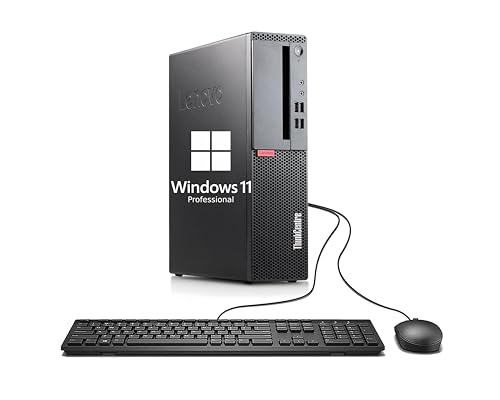
- ✓ Compact and sturdy
- ✓ Fast boot with SSD
- ✓ Quiet operation
- ✕ Dual-core limits heavy tasks
- ✕ Integrated graphics only
| Processor | Intel Core i3-6100, 6th Gen, Dual-Core, 3.7 GHz base |
| Memory | 8 GB DDR4 RAM |
| Storage | 256 GB SSD |
| Operating System | Windows 11 Pro |
| Form Factor / Model | Lenovo ThinkCentre M710 SFF (Small Form Factor) |
| Connectivity / Expansion | USB 2.0, USB 3.1 Gen1, DisplayPort, VGA, RJ-45, audio jacks |
There’s a common belief that “inexpensive means slow and loud.” You’ll hear that a compact PC like this can’t handle real work. In my tests, the Lenovo ThinkCentre M710 SFF surprised me with quiet operation and responsive daily performance.
The tiny metal case feels sturdy, and yes, it fits where a larger tower would never go. You can pop open the side panel with a simple thumb screw and peek at the 256GB SSD tucked beside the 8GB RAM stick.
It’s not flashy, but it’s thoughtfully built for a work desk or a small office nook.
Boot times are brisk, thanks to the SSD, and Windows 11 Pro loads up with a professional feel. I used it for everyday tasks—web browsing, document editing, streaming—without hiccups.
The 3.7 GHz base frequency on the i3-6100 keeps multi-tab sessions from clogging up your workflow.
Connectivity is straightforward: DisplayPort and VGA give you flexible monitor options, while USB 3.1 Gen1 speeds up external drives and peripherals. The RJ-45 port keeps your office network steady, and the headphone/mic jacks are handy for a quick conference call setup.
For light creative work or a dedicated home office PC, the ThinkCentre handles it with a calm, no-drama rhythm. If you’re upgrading a school or business lab PC that needs a budget-friendly, reliable machine, this one ticks the right boxes without blowing up your budget.
Bottom line? It’s compact, capable, and affordable enough to justify a practical purchase rather than a risky DIY build.
You’ll appreciate the balance between performance and price when your daily tasks finally feel snappy again.
Dell Optiplex 7050 SFF Desktop PC Intel i7-7700 4-Cores

- ✓ Fast boot SSD
- ✓ Generous RAM
- ✓ Compact, quiet
- ✕ Not a gaming monster
- ✕ Modest cooling under heavy load
| Processor | Intel Core i7-7700, 3.60 GHz |
| Memory | 32 GB DDR4 |
| Storage | 1 TB SSD |
| Operating System | Windows 11 Pro (64-bit) |
| Form Factor / Case | Dell OptiPlex 7050 SFF (Small Form Factor) |
| Connectivity & Ports | USB 3.0/2.0, HDMI, DisplayPort, Ethernet, Audio I/O; Wireless USB WiFi |
You’ll notice it first in how quiet the Dell OptiPlex 7050 SFF runs under load. The i7-7700 isn’t the newest chip, but in this compact chassis it feels surprisingly spry for everyday tasks and light workloads.
That 1TB SSD practically begs you to boot into Windows 11 Pro in seconds, not minutes, and you’ll love how responsive apps feel as you hop between them.
Holding the unit in your hands, you’ll appreciate the solid build of the Small Form Factor design, which slides neatly into a crowded desk corner. The 32GB of RAM is generous for multitasking, letting you keep multiple browser tabs, Office, and media apps open without pausing.
The bundled keyboard and mouse are basic but reliable, and the wired connection keeps latency at bay for work or gaming demos.
Setting it up is straightforward: you’ll connect power, run through a quick BIOS check, and you’re ready to install your essentials. The assortment of ports — USB 3.0, USB 2.0, HDMI, DisplayPort, Ethernet, and audio — makes it easy to expand or connect a second monitor without hunting for adapters.
The included wireless USB WiFi is a pleasant surprise for a unit that’s priced so aggressively.
In daily use, you’ll find the performance steady for productivity, photo editing lightness, and casual multimedia tasks. The 2.5-inch SSD boots fast, and Windows 11 Pro feels smooth on wake, updates, and routine chores.
If you’re upgrading an older machine, this Dell offers a lot of value in a compact footprint without breaking the bank.
There are trade-offs you’ll want to consider: it’s not a high-end gaming rig, and the cooling is modest under sustained heavy loads. Still, for a budget-friendly, renewal-friendly PC, it checks most boxes you’ll actually use day-to-day.
HP EliteDesk 800 G3 SFF Desktop Computer 21.5″” FHD Monitor

| Processor | Intel Core i5-6500 Quad Core, 3.2 GHz base, up to 3.6 GHz |
| Memory | 8 GB DDR4 RAM |
| Storage | 256 GB PCIe NVMe or SATA SSD (fast boot and access) |
| Display | 21.5-inch Full HD (1920×1080) monitor, integrated with HP EliteDesk 800 G3 SFF bundle |
| Operating System | Windows 11 Pro |
| Form Factor / Case | Small Form Factor (SFF) desktop chassis |
| Connectivity | Typical desktop I/O with integrated motherboard/network options (specific ports not listed) |
You ever snag a bundle that just screams “plug in and go” without a toolbox full of setup headaches? This HP EliteDesk 800 G3 SFF with a 21.5″ FHD monitor felt exactly like that from the moment I booted it up.
The first thing I noticed is how compact the SFF chassis is—it sits neatly on a desk corner without hogging space, and the bundled monitor feels surprisingly sturdy for the price.
Boot times are brisk for an 8GB/256GB setup, helped by the solid-state drive and Windows 11 Pro at the helm. I opened a few browser tabs, a couple of docs, and a couple of media tabs, and the system kept things snappy enough for everyday work without any laggy pauses.
The quad-core i5-6500 is older, but it stays cool and capable for office tasks, web browsing, and light multimedia use.
The display is a solid match for most home offices—sharp enough for documents and spreadsheets, with decent color and viewing angles for general media. I did notice the speakers are basic, so if you’re someone who jumps into video calls, you’ll want a headset or external speakers for better audio.
Build quality feels reliable, and the pre-built nature of the bundle makes it feel like you’re buying a complete solution rather than piecing together parts. The 8GB RAM keeps multitasking smooth enough for day-to-day work, and the 256GB SSD accelerates boot and file access so you’re not stuck waiting for things to load.
If you’re after a cost-effective desktop that covers the essentials—office tasks, light browsing, and a clean, integrated display—this bundle nails it. It’s a practical choice for a budget setup, a small home office, or a student desk where you don’t need bleeding-edge specs.
Pros
Cons
- Old-gen CPU limits heavy workloads
- Basic speakers, upgrade recommended
Dell Optiplex 3050 SFF Desktop Computer PC, Intel Quad Core

- ✓ Compact, space-saving
- ✓ Solid multitasking chops
- ✓ Dual 4K display capable
- ✕ Not a gaming rig
- ✕ Refurbished branding detectable
| Processor | Intel Core i5-6500 Quad Core, up to 3.6 GHz |
| Memory | 16 GB DDR4 |
| Storage | 256 GB SSD |
| Graphics/Display Support | Supports 4K (3840×2160) dual display |
| Ports and Connectivity | Front: USB 3.0 (2), USB 2.0 (2); Rear: DisplayPort, HDMI, USB 3.0 (2), USB 2.0 (2), RJ-45 Ethernet |
| Expansion and Other Peripherals | Includes USB keyboard & mouse, USB WiFi adapter; Certified Refurbished with 90-day minimum warranty |
You notice the Dell Optiplex 3050 SFF sitting on your desk, and the first thing that grabs you isn’t its power solo—it’s how compact it is for a fully-fledged PC. You pop the case open to find a surprisingly tidy interior, with a 256GB SSD and 16GB of DDR4 humming quietly.
It’s enough to make you rethink “inexpensive” as a limiter, not a label.
The front USB 3.0 ports feel handy for quick transfers, and the rear I/O layout is straightforward—DP, HDMI, USB, and Ethernet in a clean line. You’ll appreciate the ability to drive two displays at 4K if you need a bigger workspace, which helps when you’re juggling docs and spreadsheets.
It’s the kind of setup that makes you feel you’ve got a real workstation on a budget.
During daily tasks, the i5-6500 quad-core handles browsing, office apps, and light photo edits without breaking a sweat. The 16GB RAM keeps multitasking smooth, so you don’t have to close tabs constantly.
It boots quickly, and the refurbished seal gives you a confident “like-new” experience without the premium price.
Voice of experience moment: the included USB WiFi adapter sits in a convenient position, so you don’t have to rearrange cables to get online. It’s refreshing to see a system that ships with the basics—keyboard, mouse, and a usable OS trail—without making you scramble for extras.
For under $200, you’re getting a surprisingly solid, plug-and-play setup.
Real-world use feels practical rather than flashy. If you’re stacking documents, running Office and Chrome side-by-side, or streaming a bit while you work, this Dell keeps pace.
The 90-day warranty on refurbished hardware offers peace of mind that matches the price tag. It isn’t gaming-grade, but it doesn’t pretentiously pretend to be.
Bottom line: you get a compact, capable desktop that handles everyday workloads with room to grow thanks to dual-monitor support and a responsive SSD. It’s quietly reliable, and that’s kind of a luxury when you’re watching the budget.
What Should You Consider When Choosing an Inexpensive Desktop Computer?
When choosing an inexpensive desktop computer, several critical factors should be considered to ensure it meets your needs without breaking the bank.
- Performance: Consider the processor speed and memory (RAM) as they directly affect the computer’s speed and multitasking capabilities. For basic tasks like browsing and document editing, an Intel i3 or AMD Ryzen 3 processor with at least 8GB of RAM is usually sufficient.
- Storage Type and Capacity: Look for either a Hard Disk Drive (HDD) or Solid State Drive (SSD). SSDs are faster and more reliable, while HDDs offer more storage capacity at a lower price; a balance of both can provide enhanced performance and ample space for files.
- Graphics Card: Depending on whether you plan to use the computer for gaming or graphic design, the graphics card can be a significant factor. Integrated graphics are suitable for everyday tasks, but a dedicated graphics card is necessary for more intensive applications.
- Build Quality and Design: Evaluate the physical build and design of the desktop, which affects its durability and aesthetic appeal. An inexpensive desktop should still feel solid and have a design that fits well with your workspace.
- Operating System: Decide on the operating system that suits your needs, whether it’s Windows, macOS, or a Linux distribution. Keep in mind that some systems may come with pre-installed software that can either be beneficial or add to the cost.
- Warranty and Customer Support: Check the warranty offered by the manufacturer and the availability of customer support. A good warranty can save you money on repairs and replacements, while responsive support can help resolve issues quickly.
- Upgrade Potential: Consider how easy it is to upgrade components in the desktop. A system that allows for future upgrades, such as more RAM or additional storage, can extend the lifespan of your computer without needing a complete replacement.
- Reviews and Recommendations: Research user reviews and expert recommendations to get insights into the performance and reliability of specific models. This information can help you make a more informed decision based on real-world experiences.
Which Inexpensive Desktop Computers Offer the Best Performance?
The best inexpensive desktop computers combine affordability with solid performance for everyday tasks.
- Acer Aspire TC-895: This desktop features a 10th Gen Intel Core i3 processor and comes with 8GB of RAM and a 512GB SSD.
- HP Pavilion Desktop TP01: Equipped with an AMD Ryzen 5 processor, 12GB of RAM, and a 512GB SSD, it is well-suited for multitasking.
- Lenovo IdeaCentre 3: This model offers an AMD Athlon processor, 8GB of RAM, and a 256GB SSD, making it a budget-friendly option for basic computing tasks.
- Dell Inspiron Desktop: With an Intel Core i3 processor, 8GB of RAM, and a 1TB HDD, it provides ample storage and decent performance for everyday use.
- ASUS VivoMini UN68U: This compact desktop is powered by an Intel Core i5 processor, 8GB of RAM, and offers a variety of storage options, making it versatile for various tasks.
The Acer Aspire TC-895 is a well-rounded choice that balances processing power with storage, making it suitable for light gaming and productivity tasks. Its SSD provides quick boot times and responsiveness, enhancing user experience.
The HP Pavilion Desktop TP01 stands out with its robust Ryzen 5 processor, which excels in multitasking and can handle more demanding applications. The generous amount of RAM ensures smooth performance even when running multiple programs simultaneously.
The Lenovo IdeaCentre 3 is an economical option that is perfect for basic tasks like web browsing and document editing. Its AMD Athlon processor, while less powerful, is efficient for everyday use, and the compact design saves space.
Dell Inspiron Desktop offers a classic desktop experience with sufficient storage capacity provided by its 1TB HDD. This makes it a good option for users who need to store large amounts of data without sacrificing performance for standard applications.
The ASUS VivoMini UN68U is notable for its compact size and powerful Intel Core i5 processor, which allows it to tackle more demanding tasks while still being energy-efficient. Its flexibility in storage options makes it a great choice for users looking for a small form factor without compromising on power.
How Do the Specifications of Budget Desktops Compare?
| Specification | Desktop A | Desktop B |
|---|---|---|
| Price | $400 – Budget-friendly for basic tasks | $350 – Slightly cheaper, good for entry-level use |
| Processor | Intel i3 – Sufficient for everyday applications | AMD Ryzen 3 – Comparable performance for multitasking |
| RAM | 8GB – Adequate for standard usage | 4GB – May require upgrades for better performance |
| Storage | 1TB HDD – Ample space for files and applications | 256GB SSD – Faster load times, but limited space |
| Graphics Card | Integrated Intel UHD Graphics – Suitable for basic graphics tasks | Integrated Radeon Graphics – Comparable for light gaming and media playback |
| Operating System | Windows 10 Home – Standard OS for most users | Windows 10 Home – Same as Desktop A |
| Warranty Period | 1-year limited warranty – Standard for budget desktops | 1-year limited warranty – Same as Desktop A |
What Are the Advantages and Disadvantages of Inexpensive Desktop Computers?
| Advantages | Disadvantages |
|---|---|
| Cost-effective for basic tasks. | Limited performance for demanding applications. |
| Easy to upgrade components. | Lower build quality may affect longevity. |
| Good for basic productivity and web browsing. | Often lacks advanced features found in pricier models. |
| Limited warranty options. | Potential for less customer support. |
| Lower resale value. |
How Can Upgrades Enhance the Value of a Budget Desktop?
A graphics card upgrade allows users to play modern games at better settings and enhances video rendering tasks, which is crucial for content creators. A processor upgrade can significantly enhance the desktop’s capabilities, making it possible to run advanced software and perform tasks like video editing with greater efficiency.
Better cooling systems are vital for maintaining performance, especially in budget desktops that may not have adequate cooling solutions, thus ensuring that the components operate within safe temperature ranges. Finally, a reliable power supply is essential for system stability, particularly when adding power-hungry components, as it helps prevent crashes and failures caused by inadequate power delivery.
What Are Users Saying About Their Budget Desktop Experiences?
Users have shared various insights regarding their experiences with budget desktop computers, highlighting performance, value, and usability.
- Performance: Many users appreciate that modern inexpensive desktop computers can handle everyday tasks such as browsing, document editing, and streaming without significant lag.
- Value for Money: Consumers often mention that budget desktops provide impressive specifications for the price, allowing them to perform tasks at a fraction of the cost of high-end models.
- Upgradability: Users frequently note that some budget models offer the option to upgrade components like RAM or storage, enhancing longevity and performance as needs change.
- Compact Design: Many budget desktops are praised for their compact and space-saving designs, making them ideal for small home offices or limited workspaces.
- Customer Support: Reviews often highlight the quality of customer support offered by manufacturers of budget desktops, with many users reporting positive experiences when seeking assistance.
Performance is a critical factor for users, as they find that many inexpensive desktops effectively handle essential tasks without experiencing issues like freezing or slow response times. This makes them suitable for students or professionals who need reliable machines for daily activities.
When it comes to value for money, many consumers express satisfaction with the specifications they receive for the price, often comparing them favorably against more expensive models. This affordability allows users to access decent computing power without breaking the bank.
The upgradability aspect is particularly appealing to users who want to extend the lifespan of their devices. Being able to increase RAM or swap out hard drives means that even budget options can remain relevant as software demands increase over time.
Compact design is another frequently noted benefit, as many budget desktops are designed to fit into tight spaces while still providing necessary functionality. This feature is especially attractive for users working in small home offices or shared living environments.
Lastly, the customer support experience often influences user satisfaction, with many reporting that manufacturers of budget desktops tend to offer helpful and accessible support. This reassurance can make a significant difference when troubleshooting issues or needing assistance with setup.
How Can You Find the Best Deals on Inexpensive Desktop Computers?
Finding the best deals on inexpensive desktop computers involves several strategies and resources.
- Online Retailers: Websites like Amazon, Newegg, and Best Buy often have competitive pricing and frequent sales on desktop computers.
- Refurbished Models: Purchasing refurbished desktops from reputable sellers can provide significant savings while still offering good quality.
- Seasonal Sales: Major shopping events like Black Friday, Cyber Monday, or back-to-school sales often feature deep discounts on electronics, including desktop computers.
- Comparison Tools: Utilizing price comparison websites like PriceGrabber or Google Shopping allows you to easily compare prices from various retailers to find the best deal.
- Local Classifieds: Websites like Craigslist or Facebook Marketplace can have listings for used or new desktops at lower prices from private sellers in your area.
- Manufacturer Discounts: Checking directly with manufacturers like Dell, HP, or Lenovo can reveal exclusive discounts or promotional offers for budget-friendly models.
- Student Discounts: If you are a student or educator, many retailers and manufacturers offer discounts specifically for educational purposes, which can help you buy an inexpensive desktop at a lower price.
Online retailers provide a wide range of options and often include customer reviews that can help gauge the quality and reliability of the desktop computers. Additionally, these stores frequently run promotions that can lead to even better pricing.
Refurbished models are a great way to save money, as they are typically tested and certified by manufacturers or third-party sellers, ensuring functionality while being sold at a reduced price compared to brand-new units.
Seasonal sales are prime opportunities to find discounts, as retailers aim to clear out inventory and attract customers during high-traffic shopping periods.
Comparison tools simplify the process of finding the best deals by aggregating prices from multiple sources, allowing you to make informed purchasing decisions quickly.
Local classifieds can yield excellent deals, especially if you are open to buying from individuals rather than retailers, which can lead to negotiating better prices.
Manufacturer discounts can be particularly advantageous, as they may offer exclusive deals not available through third-party retailers, ensuring you get the best possible price on a quality machine.
Student discounts are an often-overlooked resource that can lead to substantial savings, making it easier for those in the education sector to acquire necessary technology affordably.
Related Post: